

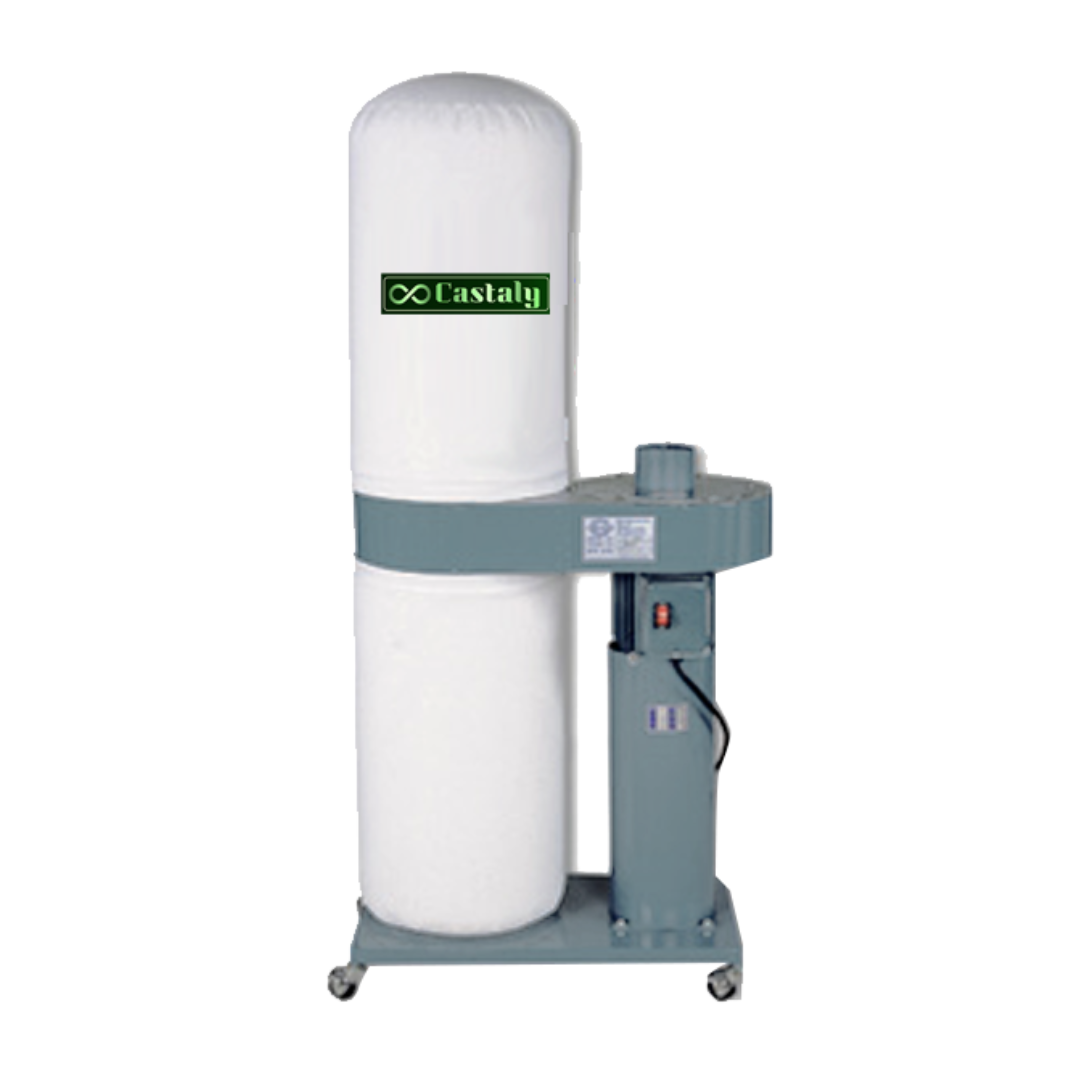
1 hp Dust Collector
1 product
Showing 1 - 1 of 1 product
Showing 1 - 1 of 1 product
Display
View
Recently viewed
Frequently Asked Questions for 1 hp Dust Collector
Yes, a 1 HP dust collector is absolutely enough if you are running a small shop or a single-operator setup. It typically pulls enough CFM (Cubic Feet per Minute) to easily handle standard woodworking machinery like a table saw, router table, bandsaw, or small planer.
Standard cloth filter bags should typically be replaced every year or when they become too clogged to wash, whereas pleated canister filters can last up to a few years if you regularly maintain them with the built-in cleaning paddles.
A 1 HP dust collector provides enough suction for a single woodworking machine in a small shop, but commercial setups running multiple machines simultaneously will need a 3 HP to 5 HP system.
You calculate the required CFM (Cubic Feet per Minute) by determining the size of the dust port on your machine—multiplying the cross-sectional area of the port by a recommended air velocity of around 4,000 feet per minute (FPM) for large tools or 3,500 FPM for smaller hand-tool connections, typically requiring 350 to 400 CFM for small tools and 600 to 1,000+ CFM for large stationary machines like joiners and table saws.
Yes, a dedicated dust collector moves a drastically higher volume of air (measured in high CFM at low static pressure) to capture light, voluminous wood chips and sawdust, whereas a shop vac operates at low air volume but very high static pressure (suction) designed to lift heavy, dense debris.
Which is the best dust collector? The best 1 HP dust collector depends on your workspace, but wall-mounted units are ideal for small garages, while premium canister models provide the safest air filtration for busy shops.