


In This Guide
- Why Go Cordless for a Miter Saw?
- What to Look for in a Cordless Miter Saw
- Top Cordless Miter Saw Picks
- Comparison: Key Specs at a Glance
- Miter Saw and Cordless Cutter Specs at a Glance
- Cordless Cutters and Miter Saws to Consider
- Choosing the Right Blade Size for Your Work
- Frequently Asked Questions
- Conclusion
Featured Cordless Miter Saw

Virutex
Virutex Cordless Jig Saw SCB324 3400400
$202.00
Curves and cutouts are the job of this compact cordless jig saw, which has a brushless motor and advanced control systems for clean cuts in wood, aluminum and steel. Pair it with a miter saw for straight crosscuts. Choose a blade to suit each material.

Evolution Power Tools
Evolution Power Tools Multi-Material Cutting Chop Saw With 14 in. Blade R355CPS
$431.98
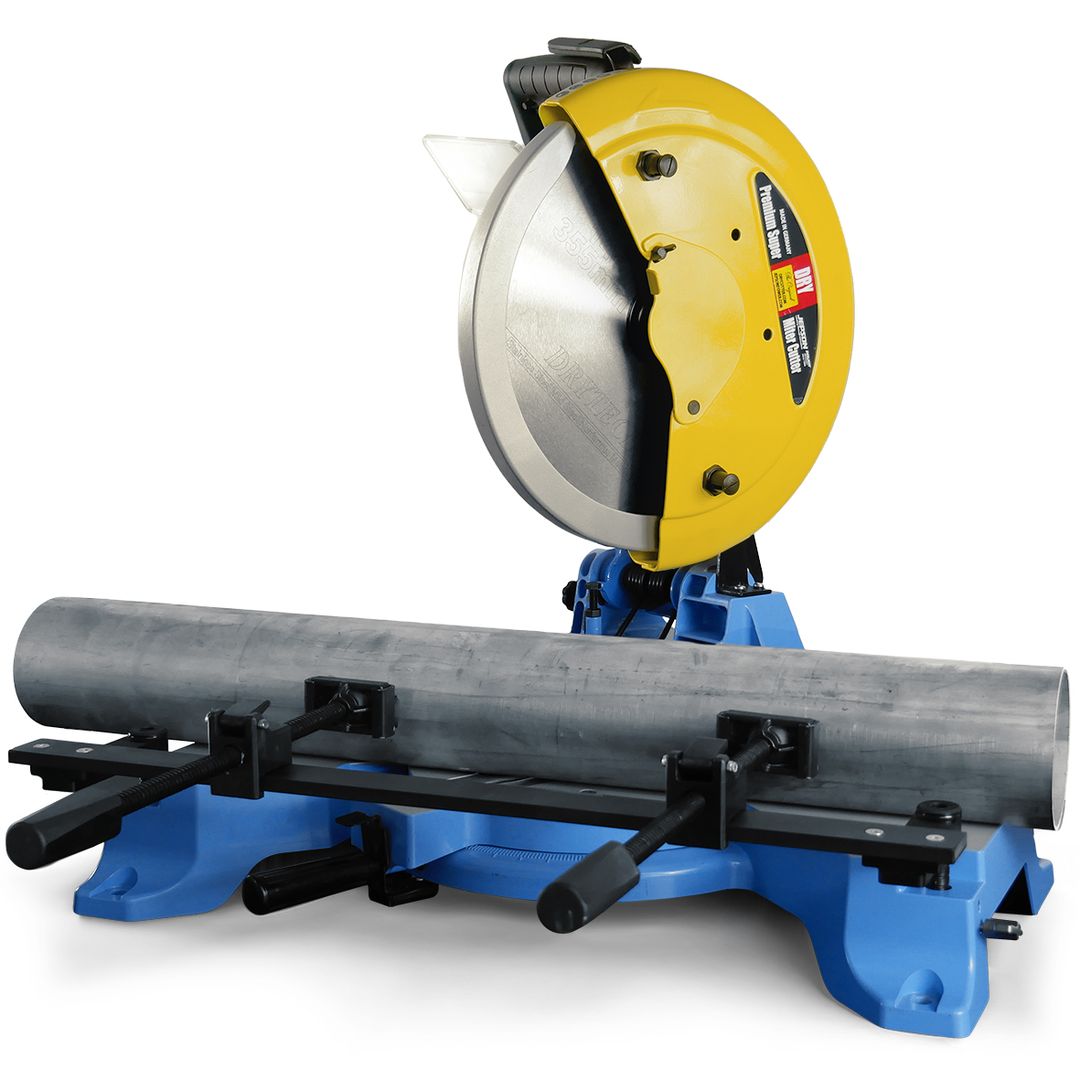
This 15 Amp chop saw puts a big 14 inch blade and cold cut technology behind crosscuts in many materials. It is a heavier crosscut option when the saw sizes in this guide feel too small.

Evolution Power Tools
Evolution Power Tools Metal Cutting Chop Saw With 14 in. Mild Steel Blade S355CPSL
$575.97
Cold-cutting 15 Amp chop saw with a 14 inch TCT blade and 45 degree miter capacity, made for burr-reduced cuts in mild steel, stainless steel, tubing and angle iron. It suits metal projects, not wood trim. Check your material before you buy.
Why Go Cordless for a Miter Saw?
The main argument against cordless miter saws used to be power. Early battery-powered models struggled with wide crosscuts in dense material, and runtime was limited enough to make them impractical for all-day shop use. That's no longer the case. High-voltage platforms — particularly 36V/40V and 60V systems — now deliver enough torque to handle 2×6 framing lumber and thick hardwood trim without bogging down, and 5.0–6.0 Ah battery packs extend runtime to hundreds of cuts per charge.

The real advantages of cordless are site flexibility and setup time. You can position a cordless miter saw anywhere in the shop, on a job site, or in a staging area without hunting for an extension cord or worrying about tripping hazards. For contractors moving between sites, the convenience compounds: one battery platform covers the miter saw, the circular saw, the reciprocating saw, and the driver in the same system.

Runtime benchmark: In comparative testing by WOOD Magazine, cordless miter saws ranged from 176 to 474 crosscuts per charge on 2×4 lumber. The top performers — compact dual-18V and dual-60V platforms — produced enough cuts to last a week of normal shop use or a half-day of heavy production framing. Runtime is now a non-issue for most woodworking applications.

What to Look for in a Cordless Miter Saw
Blade Size
Blade diameter determines cut capacity. Common cordless miter saw sizes:
- 6½": The most compact option — lightest (as low as 14 lbs), excellent portability, ideal for trim and narrow stock. Limited to smaller material dimensions.
- 7¼": The most popular cordless size. Handles 2×4, 2×6, and most finish carpentry in a manageable package. Available in compound and sliding variants.
- 10": Greater cut capacity, handles thicker hardwood and wider boards. Heavier and less portable than 7¼" models but well-suited for shop use.
- 12": Maximum capacity. 60V dual-battery platforms produce runtime on par with corded models and handle large crown molding and heavy timber trim.

Sliding vs. Non-Sliding
A sliding miter saw extends the blade forward and back on rails, dramatically increasing crosscut width capacity. A 7¼" slider can outcut a 10" non-slider on wide boards. If you're crosscutting wide boards or crown molding, a slider is essential. For strictly repetitive cuts on narrower stock, a non-sliding compound model saves weight and cost.

Battery Platform
This may be your single most important consideration. If you're already invested in a battery ecosystem, staying on that platform means your existing batteries and chargers are immediately useful. Switching platforms means purchasing new batteries, which erases much of the price advantage of a cordless upgrade. Match your miter saw to your existing brand when possible — unless the performance gap warrants the investment.
Bevel Type: Single vs. Dual
A dual-compound (dual-bevel) miter saw tilts the blade in both directions, letting you make compound cuts without flipping the workpiece. This matters most for crown molding and complex trim work. For simple crosscuts and angle miters, a single-bevel model is less expensive and equally capable.

LED Cutline Indicator
An LED or laser cutline indicator projects a shadow or laser line onto the workpiece, showing exactly where the blade will cut without running the saw. This dramatically speeds up layout and reduces waste, especially on expensive hardwoods. Most mid-range and premium cordless miter saws now include LED shadow-line indicators as standard.
Top Cordless Miter Saw Picks
Makita 40V Max XGT 10" Single-Bevel Compound Miter Saw (LS004G)
Best Overall Cordless Miter Saw 2026
The 40V Max XGT platform delivers class-leading power in a 10" form factor. The LS004G offers a 60° miter range, built-in dust collection, and Makita's signature smooth slide system. Runtime is exceptional — benchmark testing consistently places Makita cordless miter saws at or near the top of their class for cuts per charge. The XGT battery system is Makita's high-voltage commercial platform, separate from their 18V LXT lineup, so factor that in if you're not already in the XGT ecosystem.

DeWalt 12" Dual-Compound Sliding Miter Saw (DHS790AT2)
Best for Large Crosscuts
Running on two 60V FlexVolt batteries, the DHS790 delivers the largest cut capacities in any cordless miter saw category: 13½" horizontal crosscut, 6½" tall crown capacity. The CUTLINE LED indicator, 49° dual-bevel range, and electric brake make it the top cordless option for heavy trim carpentry and wide hardwood crosscuts. Includes an electric adapter so it can run plugged in when power is available. At over 56 lbs, portability is limited but shop use is excellent.

Makita 7½" Dual-Compound Sliding Miter Saw (XSL02Z / 18V x 2)
Best Runtime in a Compact Slider
In head-to-head runtime testing, the XSL02Z produced 474 crosscuts per charge on 2×4 lumber — the highest of any cordless miter saw tested by WOOD Magazine. Running on dual 18V LXT batteries (36V effective), it weighs just 27 lbs and stays compact enough to move around the shop or job site easily. The compact sliding design and excellent blade quality make adjustments easy and cuts accurate.
Milwaukee M18 FUEL 7¼" Dual-Compound Sliding Miter Saw (2733-20)
Best for M18 Battery Users
If your shop already runs on Milwaukee M18 batteries, the 2733 is the clear choice: single-battery convenience, long runtime, an LED REDLITHIUM-powered cutline indicator, and smooth adjustments. It runs on one M18 pack rather than two, keeping cost and weight down. At 333 crosscuts per 5.0 Ah charge, it outperforms many dual-battery compact competitors. The POWERSTATE brushless motor delivers consistent speed under load.

DeWalt 12" Dual-Compound Miter Saw (DHS716AT2)
Best Non-Sliding 12" Option
The DHS716 offers 12" blade capacity in a non-sliding design — larger cut capacity than most 10" sliders while keeping the footprint compact. Dual 60V FlexVolt batteries, 365 crosscuts per charge, and an included electric adapter round out the package. Best for shops that need maximum blade capacity without a full sliding chassis.
Comparison: Key Specs at a Glance
| Model | Blade | Voltage | Slider | Cuts/Charge | Weight |
|---|---|---|---|---|---|
| Makita XSL02Z | 7½" | 18V×2 | Yes | 474 | 27 lbs |
| DeWalt DHS790AT2 | 12" | 60V×2 | Yes | 335 | 56 lbs |
| DeWalt DHS716AT2 | 12" | 60V×2 | No | 365 | ~48 lbs |
| Milwaukee 2733-20 | 7¼" | 18V | Yes | 333 | ~28 lbs |
| Makita XSL05Z | 6½" | 18V | No | 312 | 14 lbs |

Miter Saw and Cordless Cutter Specs at a Glance
Power is what this guide cares about most, so this table lines up the cordless cutter and miter saw options from our store that the picks cover. Read the motor and blade details in the Key feature column first.
| Model | Price | Key feature | Best for |
|---|---|---|---|
| Virutex Cordless Circular Saw SRB165 7400700 | $235.00 | Brushless circular saw that cuts a variety of materials | Cordless users who also want a circular saw on hand |
| Evolution Power Tools Single Bevel Sliding Miter Saw R185SMS+ | $273.63 | Multi-material cutting with a single blade on a slider | Job sites that need portable, laser-guided angle cuts |
| Evolution Power Tools Single Bevel Sliding Miter Saw R255SMS+ | $392.97 | Laser guided sliding compound miter saw with a TCT blade | Denser material that calls for a 10 inch TCT blade |
Compare the motor and blade details in the Key feature column to decide how much power you need beyond what a cordless saw offers.
Cordless Cutters and Miter Saws to Consider
These saws from our store match the cuts and blade sizes covered in this guide. Check blade size and what you plan to cut before you decide, since the guide ties both to the saw you need.
1. Virutex Cordless Circular Saw SRB165 7400700 — $235.00
Going cordless with a brushless motor is the draw, in a compact circular saw for professionals and demanding DIY users who want longer runtime. View more >
2. Evolution Power Tools Single Bevel Sliding Miter Saw R185SMS+ — $273.63
Pair a cordless saw with this lightweight 10 Amp sliding compound miter saw when you need laser-guided angle cuts from a portable machine. View more >
3. Evolution Power Tools Single Bevel Sliding Miter Saw R255SMS+ — $392.97
Step up to 15 Amp and a 10 inch TCT blade for denser material. This sliding compound miter saw is laser guided and built for accuracy across materials. View more >
Choosing the Right Blade Size for Your Work
The right blade size depends on what you're cutting and how mobile you need to be:
- 6½" models are best for light trim, small moldings, and maximum portability. They're ideal for finish carpenters working in tight spaces or anyone who needs the lightest possible saw.
- 7¼" sliders are the best all-around cordless miter saws for most woodworkers. They cut 2×4, 2×6, and most dimensional lumber, cover the majority of finish carpentry, and stay light enough to move around a job site.
- 10" and 12" sliders are shop saws first. They handle crown molding, wide hardwood panels, and heavy timber trim, but the weight and footprint make them less practical as job site tools. The dual-FlexVolt DeWalt platform essentially replicates corded performance at this size.

Frequently Asked Questions
Are cordless miter saws as powerful as corded models?
High-voltage cordless miter saws — particularly dual-battery 36V and 60V platforms — now match corded saws for most woodworking and finish carpentry tasks. For continuous production work (high-volume framing or repetitive ripping) a corded saw is still the practical choice, but for typical shop and job site use the performance difference is negligible. Several cordless models include an electric adapter to run from an outlet when convenient.
What's the best cordless miter saw for a woodshop?
For most woodshops, a 7¼" or 10" cordless sliding miter saw on a high-voltage platform (Makita 40V XGT, DeWalt 60V FlexVolt, or Milwaukee M18 FUEL) gives the best combination of power, capacity, and runtime. If you already own batteries in one of these systems, stay in that ecosystem. If you're buying new, the Makita XSL02Z and DeWalt DHS790 are the benchmark performers at each size.
What is the best cordless miter saw for 2026?
The Makita 40V Max XGT 10" (LS004G) leads the 2026 class for power-to-weight ratio and runtime. For the largest cut capacity, the DeWalt DHS790 remains the benchmark 12" cordless slider. For contractors already on the M18 platform, the Milwaukee 2733 delivers the best single-battery runtime in its class. The "best" model is the one on your existing battery platform — platform compatibility adds more real-world value than spec differences between top-tier models.
How long do cordless miter saw batteries last?
Under normal woodworking use, a fully charged 5.0–6.0 Ah battery (or battery pair on dual-battery models) produces 300–475 crosscuts on 2×4 lumber. In a typical small shop making 50–100 cuts per session, that's several days of use per charge. Runtime drops on heavier material (hardwoods, thick timbers) or when cutting at angles that require the motor to work harder. Having a spare battery charged and ready eliminates any concern about running out mid-project.
Is a sliding cordless miter saw worth the extra cost?
For most woodworkers, yes. A 7¼" sliding miter saw can crosscut boards up to 12" wide, which covers nearly all dimensional lumber and most hardwood boards. Without the slide, a 7¼" miter saw is limited to narrower stock. The extra cost of a sliding model is modest compared to the additional cut capacity, and most woodworkers find they need it within their first month of use.
Conclusion
A cordless miter saw can now cut dense hardwoods and run a full workday, so choose by cut capacity, battery platform and blade size. To see current models and pricing, explore our cordless miter saws collection.
Safety and standards references: OSHA 1910.243 guarding of portable powered tools and OSHA 1910.212 general requirements for all machines.
Explore the category: Power Tools and Power Saws.
Related Reading
Shop Radial Arm Saws at Iron Line Tools

Castaly 16" Radial Arm Saw RS-660
Price: $6,259 | Type: Radial Arm Saw
The Castaly RS-660 is a 16" radial arm saw with heavy-duty motor and precision radial arm for accurate crosscutting and ripping. Ideal for production woodworking with large stock.

Castaly 14" Radial Arm Saw RS-640
Price: $5,269 | Type: Radial Arm Saw
The Castaly RS-640 is a 14" professional radial arm saw with heavy-duty cast iron arm for precision crosscutting and trimming. Built for production woodworking shops that need consistent accuracy.
Picking blade size and a battery for hardwoods
Let our team match a cordless slider to the stock you cut, the runtime you need and your shop setup.
Also browse: Radial Arm Saws