

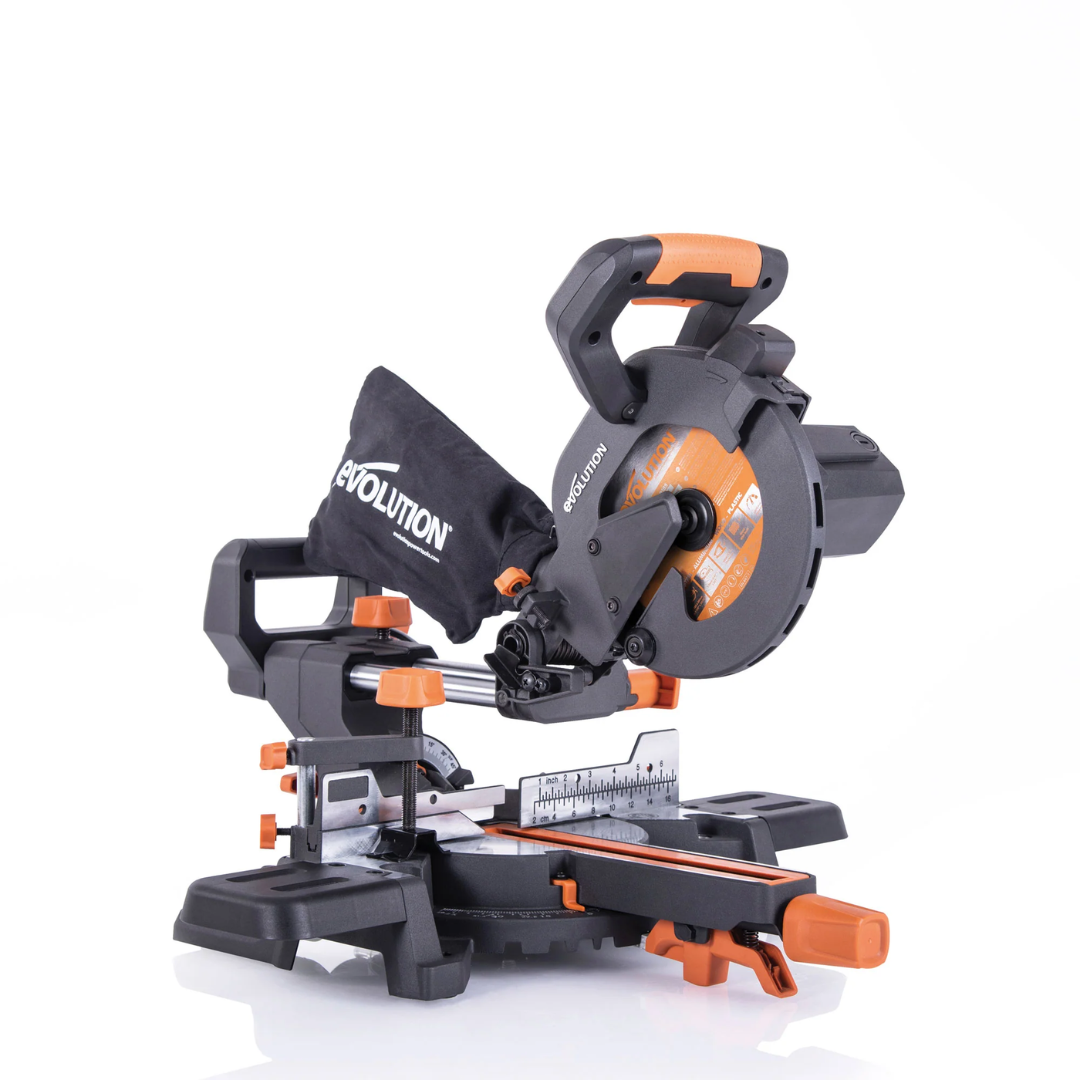
How to Choose a Miter Saw: The Complete Miter Saw Buying Guide
Knowing how to choose a miter saw is one of the most valuable skills a woodworker, finish carpenter, or contractor can develop. The right saw transforms the speed and accuracy of every trim, molding, and framing job you take on. This complete miter saw buying guide covers everything from types and blade sizes to motor specs, cutting capacity, and feature comparisons — giving you a clear framework for how to pick a miter saw that matches your actual work. Browse our full selection of miter saws at Iron Line Tools or read on for the full breakdown.

Quick Answer
A miter saw is a power saw that pivots on a horizontal axis to make precise crosscuts, miter cuts, bevel cuts, and compound cuts in wood and other materials. When choosing a miter saw, the main factors are blade size (7¼", 10", or 12"), motor amperage (10–15 Amp), cutting capacity, and type (basic, compound, sliding compound, or double-bevel sliding compound). For most woodworkers, a 10" sliding compound miter saw with a 15 Amp motor covers the widest range of projects at the best value.
Our pick: Evolution Power Tools Single Bevel Sliding Miter Saw R255SMS+ — $392.97. View more >
In This Guide
Types of Miter Saws
Understanding the four main types of miter saws is the first step in this miter saw guide — each type adds a layer of capability over the previous one, and choosing the right type determines your cutting range before you ever compare blade sizes or motor specs.
Basic Miter Saw
A basic miter saw — sometimes called a chop saw in casual conversation — rotates the blade horizontally on a pivot to cut miter angles (usually 0° to 45° in both directions), but the blade head does not tilt. It makes clean crosscuts and simple miter cuts quickly and at a low price point. Because it cannot cut bevels, it is limited to flat and square-edged material. For pure crosscutting of framing lumber or trim at 90° or 45°, a basic miter saw does the job without the extra complexity of a compound model.
Compound Miter Saw
A compound miter saw adds the ability to tilt the blade head left (single bevel) or both left and right (double bevel), enabling bevel cuts alongside miter cuts. This combination unlocks compound cuts — cuts that angle in two planes simultaneously — which are essential for crown molding, stair railings, and angled picture-frame trim. A single-bevel compound miter saw requires flipping the workpiece to cut opposing bevels; a double-bevel model skips that step, saving significant time on production runs.
Sliding Compound Miter Saw
A sliding compound miter saw adds a sliding carriage that extends the crosscut capacity well beyond what the blade diameter alone allows. The sliding rail system means a 10" blade can crosscut stock that would otherwise need a 12" blade, making sliding models a popular choice for cutting wide boards, 4×4 posts, and dimensional lumber. The Evolution R255SMS+ offers 11¾" of sliding crosscut capacity from a 10" blade — a significant advantage for shop work and wide-board furniture projects.
Double-Bevel Sliding Compound Miter Saw
The most capable type, a double-bevel sliding compound miter saw combines all features: mitering, beveling in both directions, and a sliding carriage. It is the preferred choice for cabinet shops, production finish carpenters, and anyone cutting large volumes of crown molding. It costs more and occupies more bench space, but it eliminates the need to flip workpieces for opposing bevel angles and maximizes overall cutting versatility.

Key Miter Saw Features to Consider
Once you've settled on the saw type, the following miter saw features separate an adequate purchase from a great one. Each factor should map to how you actually work, not just the most impressive spec on the box.
Blade Size
Miter saw sizes are defined by blade diameter. The three common miter saw sizes are 7¼", 10", and 12". This is a core decision in any miter saw buying guide:
- 7¼" (small miter saw): Lightweight, portable, and best suited for trim, molding, and light framing. The Evolution R185SMS+ ($273.63) uses a 7¼" TCT blade with an 8¼" × 2¼" sliding capacity — powerful for its compact footprint.
- 10" (most popular): The best all-round choice for most woodworkers. With a sliding carriage, a 10" saw can cut material that only a 12" non-sliding saw could handle otherwise. Blades are widely available and typically less expensive than 12" options.
- 12" (maximum capacity): The top choice for large crown molding, thick posts, and wide boards, but heavier, pricier, and blade selection is more limited. Only necessary when you regularly cut material a 10" sliding model cannot handle.

Motor Power (Amps)
Motor power in corded miter saws is measured in amps, typically ranging from 10 Amp (lighter-duty and portable models) to 15 Amp (professional grade). Higher amperage delivers more torque for dense hardwoods, thick stock, and multi-material cuts. For regular woodworking and finish carpentry — cutting trim, molding, and dimensional lumber — a 10 Amp motor handles the full workload. For production cutting of hardwood furniture parts, 4×4 posts, or multi-material applications involving steel and aluminum, 15 Amp is the right call. Cordless miter saws trade some peak torque for the portability of battery power; look for brushless motor models for maximum efficiency and runtime.
Cutting Capacity
Cutting capacity describes the maximum width, height, and angle the saw handles in a single pass. On non-sliding saws, this is limited strictly by blade diameter. On sliding models, the carriage extends the crosscut width significantly — for example, the 10" Evolution R255SMS+ reaches 11¾" with its sliding carriage. When asking "what miter saw to buy," always check the actual crosscut capacity in inches against your widest workpiece, not just the blade diameter.

Miter and Bevel Range
Standard miter saws pivot left and right to 45°, with positive stops at 0°, 15°, 22.5°, 30°, and 45°. Higher-end models extend to 50° or more in both directions, which is useful for wide baseboard angles on picture frames or non-standard polygon work. The bevel range on compound models is typically 0°–45° left (single bevel) or 0°–45° left and right (double bevel). Check that the positive stops match the angles you use most — snapping into a confirmed 45° without measuring saves time and reduces setup error on high-volume production cutting.

Laser Guide
A built-in laser guide projects a cut-line reference onto the workpiece, reducing the need for pencil marks and making repeat cuts faster and more accurate. Both Evolution miter saws at Iron Line Tools include a laser guide that projects the cut line onto the workpiece. For trim carpenters who make dozens of repeated cuts per day, a laser guide is a worthwhile feature — it speeds up layout and reduces the chance of a costly cut on expensive hardwood trim.
Miter Saw Size and Spec Comparison
The table below is a quick-reference comparison of the two Evolution sliding compound miter saws and the Evolution R355CPS chop saw available at Iron Line Tools — a direct side-by-side for anyone deciding between miter saw sizes or power levels.
| Spec | R185SMS+ | R255SMS+ | R355CPS |
|---|---|---|---|
| Blade Size | 7¼" | 10" | 14" |
| Motor | 10 Amp | 15 Amp | 15 Amp |
| Max Crosscut | 8¼" × 2¼" | 11¾" × 3 9/16" | 4¾" × 4¾" (square stock) |
| Max Bevel | 0°–45° Left | 0°–45° Left | N/A (chop saw) |
| Miter Range | 50° L / 50° R | 50° L / 50° R | 0°–45° (rear fence) |
| Positive Stops | 9 stops | 0°, 15°, 22.5°, 30°, 45° | 3-position rear fence |
| Blade Type | TCT Multi-Material | TCT Multi-Material | TCT Multi-Material (36 teeth) |
| Speed | 3,700 RPM | 2,500 RPM | 1,450 RPM |
| Weight | 19.7 lbs | 33.7 lbs | 47.4 lbs |
| Warranty | 3 years | 3 years | 3 years |
| Price | $273.63 | $392.97 | $431.98 |
| Best For | Trim, molding, jobsite portability | Shop work, wide boards, 4×4 posts | Steel tube, angle iron, metal shop cuts |
Top Miter Saw Picks
These are the top picks at Iron Line Tools. The first two are Evolution single-bevel sliding compound miter saws with TCT multi-material blades, laser guides, and 50° dual-direction miter capability, ready for wood, steel, aluminum, plastics, and composite materials with a single blade and no blade changes. The third is Evolution's 14-inch multi-material chop saw, for shops that cut mostly steel and aluminum.
1. Evolution Power Tools Single Bevel Sliding Miter Saw R255SMS+ — $392.97
The R255SMS+ is the flagship pick for professional woodworkers, finish carpenters, and production shops that need maximum crosscut capacity from a 10" platform. Its 15 Amp hi-torque motor drives the 28-tooth Japanese TCT blade through hardwood, engineered lumber, and mild steel without blade changes. The 11¾" sliding carriage handles 4×4 posts in a single pass, and the laser guide makes repeat cuts fast and accurate. Positive miter stops at 0°, 15°, 22.5°, 30°, and 45° snap into place for high-volume cutting. At 33.7 lbs, it is still portable enough to move around the shop or a jobsite. The 3-year warranty rounds out a compelling package for anyone choosing a miter saw for serious shop use. View more >
2. Evolution Power Tools Single Bevel Sliding Miter Saw R185SMS+ — $273.63
The R185SMS+ is the right answer for contractors, finish carpenters, and mobile woodworkers who need a compact, lightweight sliding saw they can carry between jobsites. Under 20 lbs and fitted with the same multi-material TCT blade, laser guidance, and 50° dual-direction miter capability as larger models, this 7¼" sliding miter saw punches well above its weight class. The 10 Amp motor handles trim, molding, cabinet-frame parts, PVC, aluminum threshold, and mild steel rebar with ease. Nine positive miter stops and an integrated carry handle make both setups and moves fast. For anyone asking "what miter saw to buy" with portability as the top priority, the R185SMS+ is the right tool. View more >
3. Evolution Power Tools Multi-Material Cutting Chop Saw With 14 in. Blade R355CPS — $431.98
The R355CPS is the pick when most of your work is steel and aluminum rather than wood trim. It pairs a 15 Amp motor with a 14-inch, 36-tooth TCT multi-material blade turning at 1,450 RPM, a fast-action vise with a V-block, and an adjustable three-position rear fence that miters from 0° to 45°. Capacity is 4¾" × 4¾" for square stock, 3¾" × 7⅛" for rectangular stock, and 5⅛" for round tube. Evolution says it cuts with virtually no heat, sparks, or burrs, so parts are ready to weld right away. It is a chop saw, not a sliding compound miter saw: its specs list square and mitered cuts only, with no bevel or sliding carriage. At 47.4 lbs it belongs on a bench or stand, and it is backed by a 3-year warranty. View more >
Watch: Miter Saw Basics and Buying Tips
How to Choose the Right Miter Saw for Your Work
Choosing a miter saw comes down to matching the tool's capabilities to your specific workload. Here is a practical breakdown for how to pick a miter saw based on common use cases.
For Finish Carpentry and Trim Work
Trim carpenters need clean, splinter-free cuts at precise angles. A 10" sliding compound miter saw with a fine-tooth blade (at least 60T for trim) is the professional standard. The laser guide and positive stops are more valuable here than raw motor power — accuracy and repeatability matter more than brute speed. The R255SMS+ handles hardwood and MDF trim without tearout and laser-guides every cut from setup to finish.
For Framing and Construction
Framing puts a premium on speed and cutting capacity over fine finish quality. A 12" sliding compound miter saw gives you the most crosscut width and cut height for wide header material and large posts. For framing with dimensional lumber — 2×4 through 2×8 — a 10" sliding model at 15 Amp is more than adequate and significantly more portable. If you work on a jobsite where moving the saw between locations is daily routine, the R185SMS+'s 20-lb weight and integrated carry handle give you a real advantage over heavier full-size models.
For Multi-Material Cutting (Wood and Steel)
Traditional miter saws require a blade change to move between wood and steel — a time-consuming swap that interrupts workflow. Evolution's multi-material cutting technology removes that step: the same TCT blade cuts hardwood, mild steel, aluminum, plastics, and composite materials without a blade change, and Evolution says it cuts mild steel with virtually no heat, burrs, or sparks. For shops and jobsites that work across materials — wood framing alongside metal studs, wood trim meeting aluminum threshold — the R255SMS+ and R185SMS+ remove the blade-swap delay. If most of your cuts are metal, the R355CPS chop saw applies the same idea to a 14-inch blade.

What Size Miter Saw to Cut a 2×6
A standard 2×6 is dressed to 1½" × 5½" and can be crosscut on any miter saw, including a compact 7¼" basic model. For miter cuts at 45°, the effective width narrows — but a 7¼" or 10" saw still handles a 2×6 easily. The critical sizing question comes up with thick posts: a 4×4 is dressed to 3½" × 3½", so the saw must cut at least 3½" high as well as 3½" wide. The R255SMS+ cuts 11¾" wide by 3 9/16" high, enough for a single-pass 4×4 cut, while the R185SMS+ cuts 2¼" high and needs two passes. What size miter saw to buy ultimately depends on the thickest and widest piece you will regularly cut — not just common 2×6 framing stock.

Miter Saw vs. Chop Saw: What’s the Difference?
The terms "miter saw" and "chop saw" are often used interchangeably, but they refer to fundamentally different tools. A chop saw — technically an abrasive cutoff saw — typically uses an abrasive disc to cut metal or masonry, with no miter angle adjustment. It chops straight down at 90° only. A miter saw, by contrast, pivots to cut angles in wood and finished materials and uses a toothed carbide blade rather than an abrasive disc.
When people discuss chop saw sizes, they are usually referring to abrasive disc diameter (most commonly 14"), while miter saw sizes refer to toothed blade diameter (7¼", 10", 12"). The two tools serve different industries: chop saws are metalworking tools, while miter saws are woodworking and finish carpentry tools. Evolution's multi-material TCT saws occupy a middle ground — they cut both wood and steel with a single toothed blade and no abrasive disc, with virtually no sparks or burrs on mild steel, blurring the traditional line between the two tool categories. The Evolution R355CPS is the chop-saw version: a 14-inch TCT multi-material blade, a fast-action vise, and a rear fence that miters from 0° to 45°, built for steel tube and angle iron rather than bevel cuts or wide sliding crosscuts.
Do I Need a Miter Saw?
The answer depends on your project type and cutting frequency. A circular saw with a fence or jig can make crosscuts, but it lacks the precision, speed, and repeatability of a dedicated miter saw. If you regularly work with any of the following, a miter saw is worth the investment:
- Trim and molding: A miter saw is essentially mandatory. Freehand trim cuts on a circular saw are inconsistent and time-consuming — small angle errors compound across a room.
- Framing and rough carpentry: A miter saw speeds up the work significantly, though a circular saw can substitute in a pinch for simple crosscuts.
- Flooring installation: A miter saw makes the crosscuts and angle cuts that installation requires faster and more accurate than any other method.
- Cabinet and furniture making: The precision a miter saw delivers for frame parts and panel edges is essential for square, tight-fitting assemblies.
- Occasional DIY projects: A compact 7¼" model like the R185SMS+ provides professional results without the footprint or price of a full 12" shop saw — a reasonable entry point for homeowners.
Miter Saw Safety Tips
Miter saws are powerful tools that demand consistent safe habits on every cut. These miter saw features and practices keep the saw accurate and the operator safe:
- Clamp the workpiece: Never hold stock freehand against the fence. Use the included hold-down clamp or a dedicated miter saw clamp for every cut, particularly on short or narrow pieces.
- Wear eye and hearing protection: Miter saws produce fine dust and significant noise: the Evolution R185SMS+ and R255SMS+ are rated at 91.9 and 95.8 dB(A) sound pressure. For reference, OSHA's permissible exposure limit for noise is 90 dBA over an 8-hour day. Wear safety glasses and hearing protection on every cut.
- Let the blade reach full speed before cutting: Never push the blade into stock before it has reached operating RPM. Start the cut only after the motor has reached full speed.
- Keep hands at least 6 inches from the blade path: Use the fence, the clamp, and the workpiece stop — not your hands — to position material within the blade's path.
- Keep the blade guard in place: Never remove or defeat the blade guard. OSHA's general machine guarding rule, 29 CFR 1910.212, requires guarding against hazards such as rotating parts and flying chips and sparks. The lower guard should return to the down position automatically after each cut completes.
- Connect dust collection: Use the saw's dust port adaptor with a shop vacuum to maintain clear sightlines and reduce airborne fine dust. Both the R185SMS+ and R255SMS+ include a dust bag and adaptor.
Frequently Asked Questions
What size miter saw do I need to cut a 2×6?
Any miter saw — including a compact 7¼" sliding model — can crosscut a standard 2×6 at 90°. For 45° miter cuts on a 2×6, you still need only a 7¼" or 10" saw. The blade size limits 4×4 posts and larger stock, not typical 2×6 framing lumber. A 10" sliding compound saw handles 2×4 through 4×4 lumber; a 12" model gives you more width and cut height for thicker posts and wider crosscuts.
What is the difference between a miter saw and a compound miter saw?
A basic miter saw only pivots left and right to cut miter angles — the blade does not tilt. A compound miter saw adds the ability to tilt the blade head, enabling bevel cuts and compound cuts (simultaneous miter and bevel in two planes). For crown molding, stair railings, or any angled trim that requires a cut in two planes at once, a compound miter saw is necessary. For simple crosscuts and 45° picture-frame cuts, a basic miter saw is sufficient.
How many amps should a miter saw have?
For general woodworking — trim, molding, and dimensional lumber through 2×8 — a 10 Amp motor is adequate. For production cutting, hardwood furniture work, or regularly cutting 4×4 posts, crown molding, and large timbers, a 15 Amp motor provides noticeably more torque and cutting speed. Evolution designed the R255SMS+'s 15 Amp motor and gearbox to extend motor and blade life in demanding cutting.
What is the difference between a chop saw and a miter saw?
A chop saw uses an abrasive disc to cut metal or masonry at 90° with no angle adjustment. A miter saw uses a toothed carbide blade and pivots left and right — and tilts, on compound models — to cut wood and finished materials at a range of precise angles. The two tools serve different trades. Evolution's multi-material TCT miter saws occupy a unique middle ground, cutting wood and mild steel with the same toothed blade and no abrasive disc — but they remain miter saws, not abrasive chop saws.
Can a miter saw cut a 4×4 post?
Yes, but check the saw's maximum cut height as well as its width. A 4×4 is dressed to 3½" × 3½", so the saw has to cut at least 3½" high. The Evolution R255SMS+ cuts 11¾" wide by 3 9/16" high, enough for a 4×4 in a single pass. The 7¼" R185SMS+ cuts 2¼" high, so it takes two passes, one from each side, to cut through a 4×4, and it finishes the cut cleanly. Before you buy any saw, compare its listed maximum cut height with your thickest post.
What is the best miter saw for a beginner?
For most beginners, a 10" sliding compound miter saw is the most versatile starting point — it covers trim, framing, and furniture-making in one tool. If portability and budget are the top priorities, a 7¼" model like the Evolution R185SMS+ provides a full sliding compound feature set at a lower price and lighter weight. Either way, beginners should prioritize a laser guide and positive miter stops for faster, more accurate setup while learning the tool.
Conclusion
Choosing a miter saw comes down to three questions: what type of cuts you need, how wide your stock is, and how often you move the saw between locations. A 10" sliding compound miter saw covers the vast majority of woodworking, trim, and construction needs. A 7¼" compact sliding model wins when portability is critical. Browse our full selection of miter saws at Iron Line Tools or call our specialists at 888-308-5580 to get a personalized recommendation based on your project and budget.
Explore the category: Power Tools and Power Saws.
Related Reading
Need Help Choosing a Miter Saw?
Our tool specialists will help you match the right miter saw to your project and budget.
Featured Miter Saws


Shop All Miter Saws
Browse our full selection of professional miter saws for woodworking, finish carpentry, and multi-material cutting.
Shop All Miter Saws