

Do You Need a Band Saw? What Band Saws Are Used For and When One Is Worth It
If you're asking yourself "do I need a band saw?" — the honest answer is: probably yes. A band saw is one of those tools that many woodworkers regret not buying sooner. Whether you work with hardwoods, build furniture, do production work, or want more versatility in your shop, this guide covers exactly what band saws are used for and when investing in one makes sense. Questions? Call us at 888-308-5580.
Quick Answer
A band saw is worth buying if you regularly resaw lumber, cut curves, work with thick hardwood, or build furniture and cabinets. You can likely skip one if your work is limited to basic crosscuts, sheet goods, and dimensional lumber that rarely needs resawing or curved profiles.
In This Guide
- What Are Band Saws Used For?
- Do You Really Need a Band Saw?
- Types of Work That Demand a Band Saw
- Band Saws We Recommend
- Band Saw vs. Other Woodworking Tools
- First Woodworking Band Saws Compared
- Our Picks for a First Woodworking Band Saw
- How to Choose Your First Band Saw
- Frequently Asked Questions
- Conclusion
Featured Band Saws

RIKON
RIKON 10-342EVS 18" Bandsaw - 2.5HP Electronic Variable Speed
$3,499.99
RIKON's 10-342EVS is an 18 inch wood and metal saw with a 2.5 HP motor and electronic variable speed. It is a lot of saw for a first purchase, so it suits shops that already know a band saw will earn its place. Check floor space and power first.

Castaly
$98,890.00
Production-minded buyers will notice the Castaly Auto Copy Band Saw, an automated saw for repeat cutting. If your reason for owning a band saw is volume work, it deserves a look. Our team can talk through capacity and setup with you.

Ellis Saw
Ellis 1600 Mitre Band Saw – Horizontal & Vertical Metal Cutting, 10″ Capacity
$5,299.00
Horizontal and vertical metal cutting come together in this 1600 mitre band saw from Ellis, which has a 10 inch capacity. Consider it if your shop will cut metal as well as wood. Check the 10 inch capacity against your largest section.

Ellis Saw
Ellis 3000 Mitre Band Saw - 13-1/2" Round Capacity, 2 HP, Variable Speed Shorter (still strong)
$6,795.00
With a 13-1/2 inch round capacity, a 2 HP motor and variable speed, this Ellis mitre band saw is a heavy-duty step beyond a first woodworking machine. It fits shops cutting thick stock for customers. Ask our team if you are unsure you need this much saw.
What Are Band Saws Used For?
A band saw is a versatile cutting tool that uses a continuous loop blade to make smooth, controlled cuts through wood, metal, and other materials. Here's what woodworkers use them for every day:

- Resawing: Slicing thick boards into thinner stock or bookmatched veneers — one of the most popular uses in furniture and cabinet shops.
- Ripping: Making straight cuts parallel to the grain with less risk of kickback than a table saw.
- Curved Cuts: Creating curved profiles for chair legs, cabriole legs, decorative brackets, and free-form shapes impossible on a table saw.
- Joinery: Cutting tenons, half-laps, and bridle joints with precision and efficiency.
- Pattern Work: With an auto copy band saw like the Castaly Auto Copy Band Saw, shops can reproduce identical curved parts automatically from a template.
- Metal Cutting: With the right blade, a band saw cuts aluminum, steel, and other metals. See our metal band saws for dedicated metal-cutting machines.

Do You Really Need a Band Saw?
The question isn't whether a band saw is useful — it clearly is. The real question is whether your work justifies the investment. Here's a simple way to decide:

- You need a band saw if: You regularly resaw lumber, cut curves, work with thick hardwood stock, build furniture or cabinets, or want a safer alternative to a table saw for ripping.
- You might be fine without one if: Your work is limited to basic crosscuts, sheet goods, and dimensional lumber that rarely needs resawing or curved profiles.
- For production shops: If you produce furniture legs, cabinet parts, or any repeated curved shapes, a band saw — especially an auto copy model — will pay for itself quickly in labor savings.

Many professional woodworkers describe the band saw as their single most valuable shop tool for ripping hardwood. Once you experience how much easier resawing becomes, it's hard to go back. Explore our wood band saws to see what fits your budget and space.

Types of Work That Demand a Band Saw
Certain woodworking tasks genuinely require a band saw — no other tool does them as well:
- Resawing wide boards: The only practical tool for slicing 8"-12" wide boards into thin sheets for veneers and bookmatched panels.
- Making bookmatched panels: Resaw a board in half and open it like a book to reveal a mirrored grain pattern — a signature technique in fine furniture.
- Cutting irregular shapes: The thin blade follows complex curves that no other stationary tool handles.
- Working green wood: Band saws excel at ripping green (unseasoned) lumber because the blade doesn't catch or bind the way a table saw does.
- Production curved parts: Furniture factories rely on auto copy band saws to produce identical curved components efficiently.

Band Saws We Recommend
If you decide a band saw is worth buying, these are the four models we recommend for a first purchase, from a compact 10 inch saw to a 14 inch deluxe:
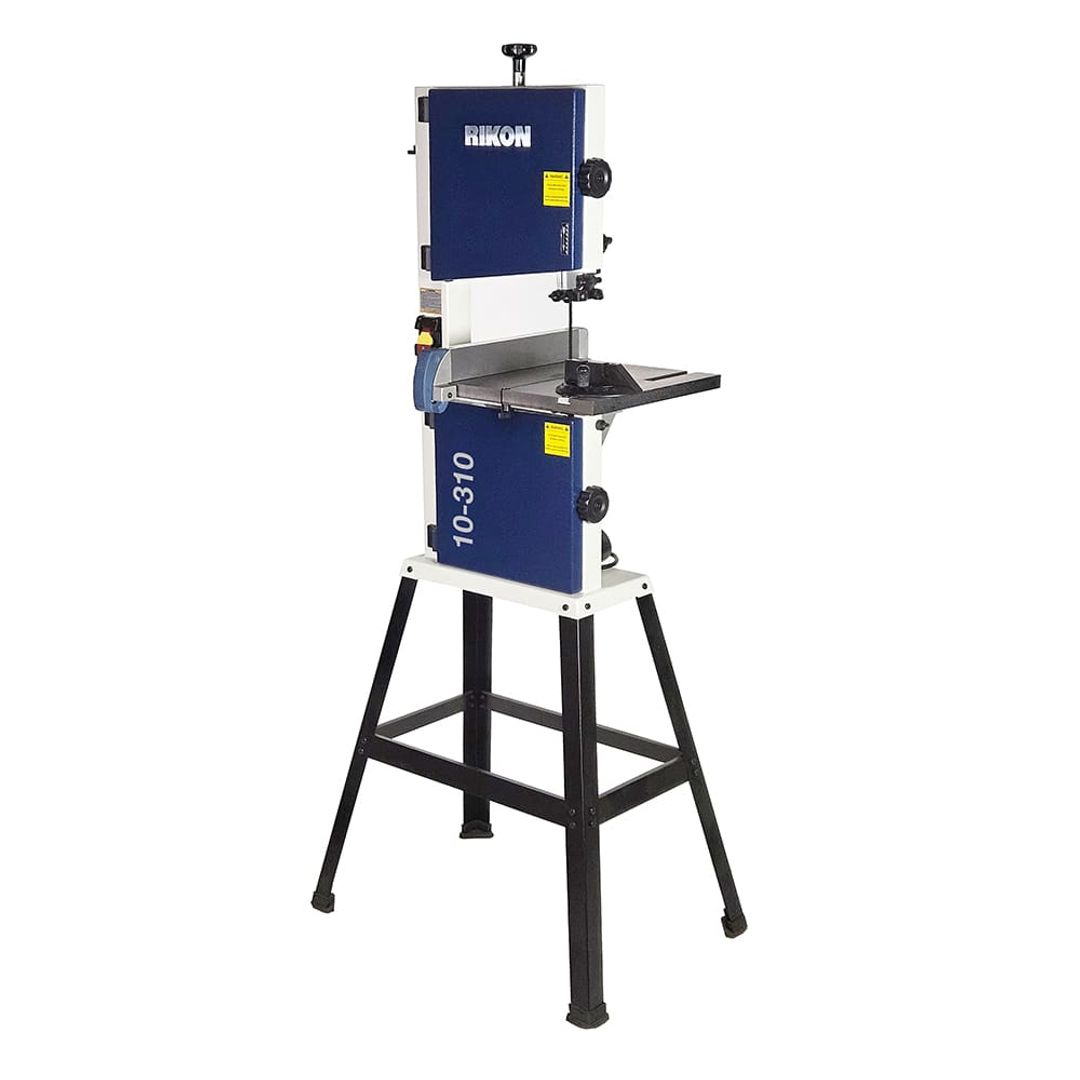
- RIKON 10-310 10" Bandsaw with stand and miter gauge — A compact 10 inch saw for beginners and hobbyists with limited space, with a tilting table that goes from 0 to 45 degrees and tool-less blade guides.
- RIKON 10-3062S 10" 2 Speed Deluxe Bandsaw with Stand, and SP coated table — A good fit for smaller projects, with a 1/2 HP motor, two blade speeds and a 10 inch frame that comes with its own stand.
- RIKON 10-324TG 14" Bandsaw 1.50 HP Motor with Tool-Less Guides — A step up to a 14 inch saw with a 1-1/2 HP motor for furniture makers who cut hardwood often, with large adjustment handles that keep setup simple.
- RIKON 10-1414 14" 2 Speed Deluxe Bandsaw — The pick when you want room to grow: a two-speed 14 inch deluxe saw with an SP coated table that protects against corrosion and reduces friction.

Browse our complete band saw collection or call 888-308-5580 for expert guidance.

Band Saw vs. Other Woodworking Tools
- Band Saw vs. Table Saw: Both rip and crosscut, but the band saw is safer (no kickback), handles curves, and excels at resawing. Many pros use both.
- Band Saw vs. Jigsaw: A jigsaw is portable but less precise. A band saw delivers much smoother, more consistent curved cuts and handles thicker stock.
- Band Saw vs. Scroll Saw: A scroll saw is purpose-built for intricate decorative cuts in thin material. A band saw handles thicker stock and broader cuts. See our full comparison: Scroll Saw vs. Band Saw.

First Woodworking Band Saws Compared
Wondering which first band saw fits? The table below lines up the models from our store that the picks cover. Look at the frame size in the Key feature column first, since it sets how much work the saw can take on.
| Model | Price | Key feature | Best for |
|---|---|---|---|
| RIKON 10-310 10" Bandsaw with stand and miter gauge | $449.99 | Tool-less blade guides on a 10 inch saw with a stand | Beginners who do not need large cutting capacity |
| RIKON 10-3062S 10" 2 Speed Deluxe Bandsaw with Stand, and SP coated table | $649.99 | 1/2 HP motor, 2 blade speeds and an SP coated table | Smaller projects where a compact saw is enough |
| RIKON 10-324TG 14" Bandsaw 1.50 HP Motor with Tool-Less Guides | $1,199.99 | Large adjustment handles and a high work table height | Furniture makers who cut hardwood regularly |
| RIKON 10-1414 14" 2 Speed Deluxe Bandsaw | $1,699.99 | SP coated table that resists corrosion and reduces friction | Woodworkers planning to outgrow a smaller first saw |
Match the frame size and motor in the Key feature column to the work you expect to do, then choose the smallest saw that still covers your hardwood and curve cutting.
Our Picks for a First Woodworking Band Saw
If this guide convinced you a band saw earns its place, these models from our store cover the work it described. Think about your thickest stock and your floor space before choosing.
1. RIKON 10-310 10" Bandsaw with stand and miter gauge — $449.99
Sized for beginners and hobbyists with limited space, this 10 inch saw has a tilting table that goes from 0 to 45 degrees and tool-less blade guides. View more >
2. RIKON 10-3062S 10" 2 Speed Deluxe Bandsaw with Stand, and SP coated table — $649.99
Good for smaller projects, with a 1/2 HP motor, two blade speeds and a 10 inch frame that comes with its own stand. View more >
3. RIKON 10-324TG 14" Bandsaw 1.50 HP Motor with Tool-Less Guides — $1,199.99
Step up to a 14 inch saw with a 1-1/2 HP motor if you build furniture and expect to cut hardwood often. Large adjustment handles keep setup simple. View more >
4. RIKON 10-1414 14" 2 Speed Deluxe Bandsaw — $1,699.99
Consider this when you want room to grow, since it is a two-speed 14 inch deluxe saw with an SP coated table that protects against corrosion and reduces friction. View more >
How to Choose Your First Band Saw
- Throat Depth: 14" is the standard recommendation for woodworking — handles most furniture and cabinet work.
- Resaw Height: Match this to the widest boards you plan to resaw. Look for at least 6" for typical shop use.
- Motor Power: 1 HP for light-duty use; 1.5 to 2 HP for regular hardwood work; 3+ HP for industrial production.
- Table Quality: A cast iron table is flatter, heavier, and dampens vibration better than aluminum.
- Fence System: A quality fence transforms a band saw into a precise ripping machine for dimensioning stock.

Also read: Best Band Saw For Woodworking: Our Top Picks. For horizontal band saws and portable band saws, we have those covered too.

Frequently Asked Questions
Do I really need a band saw if I already have a table saw?
Yes — a band saw and table saw complement each other rather than replace one another. Your table saw excels at crosscuts, dadoes, and precise dimensioning of sheet goods. Your band saw handles resawing, curved cuts, and safer ripping of thicker irregular stock. Most serious woodworkers who own both report that the band saw gets used more frequently over time, especially once they discover how much easier resawing and curved work becomes.
What are band saws most commonly used for?
The most common uses are resawing lumber into thinner stock, cutting curved profiles for furniture parts, and ripping boards. In production shops, band saws — especially auto copy models like the Castaly Auto Copy Band Saw — cut identical curved parts for chair legs, cabinet doors, and decorative elements. Explore our full range at ironlinetools.com/collections/band-saws.
Can a beginner use a band saw?
Absolutely. Band saws are considered one of the safest stationary woodworking tools. Unlike table saws, band saws have virtually no kickback risk because the blade pulls material downward. Start with an entry-level machine like the RIKON 10-310 10" Bandsaw, set up your blade tension and guides correctly, and you'll be cutting with confidence quickly. OSHA's woodworking guidance adds that the most common band saw injury is contact with the blade at the point of operation, so keep the guide set just above the stock.
How much does a good woodworking band saw cost?
Quality woodworking band saws range from a few hundred dollars for entry-level benchtop models to several thousand dollars for professional floor-standing machines. For serious shop use, investing in a mid-range to professional machine pays dividends in accuracy and durability. Call our team at 888-308-5580 to discuss pricing on our current band saw inventory.
What is the difference between a wood band saw and a metal band saw?
Wood band saws run at higher blade speeds and are optimized for cutting solid wood and wood-based composites. Metal band saws run much slower to prevent overheating. Some band saws offer variable speed controls for both wood and metal. See our metal band saws and wood band saws for dedicated options.
Do I need a band saw for resawing?
Yes — for practical resawing of wide boards, a band saw is the tool of choice. A table saw can theoretically resaw narrow stock but risks kickback with thicker material and can't match the gentle, controlled cut of a band saw through wide boards. The RIKON 10-324TG 14" Bandsaw, with a 13" resaw capacity and a 6" tall rip fence with re-saw bar, handles this task for most furniture and cabinet shop applications.
Conclusion
If you build furniture, cut curves or work with hardwoods, a band saw is a tool you will probably wish you had bought sooner, and a first one is easier to choose once you know the work it will do. Ready to compare models? Browse our band saws at Iron Line Tools.
Related collections: Stationary Band Saws and Bandsaw Blades.
Related Reading
- Scroll Saw vs. Band Saw: Key Differences and Which One Is Right for You
- Cut Off Saw vs Band Saw: Which Is Right for Your Application?
- Band Saw vs Cold Saw: Which Is Right for Metal Cutting?
- How to Choose a Band Saw for Woodworking
- How to Choose the Right Bandsaw Size for Your Needs: Band Saw Size Guide
Featured Band Saws at Iron Line Tools

Ellis 1600 Mitre Band Saw
Price: $5,299 | Type: Mitre Band Saw
If you've decided a band saw is right for your shop, the Ellis 1600 is one of the best entry points into professional-grade cutting. Built for metal and wood alike, it handles curved cuts, resawing, and angle work with equal precision — the kind of versatility that makes a band saw indispensable once you have one.

Castaly Auto Copy Band Saw
Price: $98,890 | Type: Auto Copy Band Saw
For high-volume production shops, the Castaly Auto Copy Band Saw automates repeat copy cutting of shaped panel parts with a variable-speed moving table and an automatic slow-down feed. If your shop produces furniture components, chair legs, or custom profiles at scale, this machine eliminates the guesswork and delivers identical results on every piece.
Is a band saw worth adding to your shop?
Our team can talk through your furniture, hardwood or production work and point you to a first machine.