


In This Guide
- T-Shank vs. U-Shank: The Two Blade Types
- Are Reciprocating Saw Blades Universal?
- What Else Determines Blade Compatibility
- Key Blade Specifications Explained
- Matching Blade to Material
- Tips for Getting the Most From Your Blades
- Blades and Saws for Reciprocating Work Compared
- Blades and Saws for Reciprocating Work
- Frequently Asked Questions
- Conclusion
Featured Reciprocating Saws

CS Unitec
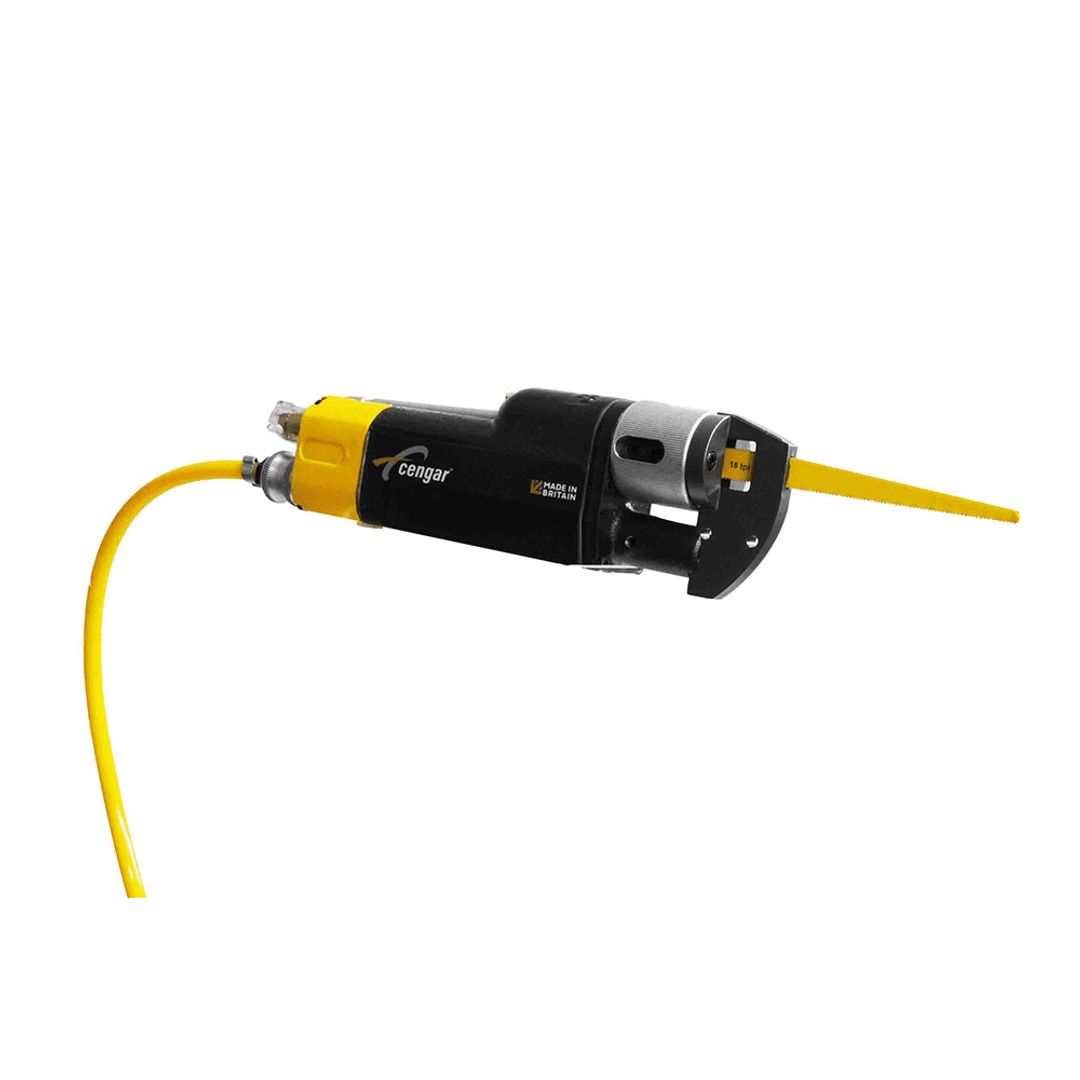
CS Unitec Air Reciprocating Saw – The CHEETAH
$1,785.50
Two blades come with this air-powered CS Unitec saw, so you have a matched pair to start with. For later blade orders, note the length and shank style it uses. That is the compatibility check this guide recommends.

CS Unitec
CS Unitec Hydraulic Reciprocating Saws
$4,068.50
Hydraulic-powered reciprocating saw from CS Unitec. Whatever the power source, blade fit depends on the saw's shank and length, as this guide explains. Ask our team to confirm blade compatibility before ordering.

Evolution Power Tools
Evolution Power Tools Reciprocating Saw with 4 Blades R230RCP
$153.83
Corded reciprocating saw with a 7 Amp motor, 2,800 SPM and a 180 degree rotating handle, built for demolition, remodeling and general cutting. Four blades are included as a starting set. When you reorder, match the shank style and length to this saw.
T-Shank vs. U-Shank: The Two Blade Types
Reciprocating saw blades come in two shank designs that determine which saws they'll physically fit:

| Shank Type | Shape | Compatibility | Status |
|---|---|---|---|
| T-Shank | T-shaped tang at the end of the blade | Fits virtually all modern reciprocating saws | Industry standard since 2000s |
| U-Shank | U-shaped notch at the end of the blade | Fits only older saws with U-shank clamps; requires a set screw to secure | Legacy design, largely discontinued |
The T-shank (also called "universal shank") locks into the blade clamp without a set screw — that's the system that makes tool-free blade changes possible on modern saws. It became the de facto standard because it's faster, more secure, and adopted by all major manufacturers including Milwaukee, Makita, DeWalt, Bosch, and Metabo HPT.

Are Reciprocating Saw Blades Universal?
For modern saws, largely yes — but with important qualifications.
If your saw was made in the last 15 years, it almost certainly uses a T-shank clamp. Any T-shank blade from any brand — Milwaukee, DeWalt, Diablo, Lenox, Bosch, Makita — will physically fit and lock into your saw. Brand doesn't matter for shank compatibility.
However, "fitting" is only the first part of the question. A blade that fits your saw physically may still be:
- Too long for the space you're working in, causing the blade to flex, wander, or bind
- Wrong TPI for the material, producing slow, rough cuts or rapid blade wear
- Wrong material (carbon steel instead of bi-metal) for the application, shortening blade life dramatically
- The wrong blade entirely for the cut — a wood blade on metal, or a pruning blade on drywall
So while T-shank blades are mechanically universal for modern saws, compatibility in the full sense — the right blade for the right job — requires matching blade specs to your application.
Old saw check: If you have an older reciprocating saw that requires a set screw to hold the blade, it uses U-shank blades. You can only use U-shank blades in it. Some manufacturers sell adapters that allow T-shank blades in U-shank clamps, but these add play and reduce cutting accuracy — if you're still using an older U-shank saw, it may be time to consider upgrading.

What Else Determines Blade Compatibility
Shank type gets the blade into the saw. These four factors determine whether the blade does the job correctly:
1. Blade Length
Longer blades (12"+) reach deep cuts and thick material; shorter blades (3–6") are better in tight spaces. Use the shortest blade that fits your cut for better control and less flex.
2. TPI (Teeth Per Inch)
Fewer teeth = faster, rougher cuts in soft material. More teeth = slower, cleaner cuts in hard material. The wrong TPI is the most common blade mistake.
3. Blade Material
Carbon steel: wood only. Bi-metal: wood and metal (including nails). High-speed steel: metal. Carbide-tipped: abrasive materials, cast iron, fiber cement.
4. Material Compatibility
Blades are made for specific materials. A wood blade on steel won't cut well and will dull immediately. Always check the blade's listed materials before installing it.

Key Blade Specifications Explained
| Spec | What It Means | How to Use It |
|---|---|---|
| TPI | Teeth per inch on the blade | Low (3–6) for wood; high (14–18) for metal; mid-range (10–14) for mixed/demo |
| Length | Overall blade length in inches | Match to depth of cut needed; shorter = more control |
| Width | Width of the blade body | Wider = stiffer, straighter cuts; narrower = more flexible for curves |
| Material | What the blade is made of | Carbon steel / bi-metal / HSS / carbide-tipped (see above) |
| Set | How far teeth are offset from the blade body | Wider set = more clearance, less binding; narrow set = cleaner cut, more binding risk in thick stock |

Matching Blade to Material

| Material | Recommended TPI | Blade Type |
|---|---|---|
| Softwood / framing lumber | 3–6 TPI | Wood-cutting bi-metal |
| Nail-embedded wood (demo) | 6–10 TPI | Bi-metal, nail-embedded rated |
| PVC / plastic pipe | 10–14 TPI | Wood or general-purpose bi-metal |
| Copper / steel pipe | 14–18 TPI | Bi-metal or HSS metal cutting |
| Cast iron | 8–14 TPI | Carbide-tipped |
| Tree branches (green wood) | 3–6 TPI | Pruning blade (aggressive tooth set) |
| Fiber cement / hardie board | 6–8 TPI | Carbide-tipped |

Tips for Getting the Most From Your Blades
- Buy sets, not singles. A variety pack of bi-metal blades covers most applications and costs less per blade than buying individually. Having the right blade on hand means you won't cut with the wrong one.

- Replace blades before they're fully dull. A dull blade makes the saw work harder, wears the motor, and produces worse cuts. If you're pushing noticeably harder than when the blade was new, swap it.
- Adjust the shoe to shift where the blade contacts the material. This distributes wear across more of the blade's teeth and extends blade life significantly.

- Slow down for metal. High SPM generates heat in metal cutting, which glazes the blade and shortens its life. Reduce speed and use cutting fluid on harder metals where possible.
- Don't twist the blade. Side pressure and twisting are the most common causes of blade breakage. Keep the cut line straight and let the blade teeth do the work.


Blades and Saws for Reciprocating Work Compared
The blades and saws from our store that the picks cover are lined up below. Start with blade length and tooth count, because they decide whether a blade fits your job.
| Model | Price | Key feature | Best for |
|---|---|---|---|
| CS Unitec Reciprocating Saw Blades | $249.50 | 24 teeth per inch on a blade 8-3/4 inch long | Swapping in a blade for plastic, nonferrous metal or thin steel |
| Evolution Power Tools Reciprocating Saw with 4 Blades R230RCP | $153.83 | Handle rotates 180 degrees on a corded 7 Amp, 2,800 SPM saw | Corded saw work in demolition, remodeling and landscaping |
| CS Unitec Air Reciprocating Saw CS75 | $2,900.00 | Pneumatic saw rated for material up to 3/4 inch thick | Work areas with a compressed air supply for tools |
Match the key feature to the material you cut and the saw you own, then check the use notes to confirm a blade or saw suits your work.
Blades and Saws for Reciprocating Work
Blade compatibility is the focus of this guide, and the blades and saws below tie in with it. Check the shank type, length and tooth count against your saw before you buy.
1. CS Unitec Reciprocating Saw Blades — $249.50
Genuine CS Unitec blades, 8-3/4 inch long with 24 teeth per inch, for thin steel, nonferrous metal and plastic. Length and tooth count are the specs to match. View more >
2. Evolution Power Tools Reciprocating Saw with 4 Blades R230RCP — $153.83
Four blades come with this 7 Amp corded saw, a good way to test blade length and tooth count on real material. Variable speed is listed. View more >
3. CS Unitec Air Reciprocating Saw CS75 — $2,900.00
A carrying case and clamp come with this pneumatic saw, rated for material up to 3/4 inch thick. Worth checking for blade fit before you buy. View more >
Frequently Asked Questions
Are reciprocating saw blades interchangeable between brands?
Yes, for modern saws. All major brands — Milwaukee, DeWalt, Makita, Bosch, Metabo HPT, Ridgid, and others — use the T-shank system, which means a Diablo blade fits a Milwaukee saw and a Milwaukee blade fits a Bosch saw. The shank is standardized. The only exception is very old saws that use the U-shank system, which requires a set screw and isn't compatible with T-shank blades without an adapter.
What is a T-shank reciprocating saw blade?
A T-shank blade has a T-shaped tang (the non-cutting end) that locks into modern quick-release blade clamps without a set screw. It's named for the shape of the shank when viewed from the side. Nearly all reciprocating saw blades sold today are T-shank, and nearly all saws made in the last 15 years accept T-shank blades. It became the universal standard because it enables faster blade changes and a more secure fit than the older U-shank system.
Can I use a jigsaw blade in a reciprocating saw?
No. Jigsaw blades and reciprocating saw blades use different shank designs and are not interchangeable. Jigsaw blades are shorter and thinner, and their shanks don't fit reciprocating saw clamps. Attempting to use one in a recip saw is unsafe. Always use blades designed specifically for reciprocating saws.
How long do reciprocating saw blades last?
It depends heavily on the material being cut and the blade quality. A bi-metal blade cutting clean wood may last for dozens of cuts. The same blade used for nail-embedded demolition lumber may last only a few cuts. Carbide-tipped blades last 2–5x longer than standard bi-metal on abrasive materials. Using the correct blade for each material significantly extends blade life.
What happens if I use the wrong TPI blade?
Too few teeth (low TPI) on metal produces a rough, slow cut and rapid blade wear — the few teeth present take on too much material per stroke and chip or dull quickly. Too many teeth (high TPI) on wood clogs the gullets between teeth with sawdust, slowing the cut and overheating the blade. Matching TPI to material is one of the easiest ways to get better cuts and longer blade life.
Conclusion
Most reciprocating saw blades use a T-shank, but check the shank type, blade specifications and material before you buy so the blade fits both your saw and your job. Compare specs, sizes and prices in our reciprocating saws collection at Iron Line Tools.
Safety and standards references: OSHA hand and power tools standards and OSHA 1910.243 guarding of portable powered tools.
Related Reading
Shop Professional Saws at Iron Line Tools

Castaly 12" Radial Arm Saw RS-612
Price: $4,389 | Type: Radial Arm Saw
A compact, shop-proven radial arm saw for woodworkers who need repeatable crosscuts and precise miter work without the footprint of a full panel saw. The RS-612 sits at the end of your bench and delivers accurate cuts all day long with its durable cast-iron construction.

Maksiwa BMS.1600.IR Sliding Panel Saw
Price: $6,399 | Type: Sliding Panel Saw
The BMS.1600.IR is a high-precision sliding panel saw for shops that need accurate cuts on sheet goods and solid wood. A sliding table handles full panels while the precision fence system delivers repeatable rips and crosscuts on plywood, MDF, and hardwood.
Does a T-shank blade fit every saw?
Unsure whether the specifications and material suit your cutting job? Call us and our team will help you decide.
Also browse: Panel Saws