

Portable Band Saw Uses: What Can a Portaband Cut and Do?
A portable band saw is one of the most versatile cutting tools in professional metal work. But most buyers only scratch the surface of what a portaband can actually do. From pipe and conduit to structural steel, rebar, and hard alloys, portable band saws handle material types and cut positions that no other handheld tool can match. This guide covers every major portable band saw use case. It also covers the materials a portaband cuts best. And it shows how to match the right saw to your trade and application.

Quick Answer
A portable band saw is used to cut metal pipe, conduit, structural steel, rebar, and tubing. It also cuts angle iron, solid bar stock, and a wide range of ferrous and nonferrous metals. It cuts in the field, on the job site, overhead, or in confined spaces where a stationary saw cannot reach. Professional trades that rely on portable band saws include pipefitting, HVAC, plumbing, electrical, structural steel fabrication, demolition, and industrial maintenance.
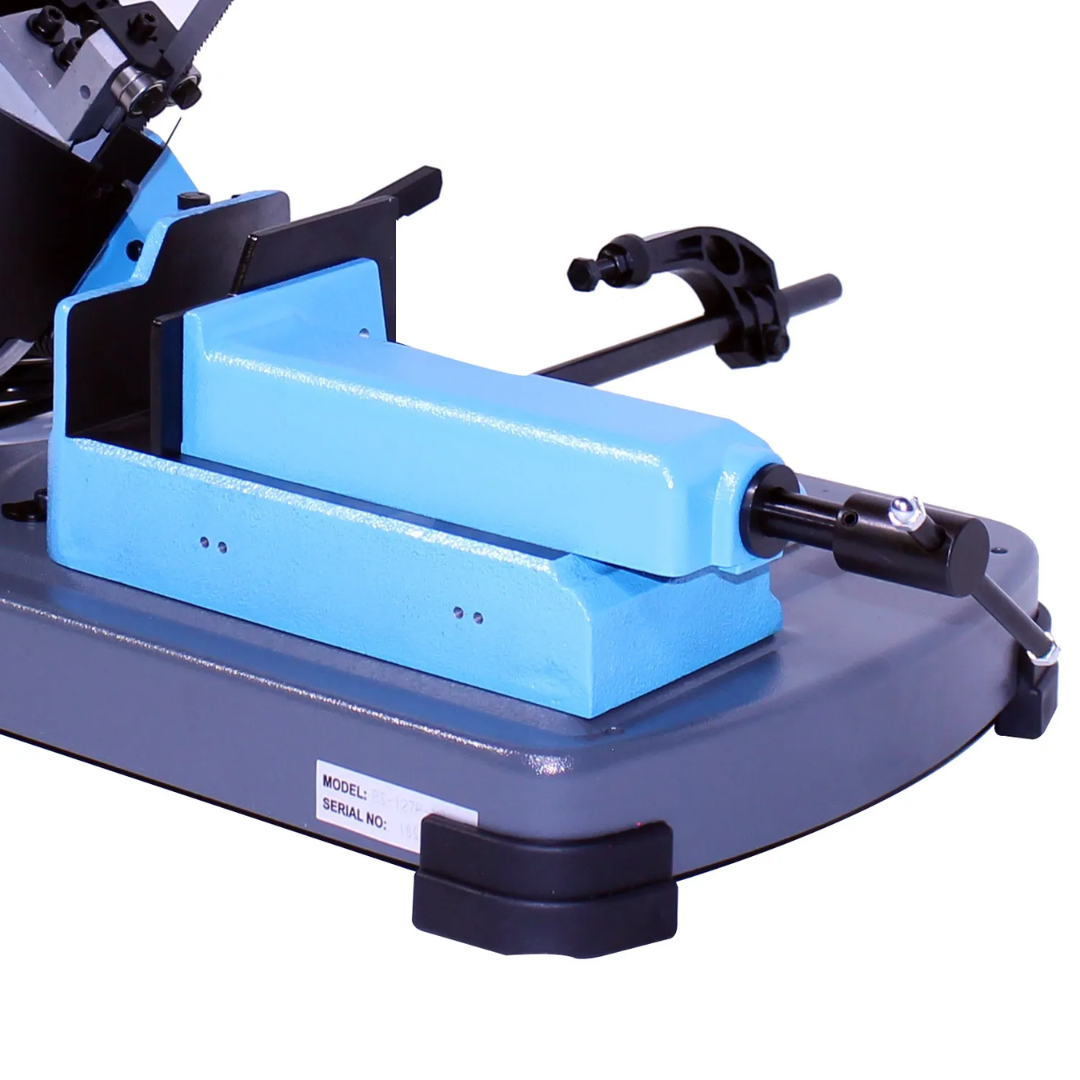
Example model: Baileigh BS-127P Portable Variable-Speed Metal-Cutting Band Saw — $1,087.40. View more >
In This Guide
What Is a Portable Band Saw Used For?
A portable band saw is a handheld or semi-portable cutting tool. It is often called a portaband. It uses a continuous loop bi-metal or carbide-tipped blade to make straight cuts through metal and other hard materials. Unlike an angle grinder or abrasive cutoff saw, a portable band saw cuts by tooth geometry rather than by abrasion. This produces a clean, burr-minimal kerf with dramatically less heat, noise, and spark output.
The core purpose of a portable band saw is to bring precise, production-quality metal cutting capability to locations where a stationary machine cannot go. This is what separates the portaband from every other handheld cutting tool. It delivers the cut quality and repeatability of a shop band saw. You can carry it to the material, position it overhead, or use it inside a ceiling cavity. You can also operate it in a space so tight that swinging an angle grinder is impractical or dangerous.
Portable band saw uses fall into five broad categories:
- Cutting to length: Sizing pipe, conduit, tube, strut, and bar stock to a measured dimension. This happens on the job site rather than in a shop.
- Miter and angle cuts: Making angled cuts on structural steel and pipe for welded connections, frameworks, and fitting assemblies. This is done without returning material to a shop.
- Confined-space and overhead cutting: Accessing pipe runs, conduit, and structural members. This happens in mechanical rooms, ceiling cavities, crawlspaces, and overhead positions.
- Demolition and removal: Cutting through fasteners, anchors, pipe, rebar, and structural elements. This is done during renovation, demolition, or emergency access work.
- Field maintenance and repair: Sizing replacement parts, cutting shafts and fasteners, and modifying existing metalwork in the field. This is done without transporting components to a machine shop.

Portable Band Saw Uses by Trade
Understanding portable band saw applications by trade helps you find the model and capacity level that match your specific work. Every major construction and fabrication trade has its own portaband use case. The priorities in each trade differ a lot. The right saw for an HVAC tech differs from the right saw for a structural steel fabricator.
Metal Fabrication and Structural Steel Work
Fabrication shops and structural steel contractors use portable band saws for sizing raw stock before it goes to a welding station. They also use them for in-position cuts on assemblies. These assemblies are too large or already tacked together to bring to a stationary machine. And they use them for miter cuts on tube, pipe, and structural members at precise angles. In this trade, a portaband with a wide speed range and an adjustable miter head is the most valuable tool on the floor. This holds for cuts that fall outside a stationary saw's reach or positioning capability.
Structural steel fabricators frequently run portable band saws on square tube, rectangular tube, I-beam, channel, angle iron, and solid round and square bar. The saw can cut in horizontal (gravity-fed) or vertical (freehand) orientation. This makes it productive in both production-line setups and one-off custom fabrication work. High-capacity portabands with hydraulic blade descent control are the standard in production fab shops. Examples are the Baileigh BS-128M and BS-10VS. In these shops, cut quality and repeatability over hundreds of pieces per shift matter.
Plumbing and Pipefitting
Pipe cutting is the original use case for portable band saws. Pipefitting remains one of the heaviest-use trades for portabands today. Pipefitters use portable band saws to cut carbon steel pipe, stainless steel pipe, and pipe schedule varieties that copper pipe cutters and hacksaws cannot handle at speed. A bi-metal portaband blade makes a clean, square cut. This cut is also better suited for weld preparation than the compressed edge left by an abrasive wheel. That means less grinding and deburring time before the pipe goes to the welder.
Field pipefitting work often happens in confined spaces around existing pipe runs, below grade, or in overhead positions inside mechanical systems. The portaband's compact geometry and the absence of spark or abrasive debris make it the correct tool for these environments. This is particularly true where abrasives are prohibited near finished surfaces, live electrical, or flammable materials.
HVAC and Sheet Metal Work
HVAC contractors use portable band saws for cutting metal pipe and conduit that serves ductwork support systems, refrigerant lines, and gas lines. These are all applications where flame and spark from an angle grinder create unnecessary risk in occupied or partially occupied structures. A portaband cuts cleanly and quietly enough to use in finished commercial spaces. In those spaces, other cutting tools would leave debris, burn marks, or noise complaints. HVAC use cases typically involve lighter-wall pipe and EMT conduit. In these cases, a compact variable-speed portaband handles the work with minimal setup time.
Electrical Work (Conduit and EMT)
Electricians use portable band saws primarily for cutting electrical metallic tubing (EMT), intermediate metal conduit (IMC), and rigid metal conduit (RMC). They do this during electrical rough-in. The portaband produces a square, clean end on conduit. This end needs minimal deburring before threading or fitting. That is faster and more consistent than the slight angle and compression a conduit cutter produces. For large-diameter rigid conduit that a standard conduit cutter cannot handle, the portaband is the tool of choice. Electricians working in commercial and industrial environments benefit from the portaband's no-setup, pick-up-and-cut convenience. This is true where conduit runs are dense and cutting locations change frequently.
Demolition and Deconstruction
Demolition contractors and renovation crews use portable band saws during removal work. They cut through structural bolts, rebar, threaded rod, anchors, and existing pipe and conduit. In selective demolition, the goal is to cut material cleanly at a specific location without damaging adjacent structure. Here, a portaband offers a level of control that a reciprocating saw cannot match. The portaband blade also outlasts reciprocating saw blades dramatically in dense steel demolition cutting. This makes it more economical for sustained demolition work on steel-heavy structures.
Field Maintenance and Industrial Repair
Industrial maintenance crews, millwrights, and plant maintenance teams use portable band saws. They size replacement shafts, cut keystock, size fasteners, and modify existing metalwork. They do this without pulling components off-line and transporting them to a machine shop. In a plant environment, downtime costs money. So the portaband's ability to make precision cuts in place is a direct productivity and cost advantage. This includes cuts on installed equipment, inside machinery frames, or on structural members. A good-quality portaband with variable speed handles everything from stainless steel food-processing components to carbon steel structural members in the same tool.

What Can a Portable Band Saw Cut?
A professional portable band saw with a bi-metal or carbide-tipped blade can cut a wide range of ferrous metals, nonferrous metals, and some non-metallic materials. Material type determines the correct blade pitch (TPI, teeth per inch) and blade speed (SFPM, surface feet per minute). That is why a variable-speed portaband handles a broader range of materials more effectively than a fixed-speed tool.
Shopping for portable band saws? See the full selection or call 888-308-5580.
Shop Portable Band SawsMetal Pipe and Tubing
Cutting metal pipe and tubing is the primary use case for most portable band saw work. A portaband handles schedule 40 and schedule 80 carbon steel pipe, stainless steel pipe in all common schedules, copper pipe and tubing, aluminum tube, and thin-wall mechanical tubing. It cuts these cleanly across the full diameter range the saw's throat can accommodate. Round tube is the portaband's natural cut geometry. The blade enters and exits the wall cleanly, without the interrupted-cut dynamics that slow blade life on solid material.
Structural Steel: Angle Iron, Channel, I-Beam, Square Tube
Structural steel sections are a major portable band saw use case in fabrication and construction. Angle iron, C-channel, structural I-beam and wide-flange, square and rectangular hollow structural sections (HSS tube), and plate are all within the cutting range of professional portabands with adequate throat depth and blade capacity. Larger sections — 4"+ wide-flange or heavy-wall HSS — are the domain of full-capacity portabands like the Ellis 1600 (10" horizontal capacity) and the Baileigh BS-10VS, rather than lighter-duty portabands whose motors will struggle on dense, large-section cuts.
Rebar and Threaded Rod
Rebar and threaded rod are common portable band saw cuts in construction and concrete work. A portaband cuts rebar cleanly and quickly across all standard sizes (#3 through #8 and larger). It does so with far less noise, spark, and vibration than an abrasive wheel. This matters in occupied buildings, near formwork, and in environments where sparks are a fire hazard. Threaded rod cutting for concrete anchors and mechanical connections is another frequent portaband use. Here, the cleanliness of the band saw cut preserves thread quality better than an abrasive disc.
Conduit and EMT
Electrical metallic tubing and rigid conduit are lightweight, thin-wall material that a portaband cuts extremely fast. In electrical work, the portaband's square, clean cut end requires less deburring than a conduit cutter's pinched-end cut. It is also faster on large-diameter rigid conduit than a standard handheld conduit cutter. Using a fine-pitch blade (18 TPI or higher) on EMT and thin-wall conduit maximizes cut quality and blade life on these materials.
Solid Bar Stock
Solid round bar, flat bar, and square bar are among the most demanding portable band saw cuts. This is because the blade must pass through the full cross-section of solid material rather than the interrupted geometry of tube or pipe wall. Blade speed selection matters significantly on solid bar. Too fast generates excessive heat. Too slow causes work-hardening on stainless and other alloys. A variable-speed portaband handles solid bar in all common sizes up to the saw's rated round capacity. This works when it is set to a low blade speed with a sharp, appropriate-pitch blade. For production solid-bar cutting, the horizontal orientation (gravity-fed descent) of larger portabands with hydraulic feed control delivers better cut quality and longer blade life than manual freehand cutting.
Stainless Steel and Hard Alloys
Stainless steel is one of the most important portable band saw applications. It is also one of the most demanding. Stainless work-hardens when cut incorrectly. If the blade slows during the cut, the heat generated in the kerf causes the material to harden ahead of the blade. This dulls the teeth rapidly and can destroy a blade in a single cut. Cutting stainless correctly requires a sharp bi-metal or carbide blade, the correct blade speed, and consistent feed without stopping mid-cut. The correct speed is slower than for mild steel, typically 80-150 SFPM depending on grade. A variable-speed portaband is not optional for stainless cutting. A fixed-speed tool running at the wrong speed will produce poor cuts and unacceptable blade consumption. High-nickel alloys, tool steel, and other hard alloys follow the same logic. That means correct speed, sharp blade, and steady feed. It also means a saw with enough motor torque to maintain blade speed through the full cut. Cutting Tool Engineering advises lowering blade speed if you hear noise or feel vibration.

Portable Band Saw Cutting Guide
Use this table to match your material to the correct blade type, TPI range, and blade speed for professional portable band saw results. Blade speed is expressed as surface feet per minute (SFPM). Most professional portabands with variable speed cover the 80–350 SFPM range needed for all materials listed.
| Material | Blade Type | TPI | Blade Speed (SFPM) | Notes |
|---|---|---|---|---|
| Mild Steel Pipe / Tube | Bi-metal | 10–14 | 150–300 | Most common portaband use; fine-pitch for thin wall |
| Stainless Steel Pipe / Tube | Bi-metal or carbide | 14–18 | 80–150 | Low speed critical; never stop mid-cut |
| Structural Steel (angle, channel, HSS) | Bi-metal | 6–10 | 150–250 | Coarser pitch for heavier sections; hydraulic feed improves blade life |
| Solid Bar Stock (mild steel) | Bi-metal | 4–8 | 100–200 | Gravity-fed horizontal cut preferred for production work |
| Rebar | Bi-metal | 10–14 | 150–250 | Consistent feed prevents blade skipping on ribs |
| EMT / Conduit (thin wall) | Bi-metal | 18–24 | 200–350 | Fine pitch prevents tooth stripping on thin walls |
| Aluminum | Bi-metal | 6–10 | 250–350 | Higher speed; blade wax or cutting fluid prevents chip welding |
| Hard Alloys / Tool Steel | Carbide-tipped | 3–6 | 60–120 | Very slow speed; consistent pressure critical; carbide blade required |

Portable Band Saw vs. Other Cutting Tools
Understanding where the portable band saw excels is essential for outfitting a trade toolkit correctly. So is knowing where other tools might be more appropriate. The portaband does not replace every cutting tool. But it does replace several for specific applications where it is clearly the superior choice.
| Tool | What It Does Well | Where Portaband Wins |
|---|---|---|
| Angle Grinder (cutoff wheel) | Fast in open air; handles odd positions | No sparks; no heat discoloration; quieter; cleaner cut; works near flammables |
| Hacksaw | No power required; very compact | Speed; consistent cut quality; far less physical effort on heavy section |
| Reciprocating Saw | Demolition speed; flush cuts | Cut squareness; blade life on steel; vibration; noise; kerf quality |
| Cold Saw | Extremely accurate; excellent finish on solid bar | Portability; overhead/confined-space cuts; pipe capacity; field use |
| Plasma Cutter | Very thick plate; cut shapes and profiles | Pipe and tube cutting; confined space; no gas/power setup; clean-cut quality |
| Pipe / Conduit Cutter (manual) | Self-guided square cut on pipe | Large-diameter pipe; heavy-wall and rigid conduit; less deburring needed |
Top Professional Portable Band Saws for Every Application
Every saw listed here is a professional-grade corded portable band saw from our portable band saw collection. They are built for the daily cutting demands of metal fabrication, pipefitting, HVAC, and industrial maintenance. All are from Baileigh Industrial and Ellis Saw, two of the most respected names in professional metal cutting equipment.
1. Baileigh BS-127P Portable Variable-Speed Metal-Cutting Band Saw — $1,087.40
The BS-127P is the benchmark professional portaband for multi-material, multi-trade use. Electronic variable speed gives it a 75 to 246 SFPM range. This range helps match blade speed to the metal and material thickness, including mild steel pipe, stainless, aluminum, and conduit. The adjustable material vise locks pipe and tube securely for hands-free cuts. The compact form factor makes it practical in confined spaces and on elevated work. For trades that cut a wide variety of pipe, conduit, and structural material daily, the BS-127P is the right starting point. View more >
2. Baileigh BS-128M Portable Metal Cutting Band Saw — $2,114.40
The BS-128M is built for small fabrication and welding shops, maintenance, and light production work. The heavy-duty stand provides stable horizontal and vertical cutting capability. The swivel head enables miter cuts up to 60° left and 45° right without repositioning material. Hydraulic controlled descent delivers consistent blade feed for better cut quality and longer blade life on production runs. The BS-128M is the right tool when portability needs to coexist with dependable cutting accuracy in light production environments. View more >
3. Ellis 1600 Mitre Band Saw — $5,299.00
The Ellis 1600 is the professional's choice for heavy structural steel cutting in a portable format. With 10" horizontal cutting capacity, the Ellis 1600 handles wide-flange I-beam, heavy-wall HSS tube, and large-section solid bar. These push lighter portabands beyond their designed limits. The robust stand and mitering capability make it as precise as a stationary machine. It also retains the deployment flexibility of a field saw. For contractors and fabricators cutting heavy structural material at volume, the Ellis 1600 is purpose-built for that application. View more >
4. Baileigh BS-10VS Portable EVS Dual Mitering Band Saw — $7,517.19
The BS-10VS represents the top of the portable band saw category for compound miter cutting in high-volume structural fabrication. Dual mitering lets the swivel head cut up to 45° left and 45° right without repositioning the material. The electronic variable speed system and hydraulic descent make every cut repeatable and blade-life-maximizing. This holds even through hard alloys and heavy stainless sections. For production shops where compound miter cuts are routine, the BS-10VS is the definitive tool. View more >
How to Choose a Portable Band Saw Based on Your Application
Matching the right portable band saw to your work requires answering three questions before you look at model specifications: What material am I cutting most often? How much material am I cutting per day? And do I need to make angle cuts?
| Application Profile | Key Requirements | Recommended Model |
|---|---|---|
| Light pipe, conduit, EMT — plumbing, HVAC, electrical | Variable speed, compact form, easy carry | Baileigh BS-127P |
| Mixed pipe and structural steel — fabrication shop with field work | Stand, horizontal/vertical, miter capability | Baileigh BS-128M |
| Heavy structural steel, I-beam, large HSS — structural fabrication | 10"+ capacity, precision miter, production run durability | Ellis 1600 |
| Compound miter cuts, high-volume fab — production structural shop | Dual miter, EVS, hydraulic feed, full-day runtime | Baileigh BS-10VS |
| Stainless steel or hard alloy cutting at any volume | Variable speed (wide range), strong sustained torque | Baileigh BS-128M or higher |
| Field maintenance and industrial repair — plant environment | Compact, variable speed, durable blade life, easy transport | Baileigh BS-127P |
Beyond the application match, two additional specifications matter in model selection. One is rated round capacity (the maximum solid round bar the saw can cut). The other is blade speed range. A saw with a 3" round capacity handles most pipe and conduit work but falls short on large structural sections. A broad SFPM range, 100 to 350 SFPM or wider, means the saw can cut both hard, slow-speed materials (stainless, tool steel) and fast, thin-wall materials (EMT, aluminum). It cuts them correctly rather than compromising somewhere in the middle.
Frequently Asked Questions
What is a portable band saw used for?
A portable band saw is used to cut metal pipe, conduit, structural steel, rebar, and tubing. It is also used to cut angle iron, solid bar stock, and a range of ferrous and nonferrous metals. It is used on the job site or in the field. It is the standard cutting tool in pipefitting, HVAC, electrical, structural fabrication, demolition, and industrial maintenance trades. This is because it produces clean, square cuts in any position with less heat, spark, and noise than an angle grinder. Those positions are horizontal, vertical, overhead, or confined space.
Can a portable band saw cut structural steel?
Yes. Professional portable band saws cut angle iron, C-channel, square and rectangular HSS tube, I-beam and wide-flange sections, and solid flat, round, and square bar. Cutting capacity varies by model. Light portabands handle up to 3" to 4" round capacity. Heavy-duty models like the Ellis 1600 handle 10" horizontal capacity for the largest structural sections.
What blade TPI should I use for pipe cutting with a portable band saw?
For mild steel pipe in common schedules (schedule 40 and 80), a 10–14 TPI bi-metal blade is the standard choice. Thin-wall material like EMT and light conduit uses 18–24 TPI to prevent tooth stripping. Stainless steel pipe uses 14–18 TPI with reduced blade speed. The rule of thumb is to keep at least three teeth in contact with the material wall at all times. This means finer pitch (higher TPI) for thinner walls. It also means coarser pitch (lower TPI) for solid and heavy-wall material.
Can you use a portable band saw to cut rebar?
Yes. A portable band saw cuts rebar cleanly across all standard sizes. It does so faster, quieter, and with less spark than an angle grinder or abrasive chop saw. A 10–14 TPI bi-metal blade at 150–250 SFPM handles rebar effectively. Maintaining a steady, consistent feed rate prevents the blade from skipping on the rebar's deformed ribs.
Is a portable band saw better than a reciprocating saw for metal cutting?
For most professional metal cutting applications, yes. A portable band saw produces a straighter, cleaner cut than a reciprocating saw on metal. It also has significantly longer blade life, less vibration, and better cut accuracy than that saw. A reciprocating saw is faster for demolition cuts where precision is not required. But for any cut where squareness, burr level, or cut quality matters, the portaband is the professional's choice.
What metals can a portable band saw NOT cut?
Standard bi-metal portable band saw blades are not suitable for hardened steel (hardness above approximately 45 HRC). Nor are they suitable for cast iron in most forms or some exotic alloys with very high abrasion resistance. These materials require carbide-tipped band saw blades or specialized sawing machines. Very thin sheet metal (under 1/16") is also poorly suited to portaband cutting. This is because the narrow cross-section tears rather than cuts cleanly with most standard blades. A plasma cutter or nibbler handles thin sheet better.
Conclusion
The portable band saw is one of the most broadly capable cutting tools in professional metal work. It cuts pipe, conduit, structural steel, rebar, and hard alloys in positions and locations that no other handheld tool can match. Matching the right saw to your specific trade application, material type, and daily cut volume makes the difference. It is the difference between a tool that pays for itself in a week and one that underperforms from day one. Browse our full lineup of portable band saws. Or call our specialists at 888-308-5580 to match the right model to your cutting application.
Safety and standards references: OSHA 1910.243 guarding of portable powered tools and OSHA 1910.212 general requirements for all machines.
Related collections: Cordless Band Saws and Metal Band Saws.
Related Reading
Not Sure Which Portable Band Saw Is Right for Your Application?
Our specialists will match the right portable band saw to your trade, material, and daily cut volume.
Featured Portable Band Saws


Shop All Portable Band Saws
Professional portabands from Baileigh and Ellis. They are built for fabricators, pipefitters, and maintenance crews who cut metal every day.
Shop Portable Band SawsQuestions? Call 888-308-5580