

Metal Band Saw Blade Selection Guide for Cutting Steel, Aluminum, and Structural Shapes
Choosing the wrong blade for a metal cutting band saw costs you more than blade life. It also costs cut quality, dimensional accuracy, and operator time spent diagnosing problems that are actually blade selection errors. The right blade for mild steel square bar is wrong for stainless tube. It is wrong again for aluminum extrusions, even at the same cross-section. This guide covers every variable. These are TPI for material thickness, blade width for cut type, and tooth geometry for material hardness. They also include bi-metal versus carbide. The guide also gives specific recommendations for steel, aluminum, stainless, structural shapes, and pipe. Use it to select the right blade the first time rather than working backward from a bad cut.

Metal band saw blade selection is the process of matching TPI (teeth per inch), tooth geometry, blade width, and blade material (bi-metal or carbide) to the specific metal being cut. That includes material type, hardness, wall thickness, and shape. The goal is to maximize cut quality, blade life, and cutting speed on your machine.
Quick Answer
Metal band saw blade selection means matching TPI, tooth geometry, blade width, and blade material (bi-metal or carbide-tipped) to the specific metal you are cutting. This includes the metal's hardness, wall thickness, and shape. Carbon steel blades are for light hobby use only and will not survive production cutting on ferrous metals.
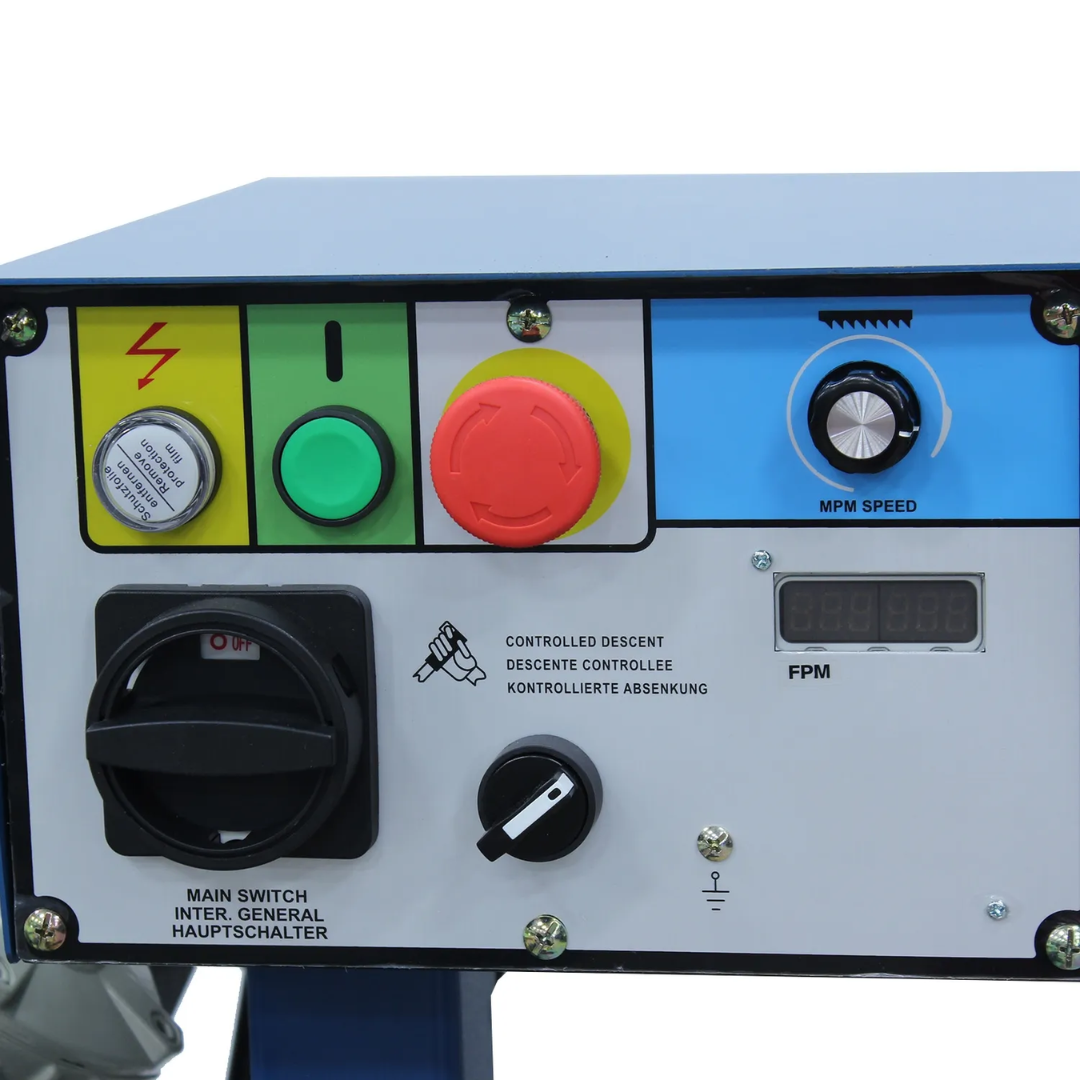
Example model: Baileigh BS-210M Manual Horizontal Bandsaw — Geared Head — $4,542.93. View more >
In This Guide
- Why Blade Selection Is the Most Impactful Variable
- TPI: The Primary Selection Variable
- Tooth Geometry: Set and Pitch Type
- Blade Material: Bi-Metal vs Carbide
- Blade Width Selection
- Cutting Mild Steel and Carbon Steel
- Cutting Stainless Steel
- Cutting Aluminum and Non-Ferrous Metals
- Cutting Structural Shapes: Angle, Channel, I-Beam, Tube
- Cutting Pipe and Round Stock
- Metal Band Saws That Maximize Blade Performance
- Our Top Metal Band Saw Picks
- Watch: Metal Band Saw Blade Selection in Practice
- Common Blade Selection Mistakes
- How to Choose a Metal Band Saw for Blade Selection
- Frequently Asked Questions
- Conclusion
Why Blade Selection Is the Most Impactful Variable
A correctly set up metal band saw with the wrong blade will produce worse results than a poorly set up machine with the right blade. Blade selection determines how many teeth are in the cut at any moment. It also determines how aggressively those teeth engage the material. And it determines whether the kerf can clear chips before they are re-cut. Each of these factors directly produces or prevents the most common cut quality problems. These are tooth stripping (from too few teeth in cut), tooth loading (from too many teeth in cut), poor finish (from wrong geometry), and short blade life (from wrong material for the application).
The variables in blade selection interact. TPI determines how many teeth are in the cut for a given material thickness. Tooth set determines how wide the kerf is and how freely chips clear. Blade material determines how hot the teeth can get before losing temper. Blade width determines lateral stiffness under feed load. No single variable can be optimized in isolation. The right blade is the combination that balances all four for the specific material and machine.
TPI: The Primary Selection Variable
TPI (teeth per inch) is the first and most important blade selection variable. The core rule is to keep 3 to 24 teeth in the cut at all times. For most production cutting, aim for 6 to 12 teeth in the cut. "In the cut" means the number of teeth that touch the workpiece at the same time. This is counted as the blade passes through it at a given cross-section.
Calculating Teeth in Cut
For solid round or square stock, divide the cross-section in inches by the blade pitch (1 ÷ TPI) and round down. Take a 2-inch solid bar cut with a 10 TPI blade. Here, 2 ÷ 0.1 = 20 teeth in the cut. That is at the high end, but acceptable. For the same bar with a 4 TPI blade, 2 ÷ 0.25 = 8 teeth in the cut. That is in the target zone. Now take thin-wall tube (1-inch OD, 0.065-inch wall). The effective cutting section is 0.065 inches. At 10 TPI, 0.065 ÷ 0.1 = 0.65. That is less than 1 tooth in the cut. This is the tooth stripping zone, where the material catches between teeth and peels them off the blade. The correct blade for thin-wall tube is 18–24 TPI. Cutting Tool Engineering also recommends about 6 to 12 teeth in the cut.
TPI by Material Thickness
- Under 1/8" (thin-wall tube, thin sheet, small-diameter pipe) — 18–24 TPI
- 1/8" to 1/4" (medium-wall tube, thin angle iron, small structural shapes) — 14–18 TPI
- 1/4" to 1/2" (wall sections on most structural shapes, medium bar stock) — 10–14 TPI
- 1/2" to 1" (solid bar to 1 inch, heavy-wall pipe, heavy structural) — 8–10 TPI
- 1" to 3" (solid bar from 1–3 inches, large structural sections) — 4–8 TPI
- Over 3" (heavy solid bar, large rounds, heavy structural shapes) — 2–4 TPI
Variable-pitch blades (expressed as a range, like "8/12 TPI") are designed to address a limitation of fixed-pitch blades on structural shapes. The effective material thickness changes during the cut (a channel section is thin at the flanges and thick at the web). So a fixed-pitch blade is in the right zone for part of the cut and wrong for another part. Variable-pitch blades keep more sections of the cut in the target zone. They also reduce harmonics that cause chatter.

Tooth Geometry: Set and Pitch Type
Tooth geometry on a metal cutting blade covers two variables. One is tooth set pattern (how the teeth are offset from the blade body to create the kerf). The other is tooth form (the shape and rake angle of the tooth face).
Tooth Set Patterns
- Raker set — one right, one left, one straight (unset), repeating. Standard general-purpose pattern for most production metal cutting. Good chip clearance, moderate kerf width. Use for solid stock and most structural shapes in ferrous metals
- Wavy set — teeth wave in a gradual sinusoidal offset rather than alternating sharply. Produces a wider kerf but reduces chatter on thin-wall material. Use for thin-wall tube, thin-wall pipe, and structural shapes where the effective section changes rapidly during the cut. Wavy-set blades are the standard choice for bundles
- Variable set — random-pattern alternating set on variable-pitch blades. Reduces harmonics on structural shapes and thin material. Used on most modern variable-pitch production blades
Tooth Form
- Standard (regular) tooth — 0° rake angle, evenly spaced gullets. For general cutting of harder metals where a mild, scraping cut is preferred. Used on most bi-metal blades for ferrous metals
- Hook tooth — positive rake angle (typically 10°), deeper gullets, wider spacing. For soft, gummy materials: aluminum, copper, plastics, and soft brass. The positive rake bites aggressively and the deep gullets clear the long, stringy chips these materials produce. Never use hook tooth on steel — the aggressive rake will strip teeth
- Skip tooth — zero or slight positive rake, widely spaced gullets with every other tooth removed. For soft non-ferrous metals and plastics where chip loading is the primary concern. Less common for industrial metal cutting
Blade Material: Bi-Metal vs Carbide
The two options for industrial metal cutting band saw blades are bi-metal and carbide-tipped. Carbon steel blades exist but are not appropriate for production metal cutting. They are for light hobby use only and will not survive production rates on any ferrous material.
Bi-Metal Blades
Bi-metal blades have high-speed steel (HSS) teeth electron-beam welded to a flexible spring-steel back. The HSS teeth hold their temper at higher temperatures than carbon steel. This allows higher feed rates and longer blade life on most production applications. Bi-metal is the correct choice for:
- Mild steel, carbon steel, alloy steel up to ~40 HRC
- Stainless steel (all grades) — use cobalt-enhanced bi-metal (M42 or M51) for 300-series
- Aluminum and non-ferrous metals
- Most structural shapes in ferrous and non-ferrous metals
- General-purpose production cutting where blade cost is a primary consideration
Carbide-Tipped Blades
Carbide-tipped blades have tungsten carbide teeth brazed to the blade back. Carbide is harder than HSS and maintains its hardness at higher temperatures. This allows higher blade speeds and much longer blade life on hard materials. But carbide is also brittle and fails catastrophically on vibration. Carbide is the correct choice for:
- Hardened steel and case-hardened material above ~40 HRC
- Abrasive materials: cast iron, hardened tool steel, high-silicon aluminum
- Exotic alloys: titanium, Inconel, Hastelloy, and other high-temperature alloys
- High-volume production on any material where bi-metal blade change frequency is the production bottleneck
Carbide is not appropriate for structural shapes where the blade encounters interrupted cuts or variable section thicknesses. The vibration from those interruptions will chip carbide teeth. Carbide also requires faster blade speeds than bi-metal on most materials. Verify that your machine's speed range is compatible before using carbide blades.

Blade Width Selection
Blade width on a metal band saw affects lateral stiffness under feed load. Wider blades deflect less under the side forces generated during cutting. Unlike woodworking band saws, where width also determines minimum radius, most metal cutting band saws cut straight sections only. So blade width selection is primarily about stiffness and machine compatibility.
Shopping for metal band saws? See the full selection or call 888-308-5580.
Shop Metal Band Saws- Use the blade width the machine manufacturer recommends for your stock width. Most horizontal and mitre band saws specify a single blade width for their guides
- If your machine accepts a range, use the narrower end of the range when cutting small cross-sections and the wider end when cutting large cross-sections where deflection resistance is the priority
- Never exceed the maximum blade width specified for the machine — the guides cannot support an oversized blade and wheel stress will be excessive
- Bi-metal blades on production machines are typically 1/2-inch to 1-1/4-inch wide. Carbide blades on the same machines are often the same width. But check the blade manufacturer's specification, as some carbide blades are designed for specific width guides
Cutting Mild Steel and Carbon Steel
Mild steel (A36, 1018, 1020) and carbon steel (1045, 4140) are the most common production metals cut on band saws. These are straightforward materials for bi-metal blades. They machine cleanly, don't harden significantly from the heat of cutting, and clear chips well with standard coolant flow.
Recommended Blade for Mild/Carbon Steel
- Blade material: Standard M42 bi-metal (8% cobalt)
- Tooth set: Raker for solid stock; variable-pitch for structural shapes
- TPI for solid bar: 4–6 TPI for stock 2 inches and above; 6–10 TPI for 1–2-inch stock; 10–14 TPI for stock under 1 inch
- Blade speed: 150–250 SFPM for mild steel; 100–150 SFPM for harder carbon steel grades. See our metal band saw blade speed chart for full SFPM recommendations
- Coolant: Required for production rates — soluble oil at 5–8% concentration, directed at the blade entry point
Signs of a Wrong Blade on Steel
Tooth stripping (teeth visibly broken off) indicates too few teeth in cut. The material is catching between teeth and levering them off. Tooth loading (gullets packed with chips) indicates TPI is too high for the section being cut. The gullets fill before leaving the cut, and the loaded teeth push material instead of cutting it. Blue or black oxidation on the cut face indicates that the blade is running too fast for the material, or that coolant flow is insufficient.
Cutting Stainless Steel
Stainless steel is harder and more abrasive than mild steel. It also work-hardens rapidly. The heat and pressure of a slow or dulling blade passing over the cut face creates a hardened layer. The next tooth then has to cut through that layer. This is why stainless is uniquely sensitive to feed rate. Too low a feed rate causes more work hardening per unit of depth than an adequate feed rate. And a blade that is dull from previous misuse will work-harden the stock ahead of each tooth. This compounds its own wear rate.
Recommended Blade for Stainless Steel
- Blade material: M42 bi-metal (minimum) or M51 bi-metal for 300-series austenitic grades (304, 316). The extra cobalt in M51 handles the elevated temperatures stainless generates
- Tooth set: Raker or variable-pitch. Variable-pitch reduces the chatter that stainless's work-hardening tendency can cause
- TPI: Same formula as steel — 6–12 teeth in cut — but err toward the higher end of the range because stainless work-hardening penalizes interrupted cutting more than steel does
- Blade speed: 60–100 SFPM for most stainless grades; 40–60 SFPM for duplex and precipitation-hardened grades
- Feed rate: Maintain adequate feed to produce a chip. If the blade is rubbing without cutting, the feed rate is too low and work hardening is occurring. A correctly fed blade produces a curled, warm chip from stainless. The chip is not fine powder (too slow) and not a hot, blue chip (too fast)
- Coolant: Required and critical. Stainless generates more heat than mild steel. Use soluble oil at 8–10% concentration, with high flow volume directed at the cut point

Cutting Aluminum and Non-Ferrous Metals
Aluminum requires a completely different blade geometry than ferrous metals. Aluminum is soft and gummy. It produces long, stringy chips that load standard raker-set blades quickly. The correct blade for aluminum uses hook tooth geometry with positive rake and deep gullets. This generates a chip and clears it before the next tooth engages. A steel-geometry blade on aluminum will have gullets that load with aluminum. The loaded blade then welds aluminum to the tooth faces. The blade fails rapidly, usually within a few cuts.
Recommended Blade for Aluminum
- Blade material: Standard bi-metal — aluminum is soft and does not wear HSS teeth significantly. Carbon steel bi-metal works; M42 bi-metal is fine and usually easier to source
- Tooth form: Hook tooth (positive rake, deep gullets). Never standard or skip tooth for production aluminum cutting
- TPI: Lower than for steel at the same cross-section. Aluminum cuts quickly and produces large chips, so extra gullet space per tooth is needed. Use 3–6 TPI for solid stock over 2 inches. Use 6–10 TPI for stock under 2 inches. Use 10–14 TPI for thin extrusions and thin-wall tube
- Blade speed: Much higher than for steel — 500–1,500 SFPM for most aluminum alloys. Many metal band saws designed for steel will be at or near their maximum speed for aluminum. High-speed-capable machines produce better aluminum cuts
- Coolant: Recommended but different from ferrous cutting. Use a misting system with a light cutting oil or a water-soluble aluminum coolant. Flood coolant systems designed for steel work, but they apply less volume. Aluminum doesn't need the same heat removal as steel
Copper, Brass, and Bronze
Copper-based alloys fall between steel and aluminum in terms of blade requirements. Use hook tooth or skip tooth geometry with TPI in the 6–10 range for most production thicknesses. Coolant is beneficial but not as critical as for steel. Blade speed: 200–400 SFPM for most copper alloys.
Cutting Structural Shapes: Angle, Channel, I-Beam, Tube
Structural shapes are the most challenging blade selection scenario because the effective material thickness changes continuously during the cut. A 3-inch angle iron passes through thin leg sections and a thicker corner section. An I-beam passes through thin web and thicker flanges. A square tube passes through four thin walls and four corners. A blade correctly TPI'd for the thin sections will have too few teeth in cut at the thick sections. A blade correctly TPI'd for the thick sections will load on the thin sections.
Variable-Pitch Blades for Structural Shapes
Variable-pitch blades (8/12, 5/8, 4/6 TPI and similar designations) are the correct solution for structural shapes. The varying pitch keeps more of the cut in the 6–12 teeth-in-cut zone across the full range of section thicknesses in a structural profile. It also reduces the harmonic resonance that fixed-pitch blades develop when cutting interrupted profiles. For any structural shape that is a significant portion of your production mix, a variable-pitch blade is the correct specification.
TPI Range for Common Structural Shapes
- Angle iron (3/16"–3/8" leg thickness): 10/14 variable pitch
- Channel (3/16"–1/2" web/flange thickness): 8/12 variable pitch
- I-beam (standard structural, 1/4"–1/2" web/flange): 6/10 variable pitch
- Square/rectangular tube (1/8"–3/16" wall): 10/14 variable pitch
- Square/rectangular tube (3/16"–5/16" wall): 8/12 variable pitch
- Heavy structural (HSS, thick-wall, heavy beam): 4/6 or 5/8 variable pitch

Cutting Pipe and Round Stock
Pipe and round stock are common metal band saw applications. They require different blade strategies depending on whether the stock is solid or hollow.
Solid Round Bar
The effective cutting section on a solid round bar equals the diameter of the bar where the blade enters. Base TPI on that diameter, using the same formula as solid square stock. The full cross-section is in cut throughout, so a fixed-pitch blade is appropriate.
Hollow Pipe and Tube
Pipe requires TPI based on the wall thickness, not the OD. A 4-inch OD pipe with a 0.237-inch wall (schedule 40) has a 0.237-inch cutting section. At 10 TPI: 0.237 ÷ 0.1 = 2.37 — barely at the minimum. Use 14–18 TPI. A 4-inch pipe with thin 0.120-inch wall needs 18–24 TPI. The correct formula is always: minimum effective section (wall thickness) × TPI = 3 to 12 teeth in cut.
Bundle Cutting
Bundle cutting (multiple pieces bundled and cut simultaneously) changes the effective section at any given blade position. The blade may encounter only air between pieces and then suddenly engage two layers of material. Variable-pitch, wavy-set blades handle bundle cutting better than fixed-pitch raker blades. They do this by reducing the impact loading as the blade exits and re-enters material. TPI for bundles should be based on the wall or section thickness of the individual pieces, not the total bundle dimension.
Metal Band Saws That Maximize Blade Performance
Blade performance is limited by the machine's ability to hold the correct blade speed. It is also limited by its ability to maintain consistent feed force and deliver adequate coolant to the cut. These machines are matched to deliver those conditions across the range of materials this guide covers.
| Model | Type | Capacity | Blade Speed Range | Price |
|---|---|---|---|---|
| Baileigh BS-210M | Horizontal Manual | 8.26" × 6.69" | Variable | $4,542.93 |
| Ellis 1600 | Mitre Band Saw | 10" round at 90° | 3 speeds (55 / 115 / 230 FPM) | $5,299.00 |
| Ellis 1800 | Mitre Band Saw | 11" round at 90° | 3 speeds (55 / 115 / 230 FPM) | $5,995.00 |
| Ellis 2000 | Mitre Band Saw | 11" round at 90° and 45° | 3 speeds (60 / 115 / 230 FPM) | $6,545.00 |
Our Top Metal Band Saw Picks
1. Baileigh BS-210M Manual Horizontal Bandsaw — Geared Head — $4,542.93
The Baileigh BS-210M's geared head drive delivers consistent blade speed regardless of feed load. This is a critical factor for maintaining the correct SFPM when cutting materials like stainless that require a specific speed range. The variable-speed control allows the operator to dial in the exact SFPM for the blade and material combination being cut. The precision vise holds stock securely through the full length of production runs. The 8.26" × 6.69" capacity handles the solid stock and structural shapes where correct blade selection pays the highest dividends. View more >
2. Ellis 1600 Mitre Band Saw — $5,299.00
The Ellis 1600's mitre capability makes it the natural choice for shops cutting structural angles, channels, and beams to length. These are the exact applications where variable-pitch blade selection matters most. The 10" round capacity at 90° handles the range of structural shapes most commonly cut in general fabrication. The coolant system delivers adequate flow to the blade entry point for production rates on stainless and hard alloys. View more >
3. Ellis 1800 Mitre Band Saw — $5,995.00
The Ellis 1800's 11" round capacity at 90° covers the full spectrum of structural shapes and solid stock where blade selection has the most direct impact on production output. Its production-grade frame and precision guide system ensure that a correctly selected blade runs at the parameters it was designed for. They do so without the tracking drift or guide wear that causes blade failures on lighter machines. View more >
4. Ellis 2000 Mitre Band Saw — $6,545.00
The Ellis 2000's 11" round capacity is the right platform for shops cutting large structural sections and heavy solid stock. These are jobs where 2–4 TPI bi-metal blades at high feed rates are the daily specification. The rigid pivot mechanism and heavy frame maintain consistent tracking and guide clearance. They do this at the high blade loads that low-TPI production cutting generates. View more >
Watch: Metal Band Saw Blade Selection in Practice
Common Blade Selection Mistakes
Using the Same Blade for All Materials
A shop that runs one blade specification on everything is making this mistake. This means one TPI for solid bar, tube, stainless, and aluminum. Blade selection is material-specific. The 10/14 variable-pitch bi-metal blade that is optimal for structural steel tube will load and fail quickly on aluminum. It will also produce poor quality on thin-wall stainless. Maintain separate blade specifications for the primary material groups in your production mix.

Selecting TPI Based on OD Instead of Wall Thickness
This mistake causes tooth stripping on thin-wall tube and pipe. A 3-inch OD tube with 0.120-inch wall and a 3-inch solid bar look similar in the vise. But they require completely different blades. Always base TPI on the effective cutting section. This is the wall thickness for hollow shapes and the diameter for solid rounds.
Using Fixed-Pitch Blades on Structural Shapes
A fixed-pitch blade on angle iron, channel, or I-beam will be correct for either the thin sections or the thick sections, but not both. Variable-pitch blades exist specifically for this application. They produce measurably better blade life and cut quality on structural profiles. The cost difference between fixed and variable pitch on a production blade is small relative to the blade life improvement.
Using the Wrong Tooth Form for Aluminum
A standard raker-set blade on aluminum will load within a few cuts and stop cutting entirely. The blade will appear to be cutting (the machine continues to run, the blade moves, the stock moves into the blade). But no material is being removed. The loaded gullets are just pushing the aluminum instead of shearing it. If a blade stops cutting aluminum, check the gullets for loading before concluding the blade is dull. The correct blade for aluminum is hook tooth.
Ignoring Blade Speed for the Material
Blade selection and blade speed are not independent. A correctly selected blade run at the wrong SFPM will underperform or fail prematurely. After selecting the blade, verify that the machine can run the correct SFPM for the blade/material combination. See our blade speed chart for the recommended SFPM by material and blade type.

How to Choose a Metal Band Saw for Blade Selection
A saw only delivers what a well-chosen blade can do. So look for steady blade speed and capacity that matches your stock.
- Holding the correct SFPM on stainless: the Baileigh BS-210M geared head drive delivers consistent blade speed regardless of feed load. Its variable-speed control lets you dial in the exact SFPM.
- Structural angles, channels and beams cut to length: the Ellis 1600 has mitre capability. It has a 10 inch round capacity at 90 degrees.
- The full spectrum of structural shapes and solid stock: the Ellis 1800 offers 11 inch round capacity at 90 degrees.
- Large structural sections and heavy solid stock: the Ellis 2000 has an 11 inch round capacity. It suits 2 to 4 TPI bi-metal blades at high feed rates.
Frequently Asked Questions
What TPI should I use for 2-inch solid steel bar?
For 2-inch solid mild steel bar, use 4–6 TPI with a raker-set bi-metal blade. At 4 TPI, you'll have 8 teeth in cut (2 ÷ 0.25 = 8). That is right in the target zone of 6–12. At 6 TPI, you'll have 12 teeth in cut. That is at the high end but acceptable. For harder carbon steel grades (4140, 4340) at the same size, use the upper end of the TPI range (6 TPI). This reduces the load per tooth on the harder material.
Can I use a wood band saw blade on metal?
No. Wood band saw blades are carbon steel with large, aggressive hook teeth designed for soft wood fibers. Carbon steel loses its temper at the temperatures generated by metal cutting. The tooth geometry would also strip immediately on any ferrous metal. Metal cutting requires bi-metal or carbide blades. These have HSS or carbide teeth that maintain hardness at elevated temperatures.
Why are variable-pitch blades better for structural shapes?
Structural shapes have varying effective cutting sections as the blade passes through them. These include thin flanges, thicker webs, and corners. A fixed-pitch blade is in the correct 6–12 teeth-in-cut zone for only one section of the profile. It will have too few or too many teeth in cut for the others. Variable-pitch blades keep more of the blade's pass through the profile in the target zone. This reduces tooth stripping on thin sections and loading on thick sections. The varying pitch also reduces the harmonic resonance (chatter) that fixed-pitch blades develop on interrupted profiles.
What's the difference between M42 and M51 bi-metal blades?
Both are HSS bi-metal blades, but M51 has a higher cobalt content (approximately 8% for M42, approximately 10% for M51). The higher cobalt content gives it better hot hardness. That is the ability to maintain its cutting edge at higher temperatures. M51 is recommended for stainless steel and other hard alloys that generate more cutting heat than mild steel. M42 is appropriate for mild steel, carbon steel, aluminum, and most general-purpose metal cutting applications.
How do I know when a metal band saw blade needs to be replaced?
Replace a metal band saw blade in any of these cases. Cut quality degrades despite correct setup and blade speed. The feed rate required to maintain cut quality drops significantly from normal. The blade requires manual pressure to advance (a correctly tensioned blade at the right speed should require only gravity or light hydraulic feed). Visible tooth damage (missing teeth, cracked gullets) is present. See our guide to the signs it is time to replace a band saw blade for a full replacement checklist and the extra warning signs when cutting metal.
Is carbide better than bi-metal for all metal cutting?
No. Carbide is better than bi-metal for hard, abrasive, and exotic materials. This is where its superior hot hardness and wear resistance justify its higher cost. For the majority of production cutting, bi-metal delivers adequate blade life at a lower cost per cut. This covers mild steel, carbon steel, stainless, aluminum, and structural shapes. Carbide also fails catastrophically on interrupted cuts (structural shapes, bundles). It also fails on machines that can't maintain the higher speeds carbide requires. This makes bi-metal the correct choice for many production environments.
Conclusion
Metal band saw blade selection is a systematic process. Match TPI to effective cutting section. Match tooth geometry to material type. Match blade material to hardness and abrasiveness. Then verify that the machine can run the correct SFPM for the combination. A metal cutting band saw with the right blade for the specific material and cross-section will out-cut and out-last the same machine with a generic blade across every shift. Our team can walk you through the right specification for your production mix. This applies if you're selecting blades for a new machine or troubleshooting cut quality on an existing one.
Safety and standards references: OSHA 1910.212 general requirements for all machines and OSHA metalworking fluids: standards.
Explore the category: Metalworking. Related collections: Metal Cutting Bandsaw Blades.
Related Reading
- Metal Band Saw Blade Speed Chart: SFPM Guide for Steel, Aluminum, Stainless, and More
- Metal Band Saw Blade Tension: How to Set It Correctly and Why It Matters
- Metal Band Saw Blade Break-In: Why New Blades Fail Early and How to Do It Right
- Cutting Fluid for Metal Band Saws: Complete Guide to Coolant Selection, Application, and Best Practices
- How to Set Up a Metal Cutting Band Saw for Clean, Accurate Cuts
Talk to a Metal Cutting Specialist
Questions about blade selection for your material mix, or which saw matches your production needs? Call us.
Featured Metal Band Saws


Shop All Metal Band Saws
Find the right saw for your production mix — sorted by capacity, type, and material capability.
Shop Metal Band SawsQuestions? Call us: 888-308-5580