

In This Guide
Featured Cordless Sanders

RIKON
RIKON 50-310 Benchtop Oscillating Spindle/Belt Sander
$349.99
Belt and spindle sanding in one shop machine: a 4 inch by 24 inch abrasive belt for board edges and flat surfaces, plus spindle sanding for curves. It shows what a stationary, plug-in sander offers over a handheld battery tool. Check how often your work needs both modes.

Virutex
Virutex LPC197 Long Reach Drywall Sander (120V/230V) 9700200
$922.30
Long reach drywall sander with a brushless motor, rated 120V/230V and designed for wall and ceiling sanding. It is lightweight and ergonomically balanced for long sessions. Check the voltage against your outlet.

Proxxon
Proxxon Cordless Belt Sander BS/A Without Battery & Charger
$176.40
Battery and charger are left out of this compact battery-powered belt sander, which is made for grinding small openings, finishing molds and deburring precision parts. It is the cordless route if you already own a battery and charger. Confirm what you have before you order.
Types of Corded and Cordless Sanders
Corded Sanders draw continuous power from the outlet — ideal for projects requiring hours of uninterrupted operation. Types include belt sanders (aggressive material removal), drum sanders (wide panels to consistent thickness), belt+disc combos (benchtop, edge work), and random orbital sanders.

Cordless Sanders are battery-powered and prioritize portability. Types include random orbital sanders (most popular cordless format), palm sanders, sheet sanders, and detail sanders for corners and edges.

When a Corded Sander Is Better
Long sanding sessions. Battery packs drain in 30–60 minutes of continuous use. For large furniture pieces or floor refinishing that requires hours of sanding, a corded sander simply runs until the job is done.

Heavy material removal. Corded belt and orbital sanders at full power remove material faster than most cordless equivalents. When flattening rough-sawn boards, removing old finishes, or taking down dried glue joints, the corded tool completes the work more efficiently.

Lower upfront cost. Corded sanders are typically less expensive because they don't include a battery or charger.
Stationary sanding machines. Large belt sanders, drum sanders, and combo sanders are almost always corded by design.

When a Cordless Sander Is Better
Job site and outdoor work. Sanding on a job site, deck, or outdoor structure often means working far from the nearest outlet. A cordless sander removes that limitation.

Hard-to-reach areas. Without a power cord dragging or tangling, a cordless sander moves freely around cabinet interiors, stair risers, and irregular shapes.
Lighter, more controlled passes. Cordless random orbital sanders are generally less aggressive than high-power corded models — often better for final finish passes before staining or topcoat.

Limited shop power. In a garage shop with a single circuit, removing a corded sander from the power load helps when running other tools simultaneously.
Pros and Cons Side by Side
| Corded Sander | Cordless Sander | |
|---|---|---|
| Runtime | Unlimited | 30–60 min per charge |
| Power | Consistently high | Slightly lower; can decrease as battery drains |
| Portability | Limited by cord | Fully portable |
| Control | More aggressive | Easier to control for light passes |
| Price | Lower upfront | Higher initial cost (battery adds expense) |
| Best for | Workshop, long sessions, heavy removal | Job sites, awkward positions, finishing |

Plug-In and Battery Sanders Compared
Sorting out Cordless Sander vs. Corded for your shop? The table below sets out the sanders from our store that the picks cover. Check how each one is powered first.
| Model | Price | Key feature | Best for |
|---|---|---|---|
| Proxxon Cordless Belt Sander BS/A | $300.60 | Glass-fiber reinforced polyamide housing with soft grip area | Weighing battery convenience against corded power |
| Virutex Belt Sander LB31E: Powerful Sanding Performance 3100199 | $491.05 | High power, fast material removal, professional finishing | Heavy rough sanding jobs that call for more power |
| Maksiwa LD.300 12 in. Disc Sander, 1HP, 1 Phase | $399.00 | 12 inch disc, 1 HP motor, 1 phase | Stationary disc sanding at a fixed shop station |
Match the power source and working surface to the jobs you do daily, then decide whether battery convenience or plug-in power matters more for your shop.
Corded and Cordless Sanders for Your Shop
These sanders from our store cover both sides of the corded versus cordless choice in this guide. Check the power source, battery details and sanding surface for your jobs before you buy.
1. Proxxon Cordless Belt Sander BS/A — $300.60
Battery power from a 10.8V lithium-ion pack with 2.6Ah drives this compact cordless belt sander, and continuously variable speed lets you slow down for delicate work. View more >
2. Virutex Belt Sander LB31E: Powerful Sanding Performance 3100199 — $491.05
Levelling and rough material removal call for a powerful motor and a large working surface, which this belt sander offers for professional finishing. View more >
3. Maksiwa LD.300 12 in. Disc Sander, 1HP, 1 Phase — $399.00
Fixed shop sanding is the idea here: a 12 inch disc and a 1HP single-phase motor give steady power with no battery to charge. View more >
Which Gives a Better Finish on Wood?
Both types produce excellent finishes when used correctly. Finish quality depends far more on technique, grit progression, and pad rotation than on whether the tool has a cord.

The key variable with cordless sanders is pad rotation under load. A sander whose pad slows or stalls when you apply pressure creates a fixed-orbit scratch pattern instead of a random one — leaving swirl marks that are difficult to sand out. Premium cordless sanders (Bosch 18V, Milwaukee M12, Makita 40V) maintain consistent pad rotation and produce finishes indistinguishable from corded tools. Budget cordless sanders are more prone to pad stall.

The Bottom Line
Choose a Corded Sander if you…
- Work in a shop with reliable outlet access
- Sand for extended sessions (1+ hours)
- Need maximum material removal power
- Are working with a limited budget
Choose a Cordless Sander if you…
- Work on job sites or outdoors regularly
- Sand in tight spaces or awkward positions
- Already own a compatible battery platform
- Want control for lighter finish passes
The practical answer for most woodworkers: own one of each. A corded random orbital sander handles the bulk of your shop work reliably. A cordless sander covers job sites, finishing passes, and detail work in awkward positions. The two formats complement each other and together cover every sanding situation you'll encounter.

Frequently Asked Questions
How long does a cordless sander battery last?
Battery packs drain in 30 to 60 minutes of continuous use. For sanding that runs for hours, such as large furniture or floor refinishing, a corded sander simply runs until the job is done.
Is a corded sander better for heavy sanding jobs?
Yes. Corded belt and orbital sanders at full power remove material faster than most cordless equivalents, which helps when flattening rough-sawn boards, removing old finishes, or taking down dried glue joints.
Which gives a better finish on wood, corded or cordless?
Both types produce excellent finishes when used correctly. Finish quality depends far more on technique, grit progression, and pad rotation than on whether the tool has a cord.
When does a cordless sander make more sense?
Choose cordless for job site and outdoor work, hard-to-reach areas, lighter finish passes, or a garage shop with a single circuit. With no cord dragging or tangling, it moves easily around cabinet interiors, stair risers, and irregular shapes.
Should I own both a corded and a cordless sander?
For most woodworkers, yes. Use a corded random orbital sander for the bulk of your shop work, and a cordless one for job sites, finishing passes, and detail work in awkward positions.
Conclusion
A corded sander gives you more power for long sessions, while a cordless sander gives you freedom on job sites and in tight spaces, so choose by where and how long you sand. To see current models and pricing, explore our cordless sanders collection.
Safety and standards references: OSHA woodworking eTool: sanders and OSHA woodworking eTool: wood dust.
Related Reading
Shop Sanders at Iron Line Tools

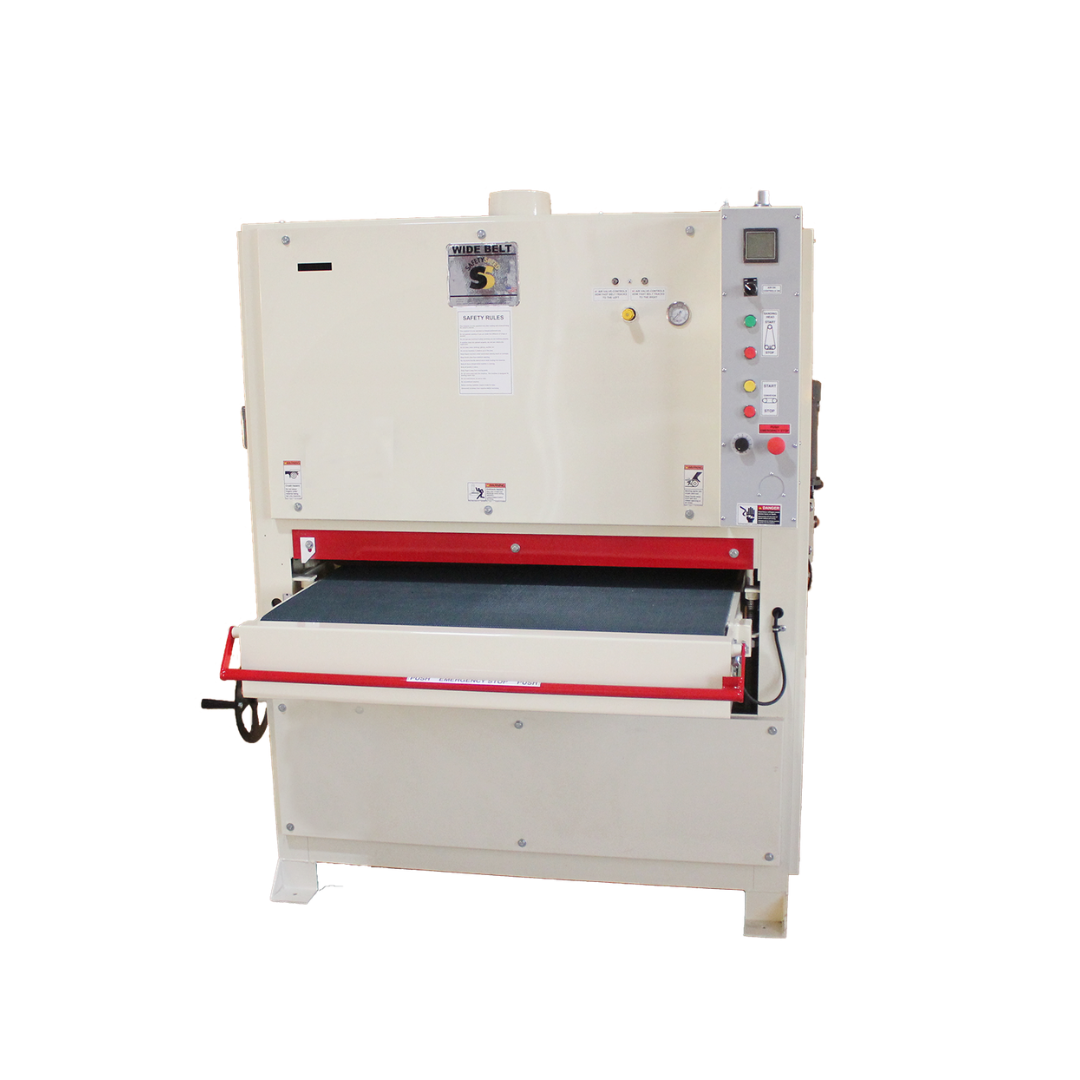
Safety Speed 43" Wide Belt Sander
Price: $21,499 | Type: Wide Belt Sander
The Safety Speed 43" Wide Belt Sander delivers 43" sanding capacity for large panels and wide boards. Ideal for cabinet shops and furniture manufacturers needing high-volume consistent sanding.

Maksiwa LDF Combination Belt and Disc Sander
Price: $899 | Type: Belt & Disc Sander
The Maksiwa LDF combines a belt sander and disc sander in one compact machine. A versatile benchtop sander for shaping, smoothing, and finishing wood in any shop.
Long sanding sessions or job site freedom?
Talk to our team about the finish you want on wood and whether a cord or a battery fits your shop.
Also browse: Sanding Machine