

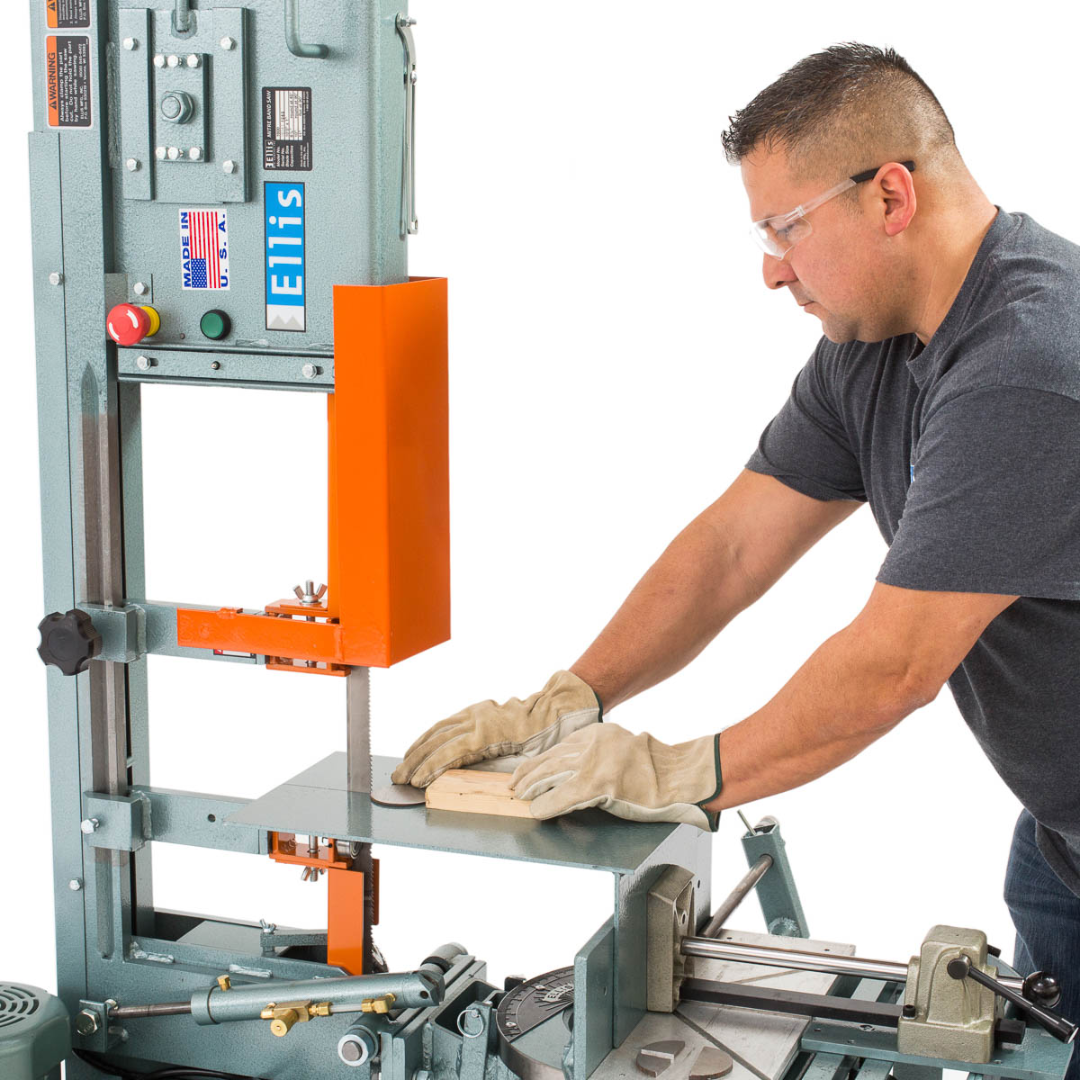
Metal Band Saw Maintenance Guide: How to Keep Your Saw Running Accurately and Efficiently
A metal band saw is one of the most precise production tools in a fabrication shop. Like any precision machine, it gives back accuracy in proportion to the attention you give it. A well-maintained saw holds tight tolerances, runs blades to their rated life, and keeps downtime near zero. A neglected one drifts, burns blades, and eventually fails mid-shift. This guide covers the full maintenance schedule: what to check daily, weekly, monthly, and annually. It also covers how to spot the early signs of problems before they become costly failures.

Metal band saw maintenance is the scheduled inspection, adjustment, cleaning, and lubrication of a metal cutting band saw's mechanical systems. These systems are the blade guides, wheel crowns, coolant circuit, drive system, and vise or table. The work is performed at daily, weekly, monthly, and annual intervals. Its goals are to sustain cutting accuracy, maximize blade life, and prevent unplanned downtime.
Quick Answer
Metal band saw maintenance is a daily, weekly, monthly, and annual routine. Run the pre-shift checklist before the first cut. It takes under ten minutes. Budget 20 to 30 minutes per week for a standard production saw. Blade guides, wheel crowns, and the coolant system each get their own checks.
Example model: Baileigh BS-210M Manual Horizontal Bandsaw — Geared Head — $4,542.93. View more >
In This Guide
- Why Metal Band Saw Maintenance Matters
- Daily Pre-Shift Maintenance Checklist
- Weekly Maintenance Tasks
- Monthly and Quarterly Maintenance
- Blade Guide Alignment and Inspection
- Wheel Crown Inspection and Care
- Coolant System Maintenance
- Drive System: Belts, Gears, and Gearhead
- Metal Band Saws Built for Low-Maintenance Operation
- Our Top Metal Band Saw Picks
- Setting Up a Maintenance Log
- Maintenance Troubleshooting
- How to Choose a Metal Band Saw for Low Maintenance
- Frequently Asked Questions
- Conclusion
Why Metal Band Saw Maintenance Matters
Metal cutting band saws run under substantially higher loads than wood cutting machines. Cutting steel, stainless, aluminum extrusions, and structural shapes generates heat, vibration, and chip load that stress every component in the system — blade guides, wheel bearings, drive belts, coolant seals, and the blade itself. Without regular attention, these stresses compound: a misaligned guide that would take five minutes to correct causes a blade to track off-center, which accelerates guide bearing wear, which worsens the tracking problem, which kills the blade prematurely, which requires an emergency blade change and a full re-setup.
The cost of this compounding failure is almost always greater than the cost of the maintenance that would have prevented it. A blade tension check takes under two minutes. A coolant concentration check takes thirty seconds. A guide bearing spin-test takes one minute. A full daily pre-shift checklist on a well-maintained machine runs five to eight minutes. It catches the problems before they become downtime events.
Daily Pre-Shift Maintenance Checklist
Run this checklist before the first cut of each shift. On a well-maintained machine it takes under ten minutes. Post it near the saw or include it in your machine startup procedure.
Blade and Tension
- Check blade tension. Verify the indicator is at the position marked for your blade width. Or use a deflection test (1/8" per 6" of span). If tension dropped overnight, re-tension before the first cut and make a note. A tension drop between shifts may indicate blade stretch or a tensioning spring beginning to wear
- Inspect the blade for visible damage. Run the blade slowly by hand, with power off and the machine unplugged or locked out. Look for cracked backing, stripped teeth, or weld separation. A damaged blade must be replaced before cutting
- Check blade tracking. With the blade guard open and the machine at rest, verify the blade sits centered on both wheel crowns. If tracking has shifted from the previous day's setting, it indicates wheel crown wear or a bearing issue
Blade Guides
- Spin the guide bearings — with power off, turn each bearing by hand. It should spin freely with no roughness, grinding, or flat spots. A rough or stiff bearing must be replaced before cutting
- Check guide clearance. The blade should sit within 0.003–0.005" of the side guides. That is close enough to prevent wander but not so close as to drag. Guides that have drifted open from vibration allow cut quality to degrade even with correct tension
- Verify the thrust bearing position. The rear thrust bearing should be set to contact the blade back only under cutting load, not while running free. Persistent contact while running free accelerates wear on both the bearing and the blade backing
Coolant System
- Check coolant level — add mixed coolant to the reservoir if low. Running with insufficient coolant reduces heat dissipation, accelerates blade wear, and can cause coolant pump cavitation
- Verify coolant flow at the blade. Run the coolant pump and confirm both nozzles are delivering flow directly to the blade entry point. Clogged nozzles are a common cause of otherwise unexplained blade heat
- Check for coolant odor. A sour or rancid smell indicates microbial contamination. Change the coolant immediately. Contaminated coolant accelerates corrosion on machine surfaces and causes skin irritation
Vise and Feed System
- Check vise jaw alignment. The fixed and moving jaws should be parallel and square to the blade. A jaw that has drifted out of square will produce angular cuts even with the saw properly aligned
- Verify feed pressure or gravity bow setting. Check that the feed rate is set correctly for the material being cut. Excessive feed pressure causes barrel cuts. Too little causes blade glazing

Weekly Maintenance Tasks
Weekly maintenance addresses the systems that don't need daily attention. These systems deteriorate faster than monthly or quarterly cycles can catch. Budget 20–30 minutes per week for a standard production band saw.
Shopping for metal band saws? See the full selection or call 888-308-5580.
Shop Metal Band SawsCoolant System — Weekly
- Check coolant concentration. Use a refractometer to verify the coolant-to-water ratio. Metal cutting soluble oils typically run at 5–8% concentration. Below 3% provides insufficient lubrication and corrosion protection. Above 12% causes foaming and can damage rubber seals. Adjust by adding concentrate or clean water as needed
- Clean chip strainer or tray — remove accumulated chips from the coolant return path. Chips in the coolant circuit accelerate pump wear and clog nozzles
- Check coolant pH. pH below 8.5 indicates acidic drift and increased corrosion risk. Above 9.5 indicates concentration too high or contamination. Maintain 8.5–9.5 for most metalworking coolants
Machine Surfaces and Ways
- Clean all machine surfaces. Remove chips, coolant residue, and oil film from the table, vise, guides, and frame. Chip buildup on guide assemblies accelerates wear. Chip buildup on the frame conceals early corrosion
- Lightly oil unpainted cast or machined surfaces — table ways, vise jaw sliding surfaces, and any other bare metal surfaces should receive a light coat of machine oil or way oil to prevent rust, especially in humid environments or shops that use flood coolant
- Check and clean the chip collection area — chips that accumulate under the cutting area can compress into a mass that interferes with workpiece positioning and makes daily chip removal progressively harder
Blade Guide Bearings — Weekly Inspection
You spin the guide bearings daily, but a weekly inspection goes deeper. Check bearing flange faces for wear marks from blade contact. Check the bearing body for any cracks. Verify that the bearing mounting hardware is tight. Loose bearing mounts cause the guide position to drift during cutting. This produces the same symptoms as a misaligned guide, even after you've adjusted it correctly.

Monthly and Quarterly Maintenance
Monthly and quarterly maintenance covers the systems that deteriorate over weeks of continuous use. These are wheel bearings, drive components, alignment of the entire machine, and coolant change intervals. These tasks require more time (60–90 minutes for a full monthly service on a production saw). They may also require partial disassembly of guards or covers.
Monthly Tasks
- Inspect wheel bearings — with the blade removed and the machine powered off and locked out, rotate the wheels by hand and feel for bearing roughness, check for play in the wheel shafts, and visually inspect the wheel flanges for damage or edge cracking
- Check drive belt tension and condition. A loose drive belt allows the wheel speed to vary under load. This produces inconsistent blade speeds and leaves swirl marks on cut faces. Check for fraying, cracking, or glazing that indicates the belt is approaching end of life
- Lubricate per the manufacturer's schedule. Each machine has a lubrication chart specifying the type and interval for every lubrication point. Follow it exactly. Over-lubrication of sealed bearings causes seal failure. Under-lubrication of bushings causes premature wear
- Check all fasteners for tightness. Vibration from cutting loosens bolts over time. Walk the machine and check every accessible fastener, particularly on guide assemblies, blade guard mounts, and vise components
- Verify machine leveling. Confirm the machine is still level in both directions. A machine that has settled unevenly on its feet will have its wheel alignment thrown off even if nothing else has changed. This produces tracking problems that resist adjustment
Quarterly Tasks
- Change coolant. Even with pH and concentration management, coolant accumulates oils, metal fines, and microbial load over time. Drain, flush with clean water, and refill with fresh mixed coolant. Do this every 3 months on a high-production saw, or when the coolant reaches 500 gallons of total cutting fluid usage
- Full alignment check. Verify wheel coplanarity (both wheels in the same plane) and blade tracking neutral position. Verify guide alignment, vise jaw squareness to the blade, and table squareness. Document the measurements so you have a baseline for future comparisons
- Inspect hydraulic or pneumatic systems (if equipped) — check hoses for cracking, verify fluid levels (hydraulic saws), and test the clamping system under load to confirm it holds workpiece position without drift
Blade Guide Alignment and Inspection
Blade guides are the most maintenance-sensitive components on a metal band saw. Guide problems are responsible for a disproportionate share of cut quality issues. The guides keep the blade tracking straight through the workpiece. They do this by providing side support and rear thrust resistance. When guides wear, loosen, or go out of adjustment, the blade deflects under feed pressure and the cut drifts.
Types of Blade Guides
Metal cutting band saws use one of two guide types. Carbide guide blocks are adjustable inserts that contact the blade sides directly. Bearing guides use sealed ball bearings to support the blade from each side and the rear. Bearing guides are more common on production machines because they run cooler and require less friction. But they need more frequent inspection, because bearing failure is catastrophic. A worn guide block, in contrast, simply closes the gap until it contacts the blade. Most of the saws in our metal band saw line use bearing-type guides.
Setting Guide Clearance
Side guide bearings should be positioned to within 0.003–0.005" of the blade face. That is the thickness of a business card. The blade should not touch the bearings while running unloaded. The bearings should only contact the blade under side load from the cut. Use a feeler gauge on the initial setup and after every blade change. The rear thrust bearing should be positioned 0.001–0.003" behind the blade back. It contacts the blade only under feed pressure, not during freewheeling.

Wheel Crown Inspection and Care
The wheel crown is the slight convex shape on the face of each drive wheel. It keeps the blade centered through the centrifugal effect of rotation. As the saw runs, the blade migrates toward the highest point of the crown, which is the center. A properly shaped crown produces stable blade tracking with minimal adjustment. A worn or damaged crown produces chronic tracking instability. No amount of tracking adjustment will permanently fix it.
Inspecting Wheel Crowns
With the blade removed and the machine locked out, inspect the wheel crown profile visually. A correctly crowned wheel shows a smooth, even convex curve from edge to edge. Look for:
- Flat spots — areas where the crown has worn flat from blade contact under high tension. Flat spots cause erratic tracking
- Edge grooves — grooves cut by blade edges tracking too far to one side. Grooves redirect the blade instead of centering it
- Rubber tire delamination (rubber-crowned wheels) — lifted or separated rubber must be replaced before the machine can track consistently
- Debris buildup — chips and coolant residue packed into the crown change its effective profile. Clean the crown face thoroughly with each blade change
When to Replace or Resurface Wheel Crowns
Metal wheels with machined crowns can be re-turned on a lathe. This restores the correct profile when they show significant wear. Rubber-tired wheels require replacement when the tire delaminates, cracks through, or shows deep grooves. The frequency of crown wear depends on blade tension levels, blade width, and production cycle length. Heavy-use production saws may need crown inspection quarterly. Lower-cycle machines may run years without needing crown service.
Coolant System Maintenance
The coolant system on a metal cutting band saw has one job. That job is to deliver cutting fluid precisely to the blade entry point at the right flow rate, concentration, and temperature. When any of these parameters drift, blade life suffers immediately. Heat is the primary driver of blade wear, and coolant is the primary defense against heat. The Fabricator recommends keeping sawing fluid fresh and correctly diluted. It also recommends checking the mix by refractometer.
Coolant Nozzle Maintenance
Nozzle clogging is the most common coolant system maintenance issue. Metal chips carried back into the coolant reservoir accumulate in nozzle orifices over time. This gradually reduces flow. Check nozzle flow daily. It takes ten seconds to look at the nozzle and confirm flow is present and directed at the blade. Clear clogged nozzles with a small pick or wire. Never use compressed air, which drives chips deeper into the nozzle and into the coolant pump.
Coolant Pump Maintenance
Coolant pumps on band saws are typically small centrifugal submersible units. They require minimal maintenance when the coolant is kept clean. But they fail rapidly when exposed to metal chips, tramp oil, or acidic coolant. The primary pump maintenance task is keeping the coolant clean. Chip filtration upstream of the pump is more cost-effective than pump replacement. Check pump output pressure monthly by noting how high the coolant flow reaches at the nozzle. Declining pressure with a clean nozzle indicates pump wear.

Drive System: Belts, Gears, and Gearhead
The drive system transfers motor power to the drive wheel. The type of drive system determines what maintenance it requires. Metal band saws use one of two drive designs. One is V-belt drive, where the motor drives a belt sheave on the wheel shaft. The other is gearhead drive, where a gear reducer is mounted directly to the wheel shaft and the motor drives the reducer. Both designs have distinct maintenance needs.
V-Belt Drive Maintenance
V-belt drives are common on horizontal gravity-feed saws and many mitre-style machines. Belt maintenance requirements:
- Check belt tension monthly. A belt with 1/2" of deflection per foot of span under moderate thumb pressure is correctly tensioned. Loose belts slip under load and cause speed variation. Tight belts overload shaft bearings
- Inspect belt condition monthly. Look for fraying on the top surface, cracking on the side faces, and glazing (a shiny, hard appearance) on the contact faces. Glazed belts slip without stretching. They cannot be corrected by re-tensioning, so replace them
- Check sheave alignment. Motor and drive sheaves must be coplanar. A misaligned sheave causes the belt to run at an angle. This generates sideways thrust on the bearings and accelerates belt wear
- Replace belts in sets. If the machine uses multiple belts in parallel, replace all belts at the same time. A new belt running alongside an old belt carries uneven load and fails prematurely
Gearhead Drive Maintenance
Gearhead drives, like the one on the Baileigh BS-210M, deliver constant torque to the drive wheel without the slip losses of a V-belt. Gearhead maintenance is simpler but more critical:
- Check gear oil level at monthly intervals. Gearhead oil level is typically checked through a sight glass or dipstick on the reducer body. Running a gearhead low on oil causes rapid gear and bearing wear
- Change gear oil per the manufacturer's schedule. Most gearheads specify an initial oil change at 500 hours and then at annual or biannual intervals. Use the oil type specified in the manual. Mixing oil types or using the wrong viscosity causes seal deterioration
- Listen for gear noise. New gear noise (whining, grinding, or rhythmic clunking) is an early warning of gear or bearing wear inside the reducer. Investigate immediately. A gearhead caught early is rebuildable. One run to failure is usually a replacement

Metal Band Saws Built for Low-Maintenance Operation
The best maintenance outcome is a machine designed to be maintained. It has accessible guide assemblies, easy coolant servicing, and drive systems that can be inspected without disassembling the whole machine. We recommend these machines for production shops where maintenance compliance is a real-world concern.
| Model | Type | Drive System | Guide Type | Price |
|---|---|---|---|---|
| Baileigh BS-210M | Horizontal Manual | Gearhead | Carbide / roller | $4,542.93 |
| Ellis 1600 | Mitre Band Saw | Worm gear (sealed oil bath) | Bearing | $5,299.00 |
| Ellis 1800 | Mitre Band Saw | Worm gear (sealed oil bath) | Bearing | $5,995.00 |
| Ellis 2000 | Mitre Band Saw | Worm gear (sealed oil bath) | Bearing | $6,545.00 |
Our Top Metal Band Saw Picks
1. Baileigh BS-210M Manual Horizontal Bandsaw — Geared Head — $4,542.93
The Baileigh BS-210M's geared head drive is one of its key maintenance advantages over belt-driven competitors. The reducer delivers constant torque without the belt tension monitoring, sheave alignment checks, or belt replacement intervals. These add to the maintenance workload on a V-belt machine. The rigid horizontal frame also keeps the guide assembly geometry stable between maintenance cycles. A machine that doesn't flex under load doesn't need guide realignment after every heavy cut. The precision vise and heavy-duty frame make it the right choice for shops cutting structural bar stock and tubing in high daily cycles. View more >
2. Ellis 1600 Mitre Band Saw — $5,299.00
The Ellis 1600's guide assembly is designed for accessibility. Guide bearing inspection and replacement can be completed quickly without special tools. This means maintenance actually happens instead of being deferred. The 1600 handles up to 10" round capacity at 90° (6-7/8" at 45°) with a 1" blade. Its compact footprint makes it the right entry into the Ellis mitre platform. It suits shops that need mitre cutting capability without the floor space requirements of larger machines. Well-maintained guide bearings on a 1600 hold cut quality through thousands of cycles between replacements. View more >
3. Ellis 1800 Mitre Band Saw — $5,995.00
The Ellis 1800 is the most popular model in the Ellis mitre line for fabrication shops running production structural steel work. Its design reflects that. The machine's maintenance-accessible construction makes daily and weekly service checks fast enough that operators complete them without skipping. The 1800's 11" round capacity at 90° (9" at 45°, 14" flat) and production-grade drive system hold alignment through the kind of daily cut counts that would reveal weaknesses in lighter machines. This makes the weekly and monthly maintenance schedule genuinely sufficient without surprises. View more >
4. Ellis 2000 Mitre Band Saw — $6,545.00
The Ellis 2000's heavy-duty steel frame and robust pivot mechanism add a maintenance dimension not present on smaller machines. The pivot bearings for the saw head need periodic inspection and lubrication. They carry substantial load whenever the head is repositioned for mitre cuts. The 2000's maintenance manual covers this specifically. The benefit is 11" round capacity at 90° and 45° (17" flat at 90°). Another benefit is a frame rigid enough that wheel alignment doesn't drift between monthly maintenance cycles, even under the feed loads required for heavy structural cutting. View more >
Setting Up a Maintenance Log
A maintenance log is the single most effective tool for moving from reactive maintenance (fixing problems) to preventive maintenance (preventing them). The log doesn't have to be elaborate. A paper sheet on the machine door or a shared spreadsheet works. But it needs to capture enough information to reveal patterns.
What to Record in the Log
- Date and shift — establishes the timeline for pattern recognition
- Blade tension at start of shift — tracking tension readings over time reveals whether a blade is slowly losing tension (stretch) or the tensioning spring is drifting
- Guide bearing condition. Log any roughness, noise, or resistance detected on the daily spin check, with a date. Multiple entries of "slight roughness" over a few days predict a bearing replacement need before it becomes a failure
- Coolant concentration — weekly reading. A concentration that keeps dropping between weekly checks indicates evaporation (too much heat in the coolant) or a coolant leak in the circuit
- Blade changes. Record the date, blade specification (width, TPI, brand), and the reason for change (end of life, breakage, stripped teeth, etc.). This builds a blade life database. It tells you what to expect from each blade type in each material
- Cut quality notes. Any shift where cut quality deviated from normal (barrel cuts, drift, chatter, rough surface) should be noted with what was adjusted to correct it. Recurring notes about the same issue on the same day of the week point to maintenance tasks being skipped

Maintenance Troubleshooting
When cut quality degrades between maintenance intervals, use these patterns to identify the maintenance issue before starting full troubleshooting:
Cut is Drifting or Bowing
First check blade tension. This is the most common cause. If tension is correct, check guide clearance on both sides. An asymmetric guide gap causes the blade to drift toward the open side. If both are correct, check that the vise jaw is still square to the blade. A jaw that has shifted causes workpiece misalignment that looks like blade drift.
Blades Wearing Out Too Quickly
Fast blade wear usually points to one of three maintenance issues. One is low coolant concentration (check concentration immediately). Another is incorrect blade speed for the material (verify against the speed chart). The last is worn guide bearings that are causing the blade to flex laterally with every revolution. Replace guide bearings and recheck blade life.
Vibration or Chatter Marks on Cut Face
Vibration during cutting indicates one of these causes. One is loose fasteners (check all fasteners on the guide assembly and blade guard). Another is a drive belt slipping under load (check belt tension and condition). The last is wheel bearing play (spin the wheels by hand with the blade off and feel for roughness or shaft play).
Coolant Foaming
Coolant foam usually means the concentration is too high (above 10% for most soluble oils) or the coolant has picked up tramp oil from the machine's drive system. Check concentration with a refractometer and adjust down if needed. If concentration is normal, look for a machine oil leak into the coolant reservoir. Address the source before adjusting the coolant.
How to Choose a Metal Band Saw for Low Maintenance
Choose a saw whose drive and guides are easy to service, because maintenance only happens when it is quick.
- Fewer drive checks: the Baileigh BS-210M has a geared head drive. It removes the belt tension monitoring, sheave alignment checks and belt replacement intervals of a V-belt machine.
- Fast guide service: the Ellis 1600 guide assembly is designed for accessibility. This means guide bearing inspection and replacement can be done quickly without special tools.
- Quick daily and weekly checks: the Ellis 1800 has maintenance-accessible construction. This makes daily and weekly service checks fast.
Frequently Asked Questions
How often should I change the coolant on a metal band saw?
In production environments, change the coolant every 3 months or after approximately 500 gallons of total fluid use, whichever comes first. More frequent coolant changes may be needed if the coolant turns sour (microbial contamination) or develops a strong odor. The same goes for coolant that drops below pH 8.5 or becomes visibly dark and contaminated with chips and tramp oil. Coolant maintenance between changes (checking concentration weekly, cleaning chip strainers, adjusting pH) extends the change interval significantly.
How do I know when to replace guide bearings?
Replace guide bearings when the daily spin check reveals roughness, grinding, or resistance that wasn't there in the previous inspection. Also replace them when the bearing shows visible damage to the flange face from blade contact. Also replace them when cut quality degradation persists after correctly setting guide clearance. Don't wait for complete bearing failure. A seized bearing on a running band saw will damage the blade and potentially damage the guide housing. Most shops replace guide bearings on a scheduled interval (every 6–12 months on a high-production saw) rather than waiting for failure indicators.
How do I check if a drive belt needs replacement?
Check drive belts monthly. A belt that needs replacement will show one or more of these signs. One sign is fraying on the top surface. Another is cracks on the inner drive surface (flex cracks that appear when you bend the belt). Another is glazing (shiny, hardened contact faces that slip without stretching). The last is significant elongation that requires frequent re-tensioning to stay in range. If you notice speed variation under load (the blade slows when the cut gets heavy), that is also a sign of belt slip. It points to a belt at or past end of life. Belts are consumables. Replacing them on schedule is far less disruptive than an in-shift break.
How long should metal band saw blades last with proper maintenance?
Blade life varies widely with material. But a properly maintained machine running a correctly broken-in blade at correct speed, feed, and coolant concentration typically achieves 50–150 hours of cutting life. That figure is for a bimetal blade cutting mild steel in the 1–3" section range. Blades cutting stainless steel or high-alloy materials will have shorter lives. Blades cutting aluminum or non-ferrous materials will last longer. If your blades are consistently failing in less than 20–30% of expected hours, the issue is usually a maintenance parameter: tension, guide clearance, coolant concentration, or blade speed.
Do I need to level a metal band saw after moving it?
Yes. Every time a metal band saw is moved, re-level it in both directions before the first cut. Moving the machine shifts its position on the feet. This changes the frame geometry and can throw off wheel coplanarity and blade tracking. Leveling takes five minutes and ensures the machine is back to its calibrated geometry before cutting resumes. After leveling, check blade tracking and verify the guide clearances are still within spec. They usually are, but confirming takes only a minute. It catches any shift in the guide geometry that occurred during the move.
Can I use any coolant in a metal band saw?
No. Use a cutting fluid formulated for metal band saw use. That means a soluble oil or semi-synthetic cutting fluid. Do not use a straight oil (too viscous for the pump and nozzle system). Do not use water alone (no lubrication and causes rust). Do not use a general-purpose cleaner. The coolant must be compatible with the materials being cut. Some coolants are not suitable for aluminum, magnesium, or titanium. Check the fluid manufacturer's compatibility data and your machine manual's coolant specifications before filling.
Conclusion
Metal band saw maintenance is the most straightforward path to consistent cut quality, long blade life, and low total operating cost. A five-minute daily checklist and a 20-minute weekly service routine catch the problems before they compound into failures. If you're evaluating metal band saws and want help, our team can walk you through the options. We can help match the right machine to your production schedule and maintenance capacity.
Safety and standards references: OSHA 1910.212 general requirements for all machines and OSHA metalworking fluids: standards.
Explore the category: Metalworking. Related collections: Vertical Band Saws, Horizontal Band Saws and Mitre Band Saw.
Related Reading
- Metal Band Saw Blade Tension: How to Set It Correctly and Why It Matters
- Metal Band Saw Blade Break-In: Why New Blades Fail Early and How to Do It Right
- Cutting Fluid for Metal Band Saws: Complete Guide to Coolant Selection, Application, and Best Practices
- How to Set Up a Metal Cutting Band Saw for Clean, Accurate Cuts
- Metal Band Saw Blade Speed Chart: SFPM Guide for Steel, Aluminum, Stainless, and More
Talk to a Metal Cutting Specialist
Questions about maintenance schedules, recommended parts, or the right metal band saw for your shop? Call us.
Featured Metal Band Saws


Shop All Metal Band Saws
Find the right saw for your shop — sorted by capacity, type, and production volume.
Shop Metal Band SawsQuestions? Call us: 888-308-5580