

In This Guide
Featured Sanding Machine

RIKON
RIKON 50-1428 1" x 42" Belt/ 8" Disc Sander
$399.99
Heavy-duty belt and disc sanding on a cast iron base frame, with a 1 inch by 42 inch belt and an 8 inch disc. Larger tables suit bigger surfacing jobs than a handheld belt sander covers.

Maksiwa
Maksiwa LD.300 12 in. Disc Sander, 1HP, 1 Phase
$399.00
Maksiwa LD.300 is a 12 inch disc sander with a 1HP motor on 1 phase power. It is worth a look when your work leans on a disc rather than a belt or orbital sander, and our team can help check power needs.

Laguna
Laguna SuperMax 19-38 Combination Brush/Drum Sander 219383
$3,473.10
Laguna SuperMax 19-38 combines drum and brush sanding, switching between methods with INTELLISAND technology. A step beyond belt and orbital tools for professionals and serious hobbyists who need more than a handheld sander.

RIKON
RIKON 50-120 6" x 48" Belt / 10" Disc Sander
$649.99
Robust and large, this RIKON 50-120 shines when most sanding happens on the abrasive belt, a 6 inch by 48 inch size paired with a 10 inch disc. The belt frame adjusts from horizontal to vertical.
Belt Sanders
A belt sander is the most aggressive powered sander you can use. Its abrasive sheet loops around the tool in a continuous belt — typically about 3 inches wide — and rotates at high speed to strip material fast across a large surface area. Belt sander speed is measured in surface feet per minute (SFM). Higher SFM means faster material removal; variable speed dials give you control across that range.
Belt sanders excel at:
- Removing old paint, finishes, and heavy material quickly from flat surfaces
- Leveling rough lumber or uneven glue joints before finish sanding
- Stripping and shaping large flat panels, tabletops, and floors
- Taking down high spots fast where a finer sander would take forever
Key rule for belt sanding: Always sand with the grain, never across or against it. The belt sander's power makes cross-grain scratches easy to create and difficult to remove. Attach a dust bag — belt sanders generate more dust faster than any other handheld sander.

The belt sander's weakness is control: on a flat open surface it's the fastest tool available, but it's too aggressive and awkward for corners, edges, curved surfaces, or finish work. It's a stock-removal tool, not a finishing tool.

Orbital Sanders
An orbital sander (also called a palm sander or finish sander in some contexts) uses a pentagonal or square abrasive pad whose motor moves it in small circles — orbits — to remove material. It's a finer, more controlled sander than the belt sander, built for finish sanding, smoothing between coats, rounding edges, and reaching into corners that circular pads can't access.
Orbital sanders run at roughly 10,000 orbits per minute (OPM), though some models go higher. Unlike belt sanders, a lower OPM is often better with orbitals: more orbits means the pad moves faster, reducing your control over the sanding direction. A variable speed trigger that can drop as low as 4,000 OPM gives you significantly more precision for detailed work.
The pentagonal pad shape is the orbital's key design advantage: it allows the sander to reach into 90-degree corners that round pads can't touch. This makes orbitals the right choice for cabinet work, furniture finishing, and anywhere corners or edges need sanding.
Handle options on orbital sanders come in three styles: palm (fits in the hand, low-profile), jug (shaped like a pitcher handle, gives more leverage), and pistol (held like a grip, comfortable for extended use). Handle choice is personal preference — it has no effect on sanding performance.

Random Orbit Sanders
A random orbit sander combines two types of movement: the pad spins in circles and moves back and forth simultaneously, creating a truly random sanding pattern. This is the key difference from a standard orbital sander, which only moves in circles. Random orbit sanders use circular pads (typically 5 or 6 inches in diameter) rather than the pentagonal pads found on orbital sanders.
The random motion is what makes this sander so useful: by varying the sanding direction constantly, it almost completely eliminates the swirl marks and circular scratch patterns that standard orbital sanders can leave behind. The result is a smoother surface finish that doesn't require extra buffing or hand-sanding to clean up.
Random orbit sanders are the most versatile all-around sander for woodworking. They remove material significantly faster than standard orbital sanders — making them suitable for medium-to-large surface areas — while still producing a finish quality far above what a belt sander can deliver. Most woodworkers who own only one sander own a random orbit.

The trade-off versus standard orbital: circular pads can't reach into corners and tight angles the way pentagonal orbital pads can. For corner and edge detail work, a standard orbital or sheet sander is still needed.

Sheet Sanders (Finish Sanders)
A sheet sander — also called a finish sander or, somewhat confusingly, a palm sander — is a small, lightweight sander with a rectangular pad that oscillates back and forth at high speed. It uses standard quarter-sheets of sandpaper, making replacement paper inexpensive and easy to find. Sheet sanders typically run between 8,000 and 14,000 OPM.

Sheet sanders are built for detail and finish work on smaller surfaces: edges, corners, trim pieces, furniture details, and the final passes before applying stain or finish. They remove material much more slowly than a belt sander or random orbit sander, which is exactly the point — at the finish-sanding stage, control matters more than speed.
What sheet sanders do well:
- Final finish passes on small to medium surfaces before staining or painting
- Sanding edges, trim, and molding profiles where control is critical
- Getting into corners and tight spots on furniture or cabinet work
- Light sanding between coats of finish on a project in progress

Sheet sanders are not the right tool for removing significant material or for large flat surfaces. Their relatively low power output means extended runtime on any serious stock-removal job, and most cordless sheet sanders have runtime limits that reflect this. Use them at the end of a project, after belt or random orbit work has already been done.

Quick Comparison: Belt vs Orbital vs Random Orbit vs Sheet
| Sander Type | Pad Shape | Speed Measure | Best For | Finish Quality |
|---|---|---|---|---|
| Belt | Looped belt (~3" wide) | SFM | Heavy stock removal, stripping, leveling | Rough |
| Orbital | Pentagonal | OPM | Corners, edges, finishing | Fine |
| Random Orbit | Circular (5" or 6") | OPM / RPM | All-around: medium removal + fine finish | Very fine (no swirls) |
| Sheet | Rectangular | OPM | Finish work, detail, small surfaces | Fine |

Sheet, Belt and Orbital Sander Models Side by Side
To settle sheet sander vs. belt sander vs. orbital, it helps to see real models, so these are the belt and orbital models from our store that the guide recommends. Check each sander's action in the Key feature column first.
| Model | Price | Key feature | Best for |
|---|---|---|---|
| Virutex Belt Sander LB31E: Powerful Sanding Performance 3100199 | $491.05 | High power motor with a large sanding surface | Levelling and rough sanding with fast removal |
| Proxxon Cordless Belt Sander BS/A | $300.60 | Cordless belt unit with a die-cast aluminum gear head | Light belt sanding without a cord to drag around |
| Virutex LRE46L Orbital sander (120 V) 4600299 | $323.15 | Electronic speed control and dust collection, 120 V | Polishing and fine sanding before a finish goes on |
| Virutex Rotary Orbital Sander RTE146L: High-Performance Sanding 4600399 | $300.15 | Dual-action rotary and orbital motion in one sander | Fast removal and fine finishing from one tool |
Settle whether you need material removal or fine finishing first, then pick the sander whose action and controls fit that job.
Belt and Orbital Sanders Side by Side
Compare belt and orbital sanders from our store with the types the article breaks down. Check whether your jobs need fast removal or fine finishing, since that decides between the two.
1. Virutex Belt Sander LB31E: Powerful Sanding Performance 3100199 — $491.05
Belt sander for levelling and rough sanding, with a powerful motor and a large working surface. Choose it when speed of removal matters more than a fine finish. View more >
2. Proxxon Cordless Belt Sander BS/A — $300.60
No cord is needed with this belt sander, which runs on a 10.8V lithium-ion battery rated 2.6Ah and has continuously variable speed control. A smaller belt option where a big machine is in the way. View more >
3. Virutex LRE46L Orbital sander (120 V) 4600299 — $323.15
When the finish matters more than speed, this orbital sander offers balanced construction, advanced dust management and results that need no rework. Use it after a belt sander has done the heavy removal. View more >
4. Virutex Rotary Orbital Sander RTE146L: High-Performance Sanding 4600399 — $300.15
Fast removal and fine finishing come from combining rotary and orbital movements in this single tool. A flexible pick when one machine must do both jobs. View more >
Which Sander Should You Choose?
Choose a Belt Sander When…
You need to remove a significant amount of material fast from a large, flat surface — stripping old paint or finish, leveling a glued-up panel, or flattening rough lumber. If you need to move material quickly across a big open area, nothing else touches the belt sander's speed.
Choose an Orbital Sander When…
You're finishing furniture, cabinets, or trim with a lot of corners and edges. The pentagonal pad reaches into 90-degree corners that round pads can't sand, making orbitals the right tool for detail and finish work where every surface needs to be reached.
Choose a Random Orbit Sander When…
You want one sander that handles most jobs well. Random orbitals remove material faster than sheet or orbital sanders and produce a cleaner, swirl-free finish than belt sanders. For general woodworking, furniture making, and project finishing, a random orbit sander is the single most useful sander to own.
Choose a Sheet Sander When…
You're doing final finish passes on small surfaces, sanding between coats, or working on trim and detail pieces where fine control matters more than speed. Sheet sanders are inexpensive, lightweight, and use cheap sandpaper — a good one to have for the final stage of any woodworking project.
If you're buying one sander: Get a random orbit sander. It's the most versatile option and handles the widest range of sanding tasks at a usable quality level. From there, add a belt sander when your projects require heavy material removal, and a sheet or orbital sander when your finish work needs corner access that the round random orbit pad can't reach.
Frequently Asked Questions
What is the difference between a sheet sander and a belt sander?
A belt sander is an aggressive, high-speed tool for removing large amounts of material fast from flat surfaces. Its sanding sheet loops around the tool in a continuous belt and strips material at high surface feet per minute (SFM). A sheet sander is a small, lightweight finish sander that oscillates a rectangular pad at lower speeds for fine-detail and finish-quality work. Belt sanders start a job; sheet sanders finish it. They are not interchangeable for each other's primary tasks.
What is the difference between a belt sander and an orbital sander?
A belt sander moves a continuous loop of sandpaper at high speed across a surface for fast, aggressive material removal — it's a roughing tool. An orbital sander moves a small abrasive pad in tiny circles at a lower, more controlled pace for fine sanding and finishing work. Belt sanders measure speed in SFM; orbital sanders in OPM. Use a belt sander to remove material quickly, and an orbital sander to refine the surface after.
What is the difference between an orbital sander and a sheet sander?
These terms are sometimes used interchangeably, and in many ways the machines are similar — both use relatively small abrasive pads for fine sanding at lower speeds. The key difference: orbital sanders are typically a broader category that includes both standard orbital and random orbit designs, while "sheet sander" or "finish sander" refers specifically to a rectangular-pad sander that uses standard quarter-sheets of sandpaper. Sheet sanders are particularly well-suited for corners and edges due to the rectangular pad shape.
What is the difference between a random orbital sander and a belt sander?
A random orbital sander moves its circular pad in a randomized combination of spinning and back-and-forth motion to remove material and produce a swirl-free finish. It's a versatile all-around sander for woodworking. A belt sander uses a continuous looped sheet moving at high speed to remove maximum material from flat surfaces as fast as possible. Random orbitals are more controlled and produce better finish quality; belt sanders remove more material faster. For most woodworking projects, you use the belt sander first and the random orbit sander after.
Which is better: an orbital sander or a sheet sander?
Neither is universally better — they're suited to slightly different tasks. A random orbit sander handles more material removal at higher quality across larger surfaces. A sheet sander is better for corners and tight detail work where the rectangular pad shape can reach surfaces a round pad cannot. For most woodworkers, a random orbit sander is the more useful purchase; a sheet sander is a good addition for finish and detail work.
What is the best all-around sander for woodworking?
A random orbit sander is the best all-around sander for most woodworking tasks. It removes material significantly faster than sheet or standard orbital sanders while producing a cleaner, swirl-free finish than a belt sander. Variable speed control, a 5- or 6-inch circular pad, and compatibility with hook-and-loop sandpaper in a range of grits make it the most versatile single sander available. Belt sanders handle heavy stock removal that a random orbit can't do efficiently, and orbital or sheet sanders add corner access the round pad misses — but if you're buying one sander to start, a random orbit is the right choice.
Conclusion
Belt sanders remove material fast, while orbital, random orbit and sheet sanders give finer finishes, so match the sander to the job. Ready to compare models? Browse our full selection of sanding machines at Iron Line Tools.
Safety and standards references: OSHA woodworking eTool: handheld orbital sanders and OSHA woodworking eTool: wood dust.
Related collections: Portable Sanders, Orbital Sander and Combination Disc & Belt Sanders.
Related Reading
Shop Sanders at Iron Line Tools

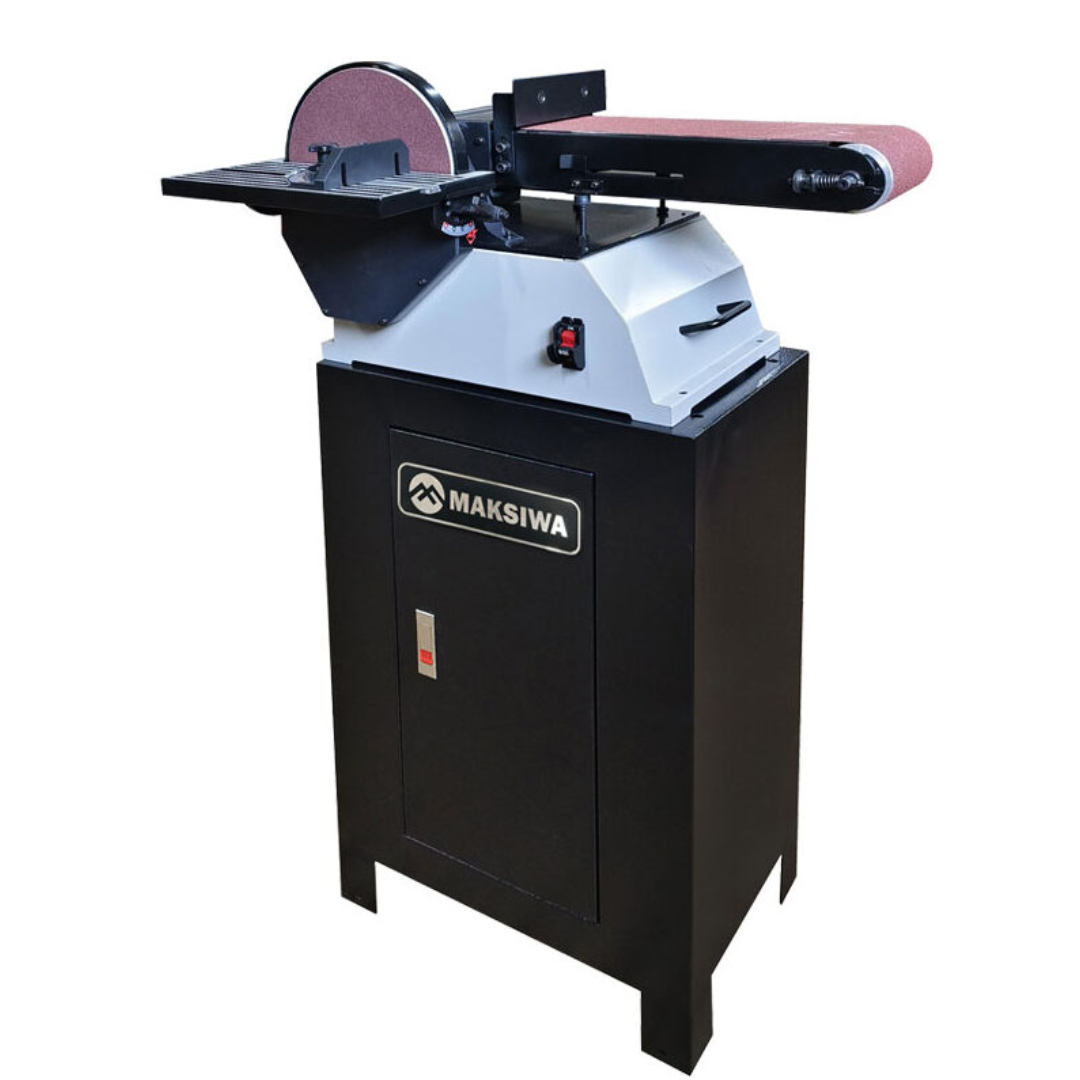
Maksiwa LDF Combination Belt and Disc Sander
Price: $899 | Type: Belt & Disc Sander
The Maksiwa LDF combines a belt sander and disc sander in one compact machine. A versatile benchtop sander for shaping, smoothing, and finishing wood in any shop.

Safety Speed 3760 Wide Belt Sander
Price: $15,499 | Type: Wide Belt Sander
The Safety Speed 3760 is a professional wide belt sander with industrial sanding head, conveyor table, and precision control panel. Built for high-production sanding of wood panels and solid lumber.
Belt for fast removal, or finer finishing?
Our team can weigh random orbit, orbital and sheet options against your project so you avoid buying the wrong tool.