

In This Guide
Featured Detail Sanders

Virutex
Virutex LRE46L Orbital sander (120 V) 4600299
$323.15
Electronic speed control and a dust collection system come with this orbital sander for polishing and fine sanding. Its balanced build gives smooth, professional results without rework on flat faces and edges. Check its pad shape against your corners.

Virutex
Virutex Rotary Orbital Sander RTE146L: High-Performance Sanding 4600399
$300.15
Dual-action sanding combines rotary and orbital movement for fast material removal and fine finishing in one tool. It suits furniture and trim work where one sander has to do both jobs. Check that it reaches your corner and edge work.

Proxxon
$179.10
Tight spaces are where this light, compact belt sander earns its place, with speed control from 12 to 25 ft per second. It is used in modeling, sculpturing and tool and die making. A fit when a detail sander is too gentle for the job.
What Is a Detail Sander?
A detail sander is a compact power sander designed specifically for fine sanding work in locations that standard palm, sheet, or random orbital sanders can't access: corners, tight angles, narrow edges, carvings, and intricate furniture details. Most detail sanders use a triangular or mouse-shaped sanding pad that allows the pointed tip to push directly into 90-degree corners.

Detail sanders operate on an orbital motion, typically between 10,000 and 25,000 OPM. Variable speed control lets you dial back for delicate surfaces or ramp up for faster stock removal. Most models weigh between 1 and 4 pounds.

Top Detail Sanders
Best Overall
Bosch GSS 18V-10 Cordless Orbital Detail Sander
Runs on 18V Li-Ion up to 22,000 OPM with three interchangeable sanding plate configurations. Captures ~90% of sanding dust. The top pick for professional woodworkers who want cordless freedom and versatility.

Best Value
Skil SR232301 1.2 Amp Corded Multi-Sander
At 13,500 OPM with a full accessory kit including finger and contour pads. Dust canister captures ~80%. Solid performance at an accessible price for hobbyists and DIYers.

Best for Corners / Lightest Option
Ryobi PCL505B1 18V One+ Corner Cat Finish Sander
At 1.54 lbs with 4Ah battery included, the Ryobi Corner Cat is the lightest in its class at 11,000 OPM. Ideal for extended sanding sessions where fatigue is a concern.

How to Use a Detail Sander
- Start the sander before touching the surface to avoid gouge marks.
- Use light pressure — let the OPM do the work.
- Use the pointed tip for corners — push it firmly into 90-degree angles.
- Keep the sander moving at all times.
- Lift off before switching off to avoid stop-point marks.

Detail Sanders for Tight Spaces Compared
The detail sanders from our store that the picks cover appear below, along with one bench spindle model. First, see how each one reaches into corners and tight spaces.
| Model | Price | Key feature | Best for |
|---|---|---|---|
| Proxxon Detail Sander OZI/E | $172.80 | Oscillating motion that also handles plunge cuts and filing | Trim, furniture sides and other hard to reach areas |
| Proxxon Pen Sander PS 13, 12 V | $57.60 | Four straight shank and four angled shank sanding attachments | Superfine sanding on small surfaces and angled spots |
| RIKON 50-320 Benchtop Oscillating Spindle Sander | $249.99 | 4-1/2 inch tall sleeves oscillating 5/8 inch, 58 times per minute | Curve work on board edges, plus holes you have bored |
Pick by the shape you need to reach, whether flat corners, slots or curved edges, then confirm the sander's motion suits it.
Detail Sanders for Corners and Tight Spaces
These sanders from our store match the corner, edge and tight-space work covered in this guide. Check the shape of the sanding surface and the speed control before you buy.
1. Proxxon Detail Sander OZI/E — $172.80
Made for very tight spots such as corners, sides and inaccessible areas, this detail sander uses a quiet oscillating motion and a variable speed you set for each material. View more >
2. Proxxon Pen Sander PS 13, 12 V — $57.60
Superfine linear sanding at 8,000 strokes per minute reaches slots, surfaces and tight corners, and the set includes sanding attachments with straight and angled shanks. View more >
3. RIKON 50-320 Benchtop Oscillating Spindle Sander — $249.99
Curved edges and the inside surfaces of bored holes are the job for this oscillating spindle sander, which uses 4-1/2 inch tall sleeves that oscillate as they spin. View more >
What to Look for When Buying
Corded vs. Cordless: Corded delivers consistent power; cordless offers freedom of movement. For cordless, look for a minimum 3Ah–4Ah battery.

Speed (OPM): Range is 10,000–25,000 OPM. Variable speed is valuable for delicate surfaces.

Pad Shape and Accessories: Interchangeable plates (square, mouse, finger, contour) maximize versatility.

Dust Collection: Built-in canisters capture 80–90%. Connect to a shop vacuum for best results.

Weight: 1.5–4.4 lbs. Lighter models reduce fatigue in long sessions.

Frequently Asked Questions
What is a detail sander used for?
A detail sander is used for fine sanding in tight spaces, corners, edges, and areas that larger sanders can't access — furniture corners and legs, cabinet doors, trim, molding, and final finish passes before staining or painting. The triangular mouse pad tip pushes directly into 90-degree corners that no round or rectangular pad can reach cleanly.
What grit sandpaper should I use with a detail sander?
Use 80–100 grit to remove material or old finish. Use 120–150 grit to prepare bare wood for paint or stain. Use 180–220 grit for final finish passes and between coats. Always progress through grits rather than jumping from coarse to very fine in one step.
What is the difference between a detail sander and a mouse sander?
A mouse sander is a type of detail sander — specifically one with a triangular pad that comes to a point at the front. The terms are often used interchangeably. "Detail sander" is the broader category; "mouse sander" refers to the triangular pad shape specifically.
What OPM range does a detail sander run at?
Most run between 10,000 and 25,000 OPM using an orbital motion. Variable speed control lets you dial back for delicate surfaces or ramp up for faster removal of material.
Conclusion
A detail sander reaches corners, edges and tight spaces that larger sanders cannot, so choose one that suits the finishing work you do. Looking for the right fit? Start with our detail sanders and narrow it down by size and price.
Safety and standards references: OSHA woodworking eTool: handheld orbital sanders and OSHA woodworking eTool: wood dust.
Related collections: Portable Sanders and Orbital Sander.
Related Reading
Shop Sanders at Iron Line Tools

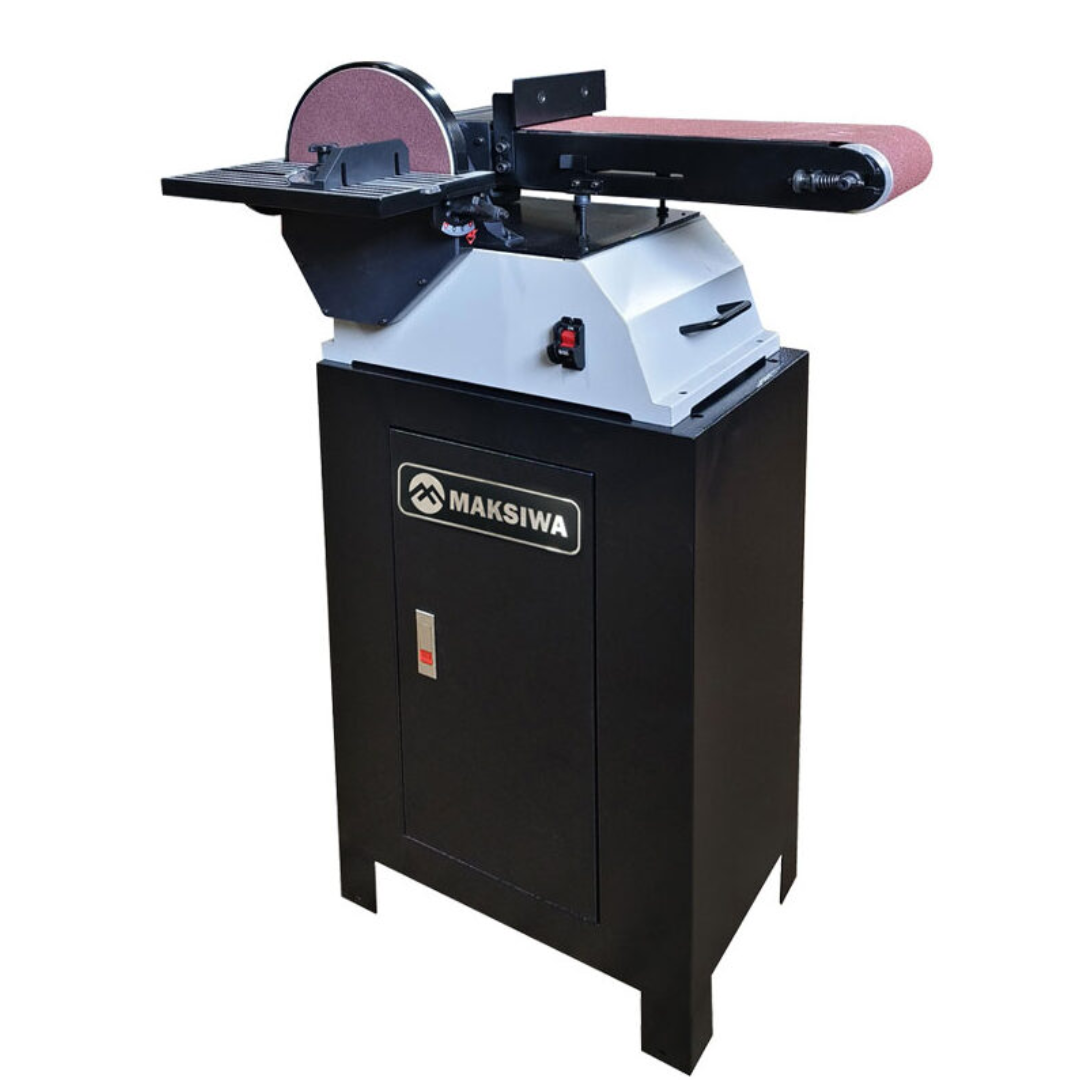
Maksiwa LDF Combination Belt and Disc Sander
Price: $899 | Type: Belt & Disc Sander
The Maksiwa LDF combines a belt sander and disc sander in one compact machine. A versatile benchtop sander for shaping, smoothing, and finishing wood in any shop.

Maksiwa LD.300 12" Disc Sander
Price: $399 | Type: Disc Sander
The Maksiwa LD.300 is a 12" disc sander with 1HP motor for precise material removal and flat-surface sanding. Heavy-duty base and industrial design for consistent shop performance.
Reaching corners, edges and tight spaces
For furniture, trim or cabinet face finishing, our team can help you choose a detail sander size and style.
Also browse: Sanding Machine