

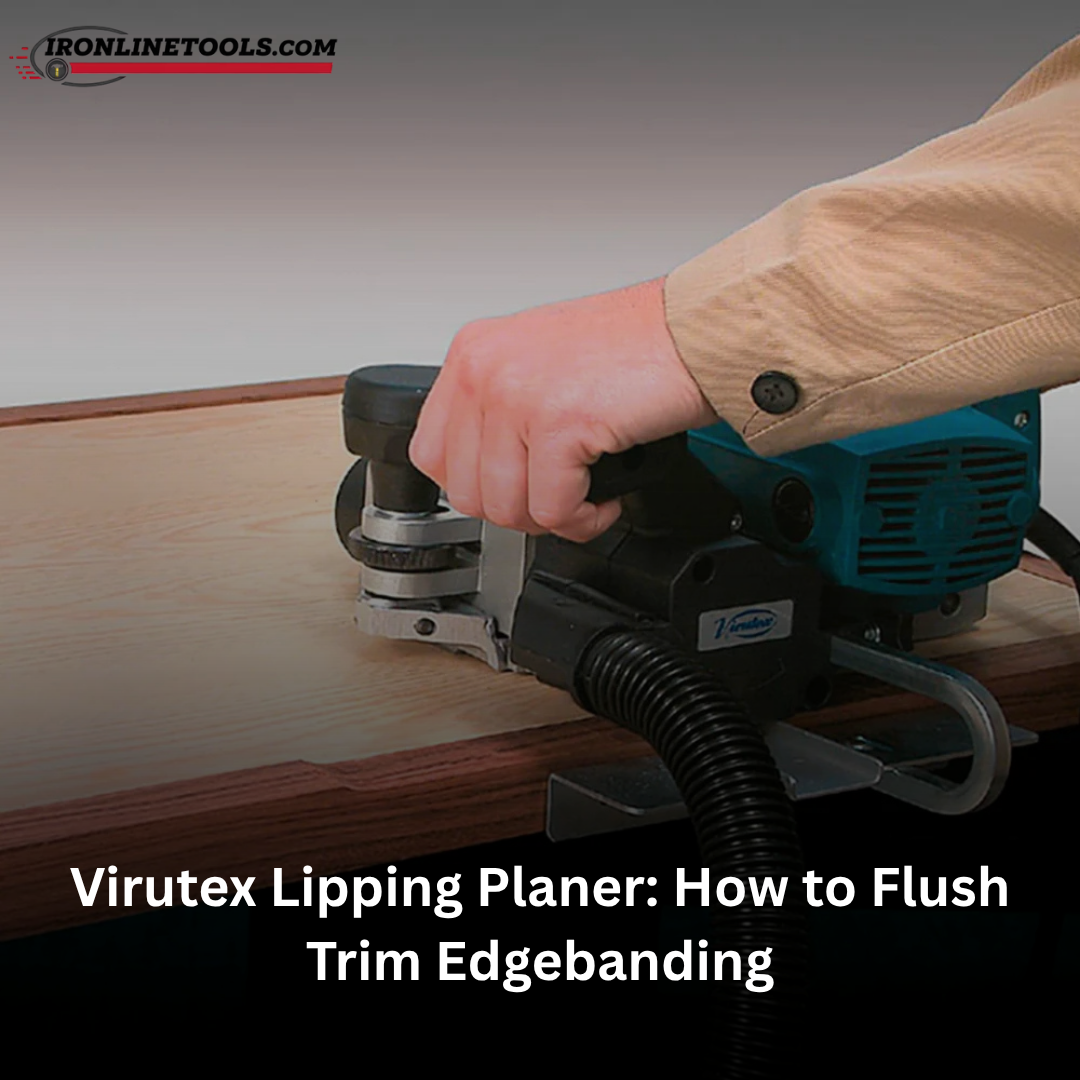
Flush trimming edgebanding creates the clean transition that cabinet doors, panels, and furniture components require. A proud edge catches light and touch, while an uneven cut can expose the substrate or damage the finished panel face. The right flush-trimming method leaves edge finishing smooth, level, and ready for final sanding or assembly.
Traditional hand tools work well for occasional panels, while a dedicated edge lipping planer gives furniture shops faster results. The Virutex CE53S edge lipping planer offers the precision required for demanding production lines.
Matthew, Iron Line Tools’ equipment specialist, helps cabinet makers evaluate Virutex lipping planer price options and capabilities for their shop workload.
Woodworkers looking for a Virutex lipping planer for sale can call Iron Line Tools at (888) 308-5580. Fast freight shipping and zero restocking fees make upgrading edge-finishing tools simple.
Why Flush Trimming Edgebanding Requires the Right Method
Flush trimming edgebanding requires controlled cutting because edge lippings vary in thickness, hardness, and grain direction. The method must remove the excess material while preserving the panel surface and producing flush edges along the full length.
Edge lippings made from solid wood, veneer, or flushing strips respond differently to pressure and cutting direction. Trimming thick flushing strips requires a tool that can cut without deflecting.
Careful setup keeps all flushing works clean and consistent. This limits the rework caused by torn fibers, scratches, or uneven height across the entire panel run.
What Causes Proud Edges, Gouges, and Tear-Out?
A proud edge remains higher than the panel face after trimming. It usually results from inconsistent tool pressure, a trimmer set too high, or edgebanding that changes thickness along its length.
Gouges occur when a blade corner digs into the panel face. Tear-out develops when the cutting edge pulls fibers from veneer or solid wood, especially at the end of a cut or across changing grain. A sharp blade, stable support, and light passes reduce these defects.
Before trimming, cabinet makers should remove adhesive squeeze-out and confirm that the banding is firmly bonded. Loose material can shift under a blade and create a deeper cut than the operator expects.
Which Panel and Edgebanding Materials Need Extra Care?
Veneer and thin plastic edge banding need light pressure because their surface layer provides little room for correction. Solid wood lippings require attention to grain direction, particularly near corners and end grain.
High-gloss panels also reveal shallow scratches that matte surfaces can hide. A clean base, sharp cutter, and dust control help protect the panel face while maintaining consistent edge height.
Manual Ways to Trim Edgebanding
Manual tools provide an economical route to edge finishing when production volume is modest and the operator needs close control. A file handles gradual cleanup, while a manual double-edge trimmer such as the Virutex AU93 removes overhang from both panel faces in one operation.
These methods suit repair work, prototypes, and small cabinet runs. Their main limitations are operator fatigue, slower throughput, and the risk of gouging a finished panel when pressure or alignment changes.
Using a File for Controlled Edge Cleanup
A fine, flat file gives the operator precise control over small amounts of material. The file should be held nearly flat against the panel face, with strokes directed along the edge and pressure kept light.
A smooth-cut file works well for final cleanup on solid wood or plastic banding. A file card keeps the teeth clear of adhesive and chips, while masking tape on the panel face provides a visual boundary during delicate work.
Filing is inexpensive and produces little noise. It also takes time, leaves more room for inconsistent height, and becomes tiring across long edges. The operator should check progress frequently with a fingertip and a straightedge.
Using a Double-Edge Trimmer Such as the Virutex AU93
The Virutex AU93 uses guided blades to trim overhanging edgebanding from the upper and lower panel faces. It provides faster results than filing and keeps both cuts aligned when the tool is held square to the edge.
The operator should test the setting on scrap from the same panel and banding batch. A smooth, continuous movement prevents the trimmer from stopping and starting, which can leave visible steps or corner marks.
Manual trimmers remain sensitive to debris, blade condition, and panel pressure. Excess force can compress the banding or push the guide against the finished surface, creating a gouge that requires repair.
When Manual Trimming Is Still the Best Choice
Manual trimming fits low-volume work, one-off furniture components, field adjustments, and situations where electrical access is limited. The tool cost is low, setup is quick, and the operator can remove material in very small increments.
The tradeoff is speed. Repeated hand trimming across multiple cabinets increases fatigue and makes consistent surface quality harder to maintain, especially when the edge lippings are long or the banding varies in thickness.
When a Powered Planer Makes Sense for Your Shop
Investing in an edge lipping planer makes sense when hand trimming limits production or creates inconsistent flush edges. Whether comparing a classic Virutex AP98 lipping planer, a Lamello lipping planer, or modern Virutex edge lipping planer models, these tools remove excess material while fully supporting the base on the panel.
Furniture manufacturing shops gain repeatability across long runs, particularly when each component must match before finishing or assembly. The operator still needs correct blade depth, stable feed pressure, and a clean work surface.
The Throughput Limits of Hand Trimming
Files and manual trimmers require the operator to guide every inch of the edge. Repeating that work across cabinet doors and case parts consumes labor that a shop could assign to assembly, sanding, or finishing.
Fatigue also changes technique. Pressure increases, alignment drifts, and the final panels may receive a different quality of edge finishing from the first panels in the batch.
How a Special Purpose Planer Protects the Panel Face
A special purpose planer uses its large support surface to keep the cutter aligned with the panel edge. This broad base reduces tipping, which helps prevent the cutter from dropping into the panel face or creating a tapered cut.
Using a special purpose planer ensures that heavy trimming does not compromise delicate face veneers during demanding flushing works.
The planer should be moved at a steady pace with the base fully supported. Light passes preserve control and allow the operator to verify the edge before removing additional material.
Matching an Upgrade to Daily Edgebanding Volume
Occasional cabinet work can remain efficient with a file or manual trimmer. A powered planer earns its place when edge banding appears on many components each day or when rework threatens delivery schedules.
Matthew helps customers compare tool capability with actual shop needs when evaluating a lipping planer for sale. He often recommends keeping manual tools for field touch-ups while adding a versatile Virutex planer to handle daily production edges.
How the Virutex CE53S Produces Clean, Flush Edges
In any hands-on Virutex lipping planer review, the Virutex 1300W edge lipping planer CE53S (product 5300199) stands out for control. It combines a wide support surface with a high-torque motor for flush trimming without panel damage.
The CE53S includes a height-adjustable base, cutter-holder, dust collector connection, and double insulation. Those features address the practical concerns that arise during repeated edge finishing: stability, cutter life, visibility, and electrical protection.
Wide Support Surface and Height-Adjustable Base
The large support surface keeps the planer planted on the panel as the cutter follows the edge. That width helps prevent tipping when the operator reaches a corner or works across a long lipping.
The height-adjustable base sets the relationship between the cutter and panel face. Proper adjustment leaves the blade removing the proud edge while the base rides on the finished surface without forcing the tool downward.
Cutter-Holder and Reversible Carbide Blade System
The cutter-holder uses reversible blades that provide two cutting surfaces per insert. When one edge wears down, flipping the blade exposes a fresh cutting edge to extend tool life.
Equipped with durable carbide blades, the tool slices cleanly through hardwood and composite edges. These reversible carbide blades reduce downtime and guarantee smooth cuts across solid wood and tough edgebanding.
Using genuine Virutex lipping planer parts and sharp carbide blades ensures superior surface quality. Operators should regularly inspect blade seating to prevent surface imperfections.
Motor Power, Cutting Capacity, and Electrical Safety
The 1,300 W motor supplies the power required for a dedicated lipping planer. It supports steady material removal when the operator maintains an even feed and avoids forcing the tool through a heavy cut.
The Virutex CE53S includes double insulation for electrical safety. The operator should follow the manufacturer’s setup and operating instructions, verify the cutting adjustment on scrap, and keep hands clear of the cutter-holder.
Using the Dust Extraction Connection for Better Visibility
The dust collector connection allows the CE53S to connect with a standard shop vacuum. Using this dust extraction connection removes chips directly from the cutting area, keeping the edge fully visible.
Effective chip removal prevents debris from collecting between the base and panel. Better visibility helps the operator monitor the cut, corners, and remaining proud material during repeated flush trimming.
A Reliable Upgrade Path for Cleaner Edge Finishing
The Virutex CE53S edge lipping planer gives production shops a stable route to clean edge finishing through its broad base, adjustable support, and durable blades. While manual tools handle small corrections, a dedicated Virutex lipping planer delivers long-term consistency.
Woodworkers interested in the Virutex lipping planer 5300199 or replacement parts can contact Matthew at Iron Line Tools at (888) 308-5580. Fast freight shipping and no restocking fees ensure a seamless transition to perfect flush edges.