

In This Guide
Featured Material Handling Equipment

EKKO
EKKO EK16A-177 3-Wheel Electric Forklift
$25,499.00
Electric class example: a 3 wheel forklift with a triple mast, 3,500 lb capacity, a 177 inch lift height, side shift and tilt on a 24V/320Ah lead acid battery. A good model for comparing electric classes with engine-driven ones.

EKKO
EKKO EH15TH Moving Mast Walkie Reach Truck
$25,499.00
Racking-focused, this moving mast walkie reach truck has 3,300 lb capacity and a 216 inch (18 ft) lift height. Reach trucks are one of the types the guide breaks down, built to store and retrieve pallets in racking.

EKKO
EKKO EK20GT-LI 4-Wheel Electric Forklift
$33,599.00
Representative of four-wheel electric forklifts, this model has 4,000 lb capacity, a 185 inch lift height, 4 levers and side shift. Use it to compare against the other types and classes in the guide.

EKKO
$33,599.00
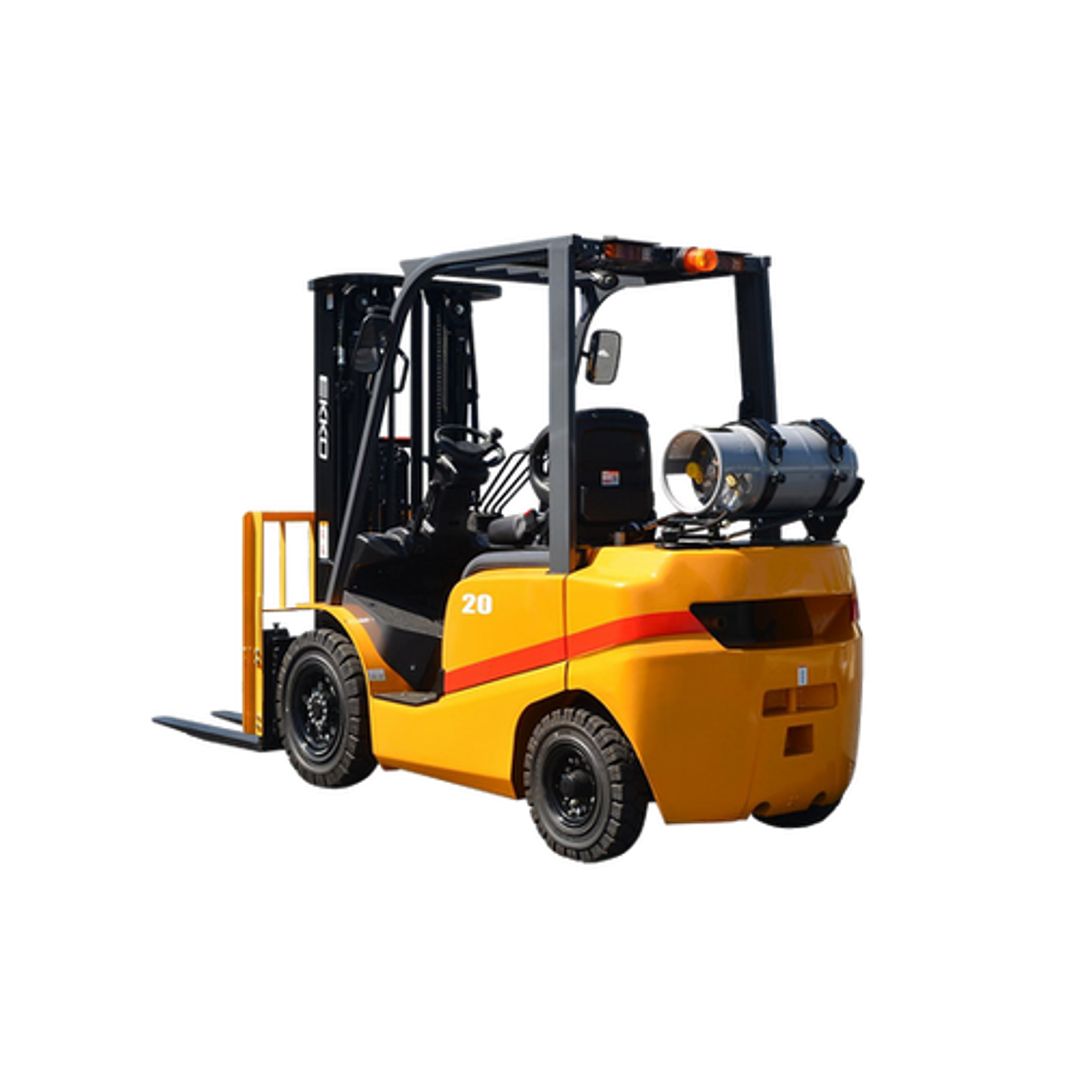
An engine-driven example from the hi-lo family, the EKKO EK30SLP LPG forklift is rated for 6,000 lb with a 189 inch lift height. It has a PSI LPG engine, pattern cushion tires and side shift. Use it to see how LPG machines compare with the electric types covered in the guide.
What Is a Hi-Lo?
A hi-lo (also written hi lo, hilo, high-low, or high low) is a powered industrial truck equipped with forks for lifting, moving, and stacking loads. The term is believed to originate from the machine's core function: it can lift loads to high positions and lower them to ground level — high and low. The name stuck in certain regions and industries, particularly in the southern United States, parts of the Midwest, and in manufacturing environments that were well established by the mid-20th century.
Outside those pockets, the machine is called a forklift — or, in more formal contexts, a powered industrial truck or lift truck. In the UK and Australia, "fork truck" is also common. In Spanish-speaking regions, "montacargas" is the standard term. All of these refer to the same class of equipment.
Quick answer: A hi-lo is a forklift. Same machine, different name. If someone at a warehouse or job site asks you to "grab the hi-lo," they mean the forklift.
Are a Hi-Lo and a Forklift the Same Thing?
Yes — functionally and mechanically, a hi-lo and a forklift are identical. Both share the same core components: a vertical mast, a carriage, steel forks, a counterweight at the rear for stability, and a hydraulic lifting system. Whether the machine is called a forklift, a hi-lo, a lift truck, or a high-low truck on a given job site depends entirely on local vocabulary, not on any technical difference.
One minor nuance worth noting: in a small number of industrial settings, "hi-lo" has been used specifically to describe a narrow-aisle reach truck or stand-up rider that can operate efficiently at both high rack heights and low floor-level positions. But this usage is uncommon, and in virtually every real-world context, the terms are fully interchangeable.
The practical implication is this: if you're hiring forklift operators and a candidate lists "hi-lo experience" on a résumé, that means forklift operation experience. OSHA's certification and training requirements for powered industrial trucks cover both terms under the same regulatory framework — a "hi-lo license" is a forklift operator certification.

Forklift (Hi-Lo) Types and Classes
Whether you call them forklifts or hi-los, the Industrial Truck Association (ITA) classifies powered industrial trucks into seven classes based on power source and tire type. Here are the classes most relevant to warehouse and industrial operations:

| Class | Type | Environment | Lift Capacity |
|---|---|---|---|
| Class I | Electric motor rider (counterbalanced) | Indoor warehouses, food processing | 3,000–15,000 lbs |
| Class II | Electric narrow aisle (reach trucks, order pickers) | High-density racking, narrow aisles | 2,500–5,000 lbs |
| Class III | Electric pallet jacks (walkie/rider) | Retail backrooms, dock loading | 4,000–10,000 lbs |
| Class IV | Internal combustion, cushion tire | Indoor/outdoor smooth floors | 3,000–15,500 lbs |
| Class V | Internal combustion, pneumatic tire | Outdoor, construction, lumber yards | 5,000–30,000 lbs |

For very heavy industrial applications — ports, steel mills, and heavy manufacturing — large counterbalanced forklifts handle loads up to 60,000 lbs. These fall outside the standard class system but operate on the same mechanical principles.
Applications by Machine Type

Warehousing & Distribution
Electric counterbalanced forklifts (Class I) and reach trucks (Class II) dominate here. Zero emissions, low noise, and smooth warehouse floors make electric the right choice. Lithium-ion battery technology has largely replaced lead-acid in high-throughput facilities, with opportunity charging during breaks eliminating the need for spare battery sets.
Manufacturing
Both electric and LPG/propane (Class IV) forklifts are common in manufacturing environments, depending on whether the facility is enclosed and ventilated. IC forklifts handle raw material transport between outdoor storage and indoor production areas. This is also where the "hi-lo" term is most likely to survive in everyday workplace language.
Construction & Outdoor
Rough terrain forklifts (Class V, pneumatic tires) and telehandlers handle outdoor site work — lumber yards, building materials, pre-cast concrete staging, and loading/unloading on uneven ground. These are the machines people are asking about when they compare a forklift to a skid steer for outdoor applications.
Retail & Small Warehouses
Compact electric forklifts and walkie/rider pallet jacks (Class III) serve retail stockrooms and smaller storage environments. These are the "hi-lo" machines most people in retail settings picture when they hear the term — compact, electric, and built for tight indoor spaces with relatively light loads.


Why the Terminology Matters
For most everyday uses — searching for equipment, talking on the shop floor, writing a job posting — "hi-lo" and "forklift" are perfectly interchangeable. But in a few specific contexts, using the standardized term matters:
- Safety and compliance documentation: OSHA regulations, training materials, and certification records use "powered industrial truck" and "forklift" as the standard terms. Safety signage and training programs that mix slang into formal documentation can create ambiguity during audits or incident investigations.
- Equipment procurement: When writing purchase orders, rental agreements, or equipment specs, use the ITA class designation (Class I, Class IV, etc.) alongside "forklift" to ensure you receive the right machine. A procurement order reading "hi-lo with side shift" is technically interpretable as any class of forklift with that attachment — adding the class and capacity removes ambiguity.
- Hiring and job postings: Candidates listing "hi-lo experience" or "hi-lo certification" have forklift operator experience and certification. Both terms attract the same pool of qualified operators when used in job descriptions.

Bottom line: Use whichever term fits the context. On the shop floor, "hi-lo" communicates just as clearly as "forklift." In formal documentation, procurement, and safety contexts, "forklift" or the ITA class designation is the right choice.

Hi-Lo and Forklift Types Compared by Power
Hi-Lo vs. Forklift is mostly a naming question, so this table lines up the machine types from our store that the picks cover. Look at the power type first.
| Model | Price | Key feature | Best for |
|---|---|---|---|
| EKKO EK18RFL Stand-up Rider Forklift | $37,799.00 | Stand-up rider with 189 inch lift height and 48V/420Ah battery | Operators who stand while lifting loads to 15.75 feet |
| EKKO EP18JNLI Lithium Narrow Electric Pallet Truck | $2,888.30 | 7.87 inch lift, 4,000 lb capacity, 24V/40Ah lithium-ion battery | Pallet moves that need only a short lift |
| EKKO EK25D Diesel Forklift | $34,999.00 | Diesel unit lifting 5,000 lb to 185 inch, solid pneumatic tire | Heavier 5,000 lb loads handled with diesel power |
| EKKO EK18AT-185LI 3-Wheel Electric Forklift | $33,999.00 | 3-wheel electric with 48V/202AH lithium battery and AC drive motor | Electric forklift work on a lithium battery system |
Match the power type, capacity and lift height to your building and your loads, and use the figures in each row to rule machines in or out.
Forklift Types and Classes to Compare
A hi-lo is a forklift, so the models below from our store show the types behind the word, from rider forklifts to pallet trucks. Check the class and lift height that fit your loads.
1. EKKO EK18RFL Stand-up Rider Forklift — $37,799.00
Standing while driving is the idea behind this rider forklift, rated for 4,000 lb with 189 inch (15.75 ft) of lift, side shift and tilt. One type behind the word hi-lo. View more >
2. EKKO EP18JNLI Lithium Narrow Electric Pallet Truck — $2,888.30
Short lifts, not stacking, are what this narrow lithium electric pallet truck offers, with a 4,000 lb rating, a 7.87 inch lift height and an on-board charger. Compare it with forklifts that stack pallets. View more >
3. EKKO EK25D Diesel Forklift — $34,999.00
Engine-driven diesel is the classic type, and this one has 5,000 lb capacity, a 185 lift height, a solid pneumatic tire, side shift and tilt. Compare it with electric and LPG classes when you choose. View more >
4. EKKO EK18AT-185LI 3-Wheel Electric Forklift — $33,999.00
Three wheels, an electric drive and a 185 inch lift define this 4,000 lb forklift, which also has a dual-front drive motor and side shift. It shows the electric class of forklift. View more >
Frequently Asked Questions
Are a hi-lo and a forklift the same thing?
Yes. A hi-lo is a forklift — the two terms refer to the same machine. "Hi-lo" (also spelled hilo, hi lo, high-low, or high low) is a regional and occupational slang term that has been used in the United States since roughly the mid-20th century, particularly in the South and in manufacturing industries. It likely derives from the machine's ability to lift loads to high positions and bring them down to ground level. In formal contexts, "forklift" or "powered industrial truck" is the standard terminology.
What is a hi-lo forklift?
A hi-lo forklift is simply a forklift — the phrase combines both the slang and the formal name for the same machine. There is no distinct product category called a "hi-lo forklift." When you see this term used in job postings, equipment listings, or workplace signage, it refers to a standard powered industrial truck with forks for lifting and moving loads.
What is hi-lo experience?
Hi-lo experience means forklift operation experience. On a résumé or job application, "hi-lo experience" indicates the candidate has operated a forklift in a warehouse, manufacturing, retail, or construction setting. OSHA requires formal certification for all powered industrial truck operators — so "hi-lo certification" or a "hi-lo license" is the same as a forklift operator certification issued under OSHA 29 CFR 1910.178.
What is a high-low machine?
A high-low machine (also high low machine, high-low truck, or hi-low equipment) is another name for a forklift. The terminology is especially common in older manufacturing environments and in certain U.S. regions. The machine itself is a standard powered industrial truck: a counterweighted vehicle with a hydraulic mast and forks that lifts, transports, and stacks material.
What is the difference between a hi-lo and a forklift?
There is no functional difference. Both terms describe the same machine. The only difference is terminology: "forklift" is the globally standardized term used in formal documentation, safety regulations, and manufacturer specifications, while "hi-lo" is occupational slang still in active use on many shop floors and in regional workplaces. A forklift salesperson, OSHA inspector, or equipment rental company will understand either term immediately.
What is a hilo lift?
A hilo lift is a forklift — the term "hilo lift" combines the slang name with the machine's core function. In some contexts, "hilo lift" or "hi-lo lift" may specifically refer to smaller, electric-powered indoor forklifts used in retail stockrooms or compact warehouses, but it is not a formal product category and the terms remain interchangeable with "forklift."
What is the weight capacity of a hi-lo?
Because a hi-lo is a forklift, its weight capacity depends entirely on the specific model and class. Entry-level electric forklifts handle 3,000–5,000 lbs. Mid-range counterbalanced forklifts typically range from 5,000–15,000 lbs. Large rough terrain and heavy-spec forklifts handle 15,000–60,000 lbs. The capacity rating is printed on the machine's nameplate and must never be exceeded in operation.
Conclusion
A hi-lo and a forklift are the same machine, so focus on the type and class of forklift that fits your loads and your site. Looking for the right fit? Start with our material handling equipment and narrow it down by size and price.
Safety and standards references: OSHA eTool: Powered Industrial Trucks (Forklift), OSHA 29 CFR 1910.178 and NIOSH Forklift Safety Toolbox Talk.
Related Reading
Shop Forklifts at Iron Line Tools

EKKO EK20TLP LPG Forklift
Price: $32,199 | Type: LPG Forklift
The EKKO EK20TLP is a professional LPG-powered forklift with 4,400 lb capacity. Built for industrial warehouse and manufacturing environments needing reliable, high-performance material handling.

EKKO EK25TLP LPG Forklift
Price: $33,599 | Type: LPG Forklift
The EKKO EK25TLP is a 5,000 lb capacity LPG forklift for demanding warehouse and manufacturing environments. Reliable LPG power, durable construction, and smooth operation.
Is a hi-lo just another name for a forklift?
Tell our team about your loads and site, and we can match the right type and class of truck.